
Reviewed · VIETNAMESE COFFEE TOURS
A Complete Vietnam Coffee Journey – The Unknown Giant
Vietnam’s coffee culture makes far more sense once you taste it in several forms. In this 2.5-hour workshop, Quynh guides you through six drinks, from familiar condensed-milk coffee to egg, coconut, and salt coffee, while explaining how Vietnam made coffee its own.
I like the hands-on format and the clear link between brewing tools, flavor, and local habits. I also like the chance to look past the usual strong iced coffee and learn why robusta matters so much to Vietnam. The main drawback is the caffeine load, so plan your timing carefully.
In This Review
- Key points
- Six cups that explain Vietnam better than one
- Starting at 40E Ngô Đức Kế
- A short history lesson with a Vietnamese point of view
- Making the drinks instead of only watching
- Traditional coffee meets newer café styles
- A snack that keeps the coffee company
- Why the $30 price makes sense
- Who will enjoy this coffee workshop
- Plan the timing and booking carefully
- Should you book Vietnam Coffee Journey?
- FAQ
- Where does the coffee experience begin and end?
- How long does the workshop last?
- How many coffee drinks are included?
- What food is included?
- What languages are available?
- Can I cancel or pay later?
Key points
- Six coffee drinks: Taste and compare classic, regional, and newer Vietnamese styles.
- Quynh’s clear teaching: Expect strong English, broad coffee knowledge, and plenty of time for questions.
- Make your own drinks: You do more than watch, with hands-on preparation built into the session.
- Coffee with context: Learn how Vietnam’s coffee trade and daily customs shaped what appears in the cup.
- A local snack included: Choose bánh mì, vegetarian or halal bánh mì, croissant, or fresh fruit.
- Small group in central Saigon: The group is limited to six and begins and ends at 40E Ngô Đức Kế.
Six cups that explain Vietnam better than one
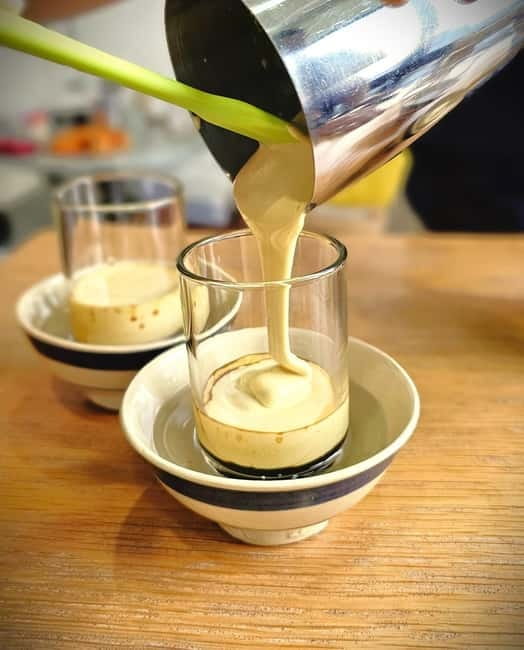
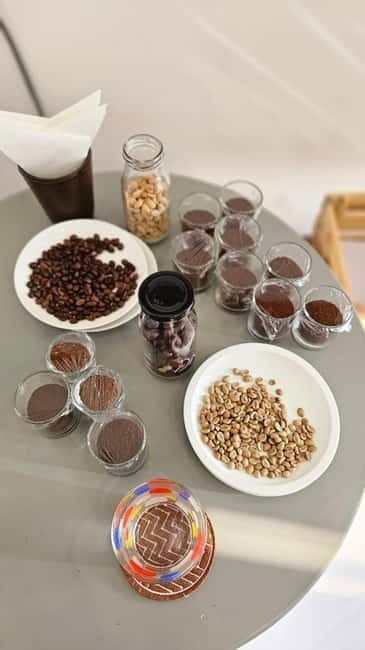
Many visitors first meet Vietnamese coffee as a dark, sweet drink poured over ice. That is only the opening chapter. This experience uses six different drinks to show how Vietnamese coffee changes with ingredients, preparation, and local taste.
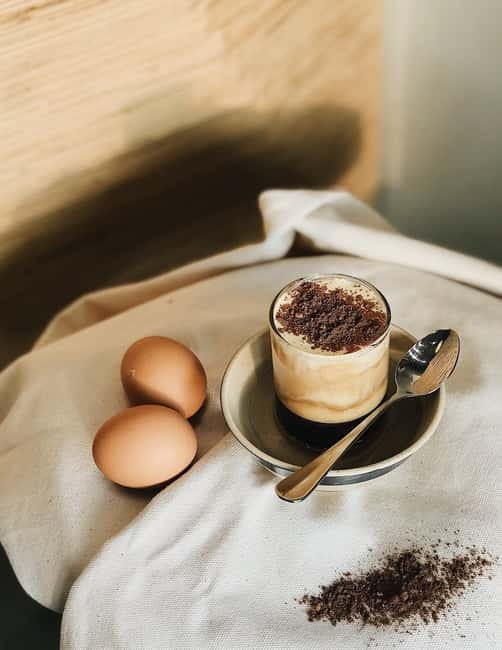
You will taste styles that include condensed milk, coconut, salt, and egg. These are not added just for novelty. Each one shows a different way people soften, enrich, cool, or reshape coffee. The tasting also gives you a useful comparison between traditional preparation and newer café styles.
I like this approach because it avoids reducing Vietnamese coffee to a single famous recipe. You get a wider picture of what people drink, how those drinks developed, and why a coffee menu in Vietnam can feel so different from one in Europe, Australia, or North America.
The session is not presented as professional barista training. You will not leave with a formal coffee qualification. Instead, you will understand how brewing methods and equipment affect the final taste, which is far more useful for most visitors who simply want to order and make better coffee.
More Vietnamese coffee stops in Ho Chi Minh City:
- Fun & Easy Vietnamese Coffee Workshop in Hồ Chí Minh City
★ 5.0 · 293 reviews - Vietnamese Coffee & Culture Exploration in Hồ Chí Minh City
★ 5.0 · 202 reviews - Decadent Vietnamese “Egg Coffee” Workshop in Hồ Chí Minh City
★ 5.0 · 150 reviews
Starting at 40E Ngô Đức Kế
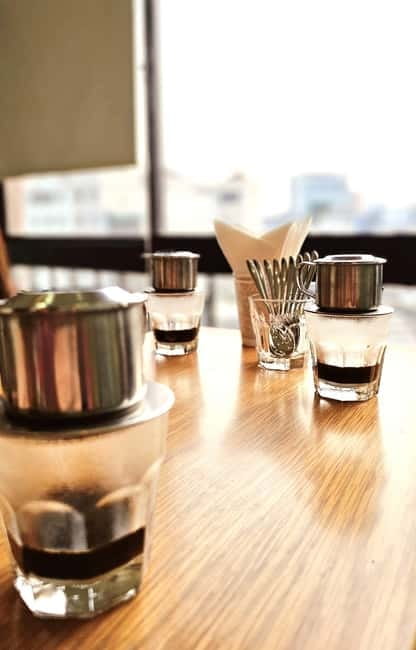
The meeting point is 40E Ngô Đức Kế, a convenient central address in Ho Chi Minh City. The workshop both starts and ends there, so you do not need to arrange transport between several cafés or worry about finding a final drop-off point.
That fixed location matters in Saigon. A coffee session is easier to enjoy when you are not spending part of the afternoon crossing town. You can plan it around other central sightseeing, though the experience itself remains focused on coffee rather than city touring.
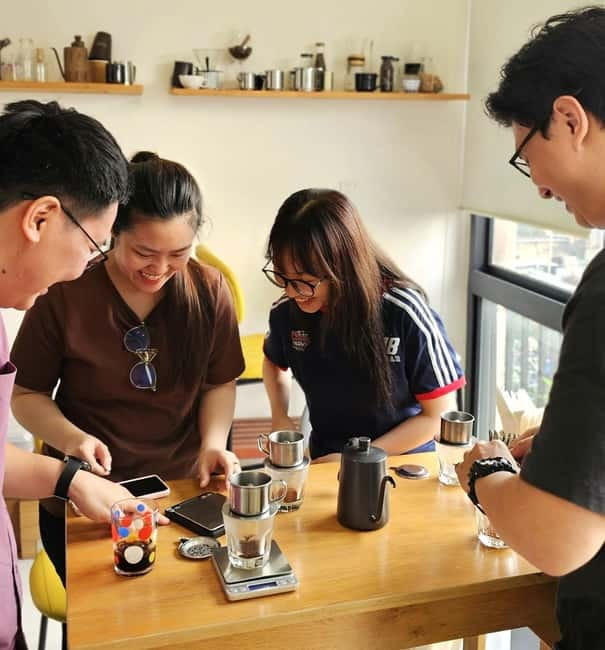
The group is limited to six people. That is a useful size for a practical tasting, since you should have room to ask questions and take part in making drinks. It also means the session may feel more like a conversation than a large demonstration.
The supplied details describe the activity as wheelchair accessible, but they also say it is not suitable for wheelchair users. That is a clear inconsistency. If you use a wheelchair, contact the host before booking and ask for the current access arrangements rather than relying on the general accessibility label.
A short history lesson with a Vietnamese point of view
Quynh begins with the story of coffee in Vietnam and places the country within the wider history of coffee. This gives the tasting a useful frame. You are not just learning how to mix ingredients. You are learning why coffee became important in Vietnam and how local drinking habits developed.
The experience also covers coffee growing and Vietnam’s place in the world coffee trade. One important theme is robusta, a bean often treated unfairly in coffee conversations that focus only on arabica and specialty roasting.
Here, robusta gets a fair hearing. You will learn why it matters to Vietnam and how its qualities suit strong, concentrated drinks. The point is not to claim that one bean is always better than another. It is to understand that coffee style depends on the bean, the roast, the brewing method, and the drinker’s preference.
That is valuable context for anyone who has wondered why Vietnamese coffee tastes so forceful. The answer is not simply that people add a lot of sugar or condensed milk. The bean and brewing style are part of the story too.
Quynh also links coffee to Vietnamese culture and changing habits. The supplied information does not promise a broad walking tour or visits to plantations, so you should expect cultural explanation at the workshop rather than a field trip. For a short city-based activity, that focused format makes sense.
Making the drinks instead of only watching
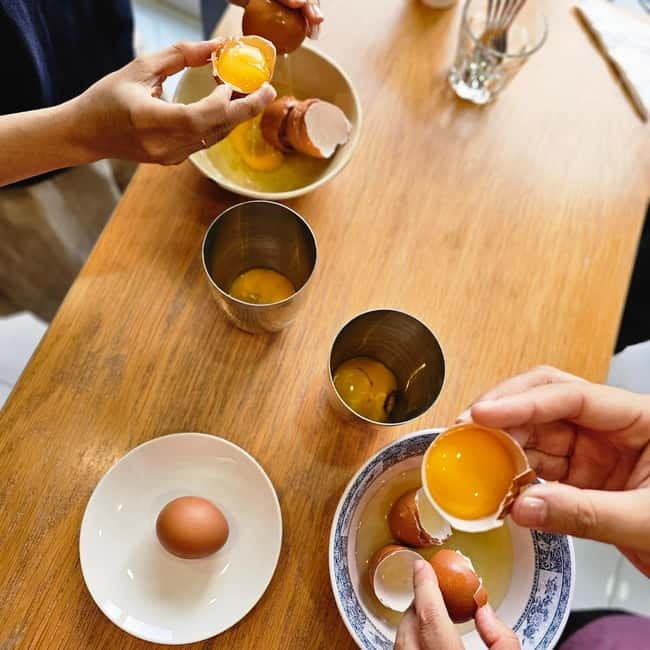
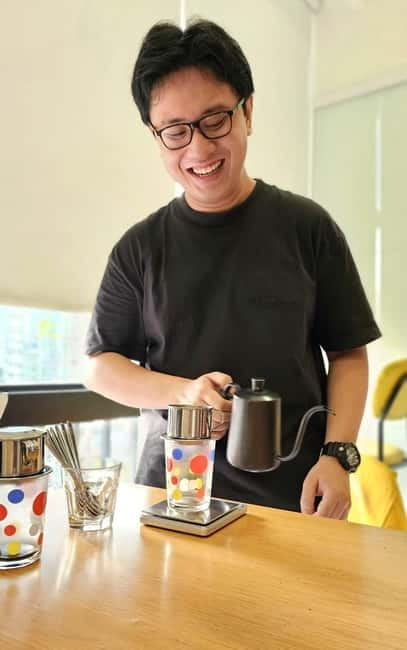
A major strength is the hands-on work. You will make your own coffee drinks as the session moves through different styles, then taste what you have prepared.
That practical element gives you a better feel for the role of each ingredient. You can notice what happens when coffee meets condensed milk, salt, egg, or coconut. You also get a clearer sense of texture and balance than you would from simply sipping finished drinks brought to the table.
The goal is not to turn you into a café worker. Quynh explains the process in plain terms, including how brewing tools and methods bring out particular characteristics. You should leave with a working idea of how to adjust a drink for your own taste.
That might mean changing sweetness, strength, or the way a drink is brewed. Exact recipes and brewing tips are part of the session, so you can try to recreate some of the drinks later. The value here is practical: you gain enough understanding to experiment at home instead of treating Vietnamese coffee as something you can only order abroad.
Come ready to ask questions. Quynh welcomes them, and the format appears designed for discussion rather than a fixed speech that must finish on schedule. Questions can stay on coffee, or you can use the conversation to explore related parts of Vietnamese culture.
A completely different kind of day out of Ho Chi Minh City:
- Cu Chi Tunnels Tour from HCM City – Morning or Afternoon
★ 5.0 · 15,833 reviews - From HCM City: Mekong Delta Tour with Sampan Journey
★ 4.5 · 13,132 reviews - Ho Chi Minh City Street Food Tour & Sightseeing By Motorbike
★ 5.0 · 9,413 reviews - HCM: Cu Chi Tunnels-Tapioca Small Group Tour Morning or Afternoon
★ 5.0 · 7,485 reviews
Traditional coffee meets newer café styles
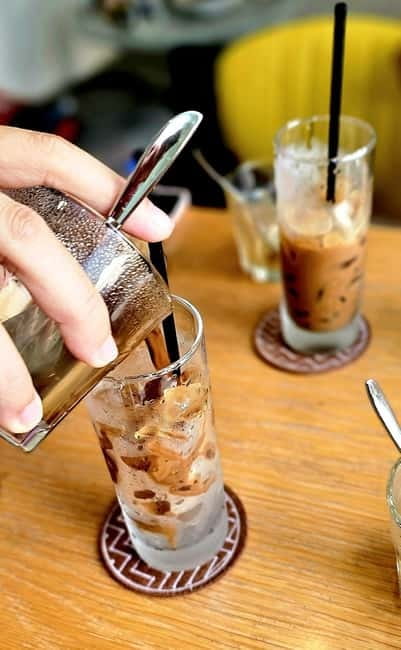
The comparison between traditional and modern preparation is one of the most useful parts for a first-time visitor. Traditional Vietnamese coffee often suggests a slower, more concentrated method, while modern cafés may use different equipment and presentation.
You will learn how those choices affect the drink. The workshop does not push one commercial brand or one specialty-coffee view, which helps keep the discussion practical. You are free to decide what you like.
This balanced approach suits people who already know a little about coffee. If you normally drink filter coffee, espresso, or milk-based drinks, you can compare familiar ideas with Vietnamese methods. If you know very little, you still get a clear route through the basics.
I would not book this expecting a formal tasting with technical scoring sheets. The focus is understanding, making, tasting, and comparing. That makes it friendly for curious beginners and still worthwhile for coffee drinkers who want a broader view of Vietnam’s cup.
The six drinks also prevent the session from becoming repetitive. Each sample gives you another way to think about sweetness, bitterness, creaminess, temperature, and aroma. Still, six coffees in one sitting is a lot. If caffeine affects your sleep, schedule the workshop earlier in the day.
A snack that keeps the coffee company
The experience includes one snack, with a choice of local bánh mì, vegetarian or halal bánh mì, croissant, or fresh fruit. This is a small detail, but it helps balance a session built around repeated tastings.
A bánh mì makes the most local choice, while vegetarian or halal options give you some flexibility. A croissant fits naturally with a coffee-focused break, and fresh fruit is the lighter option if you have already eaten.
You should state any special requirements when booking or contact Quynh in advance. The available choices are listed, but the host specifically asks people with special needs to get in touch. That is the sensible step for dietary concerns beyond the stated options.
The snack is not a full meal. Think of it as something to eat alongside the workshop, not a replacement for lunch or dinner. If you book around mealtime, plan another meal before or after.
Why the $30 price makes sense
At $30 per person, this is priced above a casual café stop but below many longer food tours or private lessons. You are paying for six drinks, a snack, two and a half hours of instruction, and a small-group setting.
The value depends on what you want. If your goal is simply to drink one iced coffee, this will feel like too much. A café can do that for far less. If you want to understand the drinks, make them yourself, and ask detailed questions, the price is easier to justify.
The session also saves you from ordering six separate drinks and trying to work out the differences without guidance. Quynh explains the background as you taste, so the activity gives you both refreshments and context.
The host’s strong rating across almost 800 reviews on different platforms is encouraging, although the activity’s supplied review count is much smaller at 10. The available written feedback is consistently positive about Quynh’s English, coffee knowledge, historical explanations, and willingness to answer questions. I would treat that as a good sign, while still judging the experience by your own interest in the subject.
Who will enjoy this coffee workshop
I would recommend it most strongly to coffee drinkers who want more than a postcard version of Vietnam. You will get the most from the session if you like asking why a drink tastes the way it does, or if you want recipes and brewing ideas to take home.
It also suits first-time visitors who want a cultural activity that does not require a full day. The 150-minute length gives you enough time to learn and taste without taking over your itinerary. The central meeting point makes it easy to fit between other plans in Ho Chi Minh City.
People who already know coffee may appreciate the discussion of robusta and Vietnam’s place in world coffee. Quynh’s background covers coffee beyond Vietnam, so the conversation can reach wider coffee topics if the group has questions.
This is less suitable for children under 16, who are not allowed to join. It may also be a poor choice for anyone who dislikes strong coffee, sweet drinks, or tasting several preparations in a row. You can ask for special arrangements, but the basic format is clearly coffee-centered.
The experience is conducted in English and Vietnamese. The written feedback specifically praises Quynh’s English, so English-speaking visitors should be able to follow the explanations and take part in the discussion.
Plan the timing and booking carefully
The workshop lasts 150 minutes, with starting times depending on availability. Since you will taste six drinks, an earlier appointment may be more comfortable than a late evening session.
Free cancellation is available up to 24 hours before the start for a full refund. You can also reserve now and pay later, which helps if your Saigon schedule is still changing. These policies are useful, but I would still read the final booking terms before paying.
The advertised group limit is six participants. That small size is important to the hands-on format, so check the available date if you are traveling with friends. The supplied details do not state a minimum group size for this workshop, so ask the host if that matters to your plans.
Quynh also offers two related experiences. One is a shorter 1.5-hour session focused on making three iconic drinks associated with northern, central, and southern Vietnam. The other is a four-hour electric tuk-tuk tour linking the city’s growth with its coffee drinks, with a minimum of two participants.
Those alternatives may suit you better if you want either a quick introduction or a city tour. The 2.5-hour workshop is the better choice if your priority is learning how the drinks work.
Should you book Vietnam Coffee Journey?
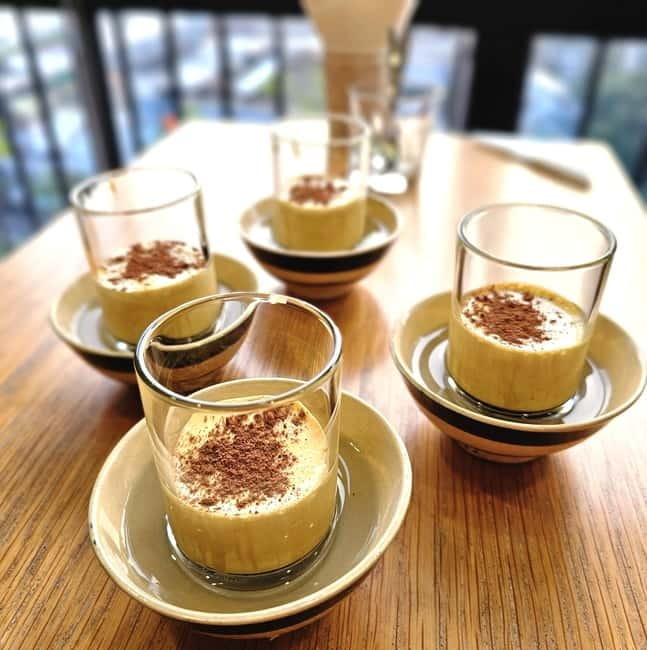
Book it if you want a thoughtful, hands-on look at Vietnamese coffee rather than another quick tasting. The strongest reasons are the six-drink comparison, the chance to make the drinks yourself, and Quynh’s ability to connect coffee with Vietnam’s past and present.
I especially like that robusta receives serious attention and that the workshop avoids forcing one narrow specialty-coffee opinion. You can ask questions, compare traditional and modern methods, and leave with useful brewing tips.
Skip it if you only want a single café drink, dislike caffeine-heavy tastings, or need a fully accessible activity without first confirming the conflicting wheelchair information. For curious coffee drinkers, though, $30 buys a focused afternoon and a much better understanding of why Vietnamese coffee tastes the way it does.
FAQ
Where does the coffee experience begin and end?
It begins and ends at 40E Ngô Đức Kế in Ho Chi Minh City.
How long does the workshop last?
The experience lasts 150 minutes, or 2.5 hours.
How many coffee drinks are included?
Six different coffee drinks are included, with tasting, comparison, and hands-on preparation.
What food is included?
You can choose one snack: local bánh mì, vegetarian or halal bánh mì, croissant, or fresh fruit.
What languages are available?
The live guide conducts the experience in English and Vietnamese.
Can I cancel or pay later?
You can cancel up to 24 hours in advance for a full refund. Reserve now and pay later is also available.
Just added around Ho Chi Minh City
- Ho Chi Minh city Street Food by scooter tour | female driver★ 5.0 · 3 reviews
- Vung Tau City Shore Excursion from Phu My Port★ 5.0 · 3 reviews
- Ho Chi Minh City: Full Long Tan Battlefield Tour★ 4.7 · 3 reviews
- Ho Chi Minh City: Guided Food Tour by Scooter★ 5.0 · 3 reviews
- Ride Saigon: Private Half-Day Motorbike Adventure★ 5.0 · 3 reviews
- Ho Chi Minh: Cai Be-Mekong Delta Local Village Full Day Tour★ 3.7 · 3 reviews
- PHU MY SHORE EXCURSION: Saigon Past and Present Tour★ 5.0 · 3 reviews
- 3D2N Mekong Delta Tour: Cycling – Kayaking – Floating Market★ 5.0 · 3 reviews
Vietnamese Coffee Tours, compared.
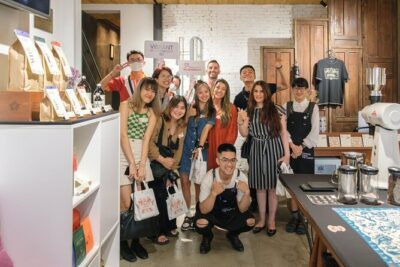
Fun & Easy Vietnamese Coffee Workshop in Hồ Chí Minh City
Read our review →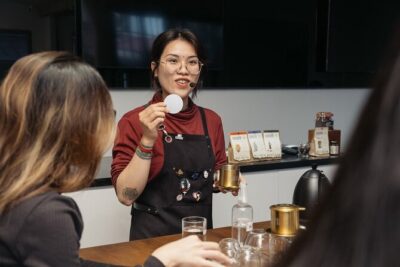
Vietnamese Coffee & Culture Exploration in Hồ Chí Minh City
Read our review →
Decadent Vietnamese “Egg Coffee” Workshop in Hồ Chí Minh City
Read our review →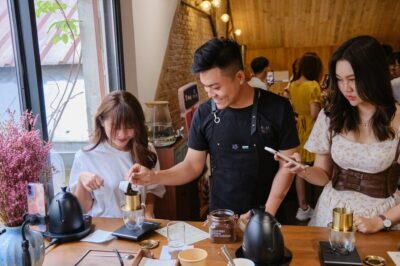

Techniques & Secrets Behind the Famed Vietnamese Egg Coffee
Read our review →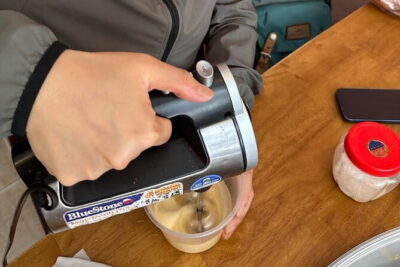
1 hour Egg Coffee Cooking Class with Snack and Local Instructor
Read our review →
Saigon Unseen: Culture, Coffee, Hidden Spots Motorbike Adventure
Read our review →
Vietnam Flavour: Market-to-Table & The Art of Egg Coffee
Read our review →Browse the lists this tour appears in