
Reviewed · VIETNAMESE COFFEE TOURS
Vietnamese Coffee & Culture Exploration in Hồ Chí Minh City
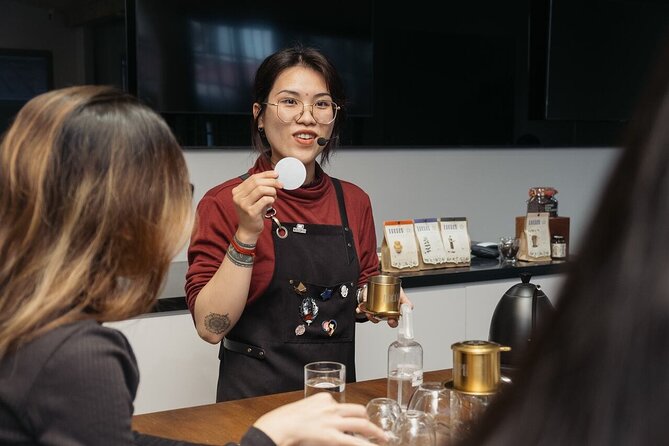
Vietnamese coffee is more than a strong drink topped with condensed milk. At Lacàph Coffee, you’ll roast a small batch of beans, brew two blends, and learn how geography and local customs shaped the cup in front of you. Guides such as Sui, Abby, Vi, Joey, and Tri lead the sessions, depending on the date.
I like the hands-on roasting and brewing, which gives this experience more substance than a standard café tasting. I also like the short morning schedule, with coffee, sweets, and cultural films packed into two and a half hours, leaving your afternoon open.
The main thing to consider is the caffeine. You may taste several preparations, and one participant advised arriving un-caffeinated because the coffee adds up. If you are hoping specifically to make egg coffee, that is not guaranteed, so check your expectations before booking.
In This Review
- Key points to know before you book
- Why this class gives coffee a local story
- Starting with a sensory coffee experiment
- Roasting the Lacàph Phin Blend
- Brewing two blends with a Vietnamese phin
- Tasting coffee with sweet snacks
- Connecting Hanoi, Đà Lạt, and Chợ Lớn
- The guides make the difference
- Is $29.68 good value?
- Timing, meeting point, and the rest of your day
- Who should book this experience?
- Six practical questions to settle before booking
- Should you book the Lacàph coffee class?
- FAQ
- Where does the Vietnamese coffee experience begin?
- What time does the experience start?
- How long does the coffee class last?
- Where does the experience end?
- How many people can join the activity?
- Can I cancel for a full refund?
Key points to know before you book
- Roast a small batch of Phin Blend: Hear the beans crack, smell the changing aroma, and see how roasting affects the finished drink.
- Brew two Lacàph blends: The session is practical, not just a talk, with guided preparation and tasting.
- Taste coffee with local character: Phin coffee, salted coffee, condensed-milk iced coffee, and other styles may feature in the lesson.
- Watch Vietnam through coffee: Short films connect coffee to Hanoi, Đà Lạt, and Chợ Lớn in Ho Chi Minh City.
- Enjoy a comfortable District 1 setting: The class takes place upstairs at Lacàph Coffee, with light snacks such as cocoa cashews.
- Finish before the day gets busy: The 10:00 am start and roughly 2.5-hour length fit neatly beside sightseeing plans.
Why this class gives coffee a local story
You can order Vietnamese coffee on almost any street in Ho Chi Minh City. What you cannot always see is the work behind it: the bean, the roast, the brewing method, and the habits that turn coffee into part of daily life.
That is the useful idea behind this class. Instead of simply handing you a sweet iced coffee, Lacàph explains how Vietnamese coffee is made and why different cups taste so different. You get context, but you also get something to do with your hands.
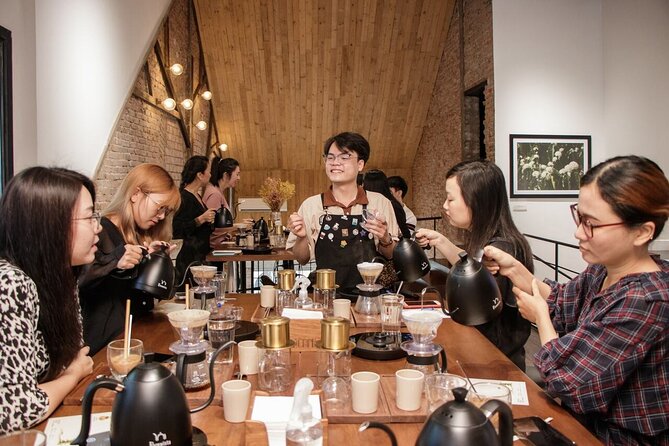
The setting is Lacàph Coffee Experiences Space, upstairs at 220 Nguyễn Công Trứ in District 1. It is near public transportation, and the group can include up to 18 people. That is large enough for a lively session but still small enough for a guided class rather than a stage presentation.
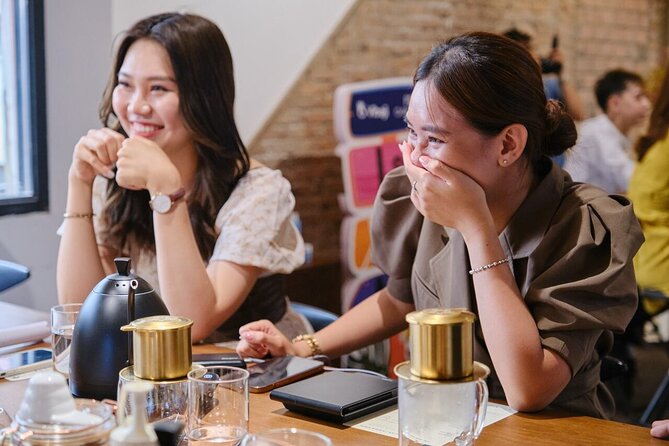
I like that balance. A coffee lesson should have enough people for questions and conversation, yet not feel like a lecture hall. With a maximum of 18, your experience may depend slightly on the group size and the guide leading that day.
More Vietnamese coffee stops in Ho Chi Minh City:
- Fun & Easy Vietnamese Coffee Workshop in Hồ Chí Minh City
★ 5.0 · 293 reviews - Decadent Vietnamese “Egg Coffee” Workshop in Hồ Chí Minh City
★ 5.0 · 150 reviews - Ho Chi Minh City: Fun and Easy Coffee Workshop for Beginners
★ 4.9 · 121 reviews
Starting with a sensory coffee experiment
The session begins with a multi-sensory experiment. You are asked to pay attention to more than taste, including smell, sound, and the physical changes that happen as coffee is prepared.
That opening matters because coffee can seem simple when it arrives in a glass. The sensory exercise gets you thinking about aroma and texture before you begin brewing. It also gives the guide a natural way to explain why the same bean can produce a different cup under another method.
This is not a formal barista certification course. You are not signing up for a technical training program with lengthy measurements and advanced equipment. Instead, you get an accessible introduction that helps you understand what you are drinking for the rest of your stay.
The class works especially well if you normally order cà phê sữa đá without asking how it is made. You will leave with a better sense of how the slow drip, condensed milk, ice, roast, and blend all affect the final drink.
Roasting the Lacàph Phin Blend
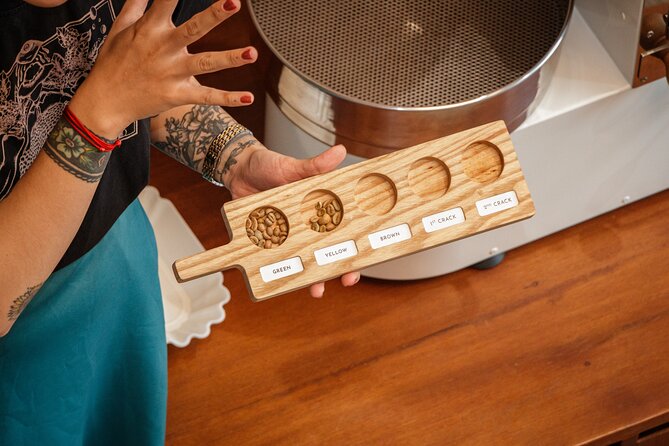
One of the most memorable parts is the small-batch roasting of the Lacàph Phin Blend. You get to hear the coffee beans crack as they roast and smell the aroma shift during the process.
That sound is not just a theatrical touch. It shows you that coffee beans are changing in front of you, moving from a raw product toward the dark, fragrant beans used in the phin filter. The guide connects the roasting step to the taste you later find in the cup.
Because this is a small batch, do not expect a full commercial roasting tour. You are seeing a compact demonstration tied directly to the coffee you drink during the class. For most people, that is enough. It keeps the focus on understanding rather than on machinery.
I particularly like this part for first-time coffee learners. A tasting alone can leave you with a list of flavors but little sense of how they got there. Hearing and smelling the roast gives the process a physical quality you can remember.
Brewing two blends with a Vietnamese phin
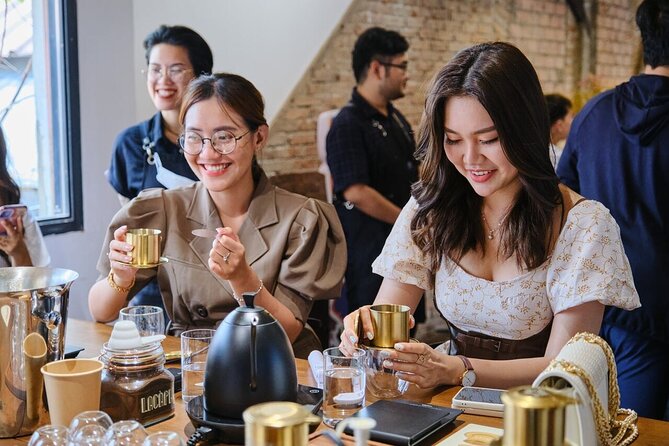
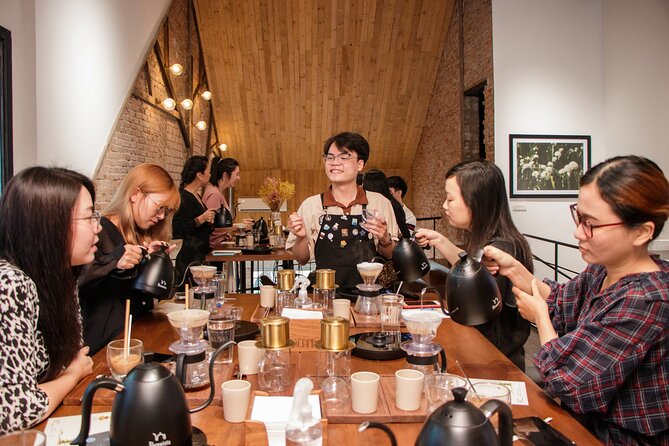
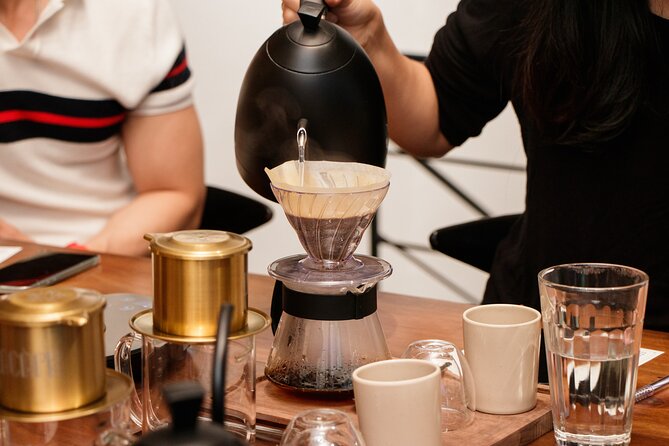
The team guides you through brewing two Lacàph coffee blends. This is where the class moves from explanation to practice.
The phin is central to Vietnamese coffee culture. It is a small metal filter that rests over your glass or cup, allowing water to pass slowly through the grounds. The pace is part of the experience. Vietnamese coffee is not built around rushing from machine to counter.
You will see how the brewing method shapes the drink and how different blends create different results. The class may also include pour-over coffee, phin coffee, and salted coffee, based on the preparations described by participants who attended.
The practical value is clear. After the class, you can recognize the equipment and method when you see a phin on a café table. You may also have a better idea of what to order, especially if the menu offers several styles without much explanation.
Do not expect to prepare every famous Vietnamese coffee drink in one morning. One person specifically hoped to make egg coffee but found it was not part of that session. Egg coffee, salted coffee, and condensed-milk iced coffee may be discussed or tasted, but the exact menu can vary.
A completely different kind of day out of Ho Chi Minh City:
- Cu Chi Tunnels Tour from HCM City – Morning or Afternoon
★ 5.0 · 15,833 reviews - From HCM City: Mekong Delta Tour with Sampan Journey
★ 4.5 · 13,132 reviews - Ho Chi Minh City Street Food Tour & Sightseeing By Motorbike
★ 5.0 · 9,413 reviews - HCM: Cu Chi Tunnels-Tapioca Small Group Tour Morning or Afternoon
★ 5.0 · 7,485 reviews
Tasting coffee with sweet snacks
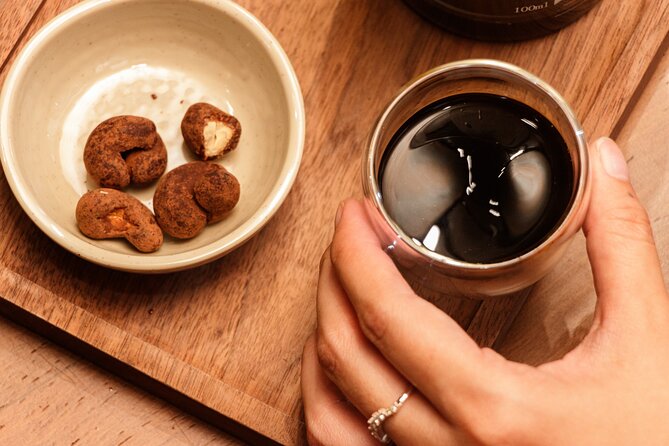
Coffee is served alongside light snacks, which help balance the stronger drinks. Cocoa cashews are one example, and they were singled out as a favorite pairing.
That pairing is more than a small extra. Vietnamese coffee can be bold, bitter, sweet, creamy, or salty, depending on the blend and recipe. A bite of something sweet or nutty gives your palate a break and makes the tasting easier to follow.
You should expect several coffee samples rather than one ordinary cup. The exact lineup is not fixed in the information provided, but the experience covers different blends and preparations. You may encounter phin coffee, salted coffee, and the famous iced coffee with condensed milk.
This is also why I would avoid drinking coffee immediately before the class. The experience is designed around tasting, not simply consuming a single morning drink. If caffeine affects you strongly, the quantity is worth considering when you decide whether this class fits your plans.
Connecting Hanoi, Đà Lạt, and Chợ Lớn
Coffee is used here as a way to explain place. Short in-house documentaries take you from Hanoi to Đà Lạt and then to Chợ Lớn in Ho Chi Minh City.
That regional range helps prevent the class from becoming a narrow lesson about one café or one brewing tool. Hanoi, Đà Lạt, and Chợ Lớn each bring different settings and cultural references into the story. The films give you a visual break between tastings while showing how coffee fits into daily life across Vietnam.
The material also places the drink in a broader Vietnamese setting. You are not only learning which coffee tastes strong or sweet. You are seeing how the drink relates to people, cities, and local habits.
I would not book this expecting a full city tour or a long documentary screening. The films are part of a two-hour coffee class, so they support the tasting rather than replace it. Still, they add useful context for anyone who wants more than a quick café stop.
The guides make the difference
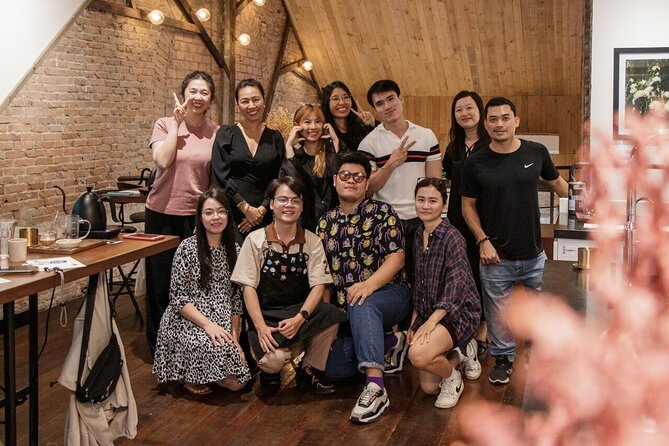
The teaching style is one of the strongest reasons to consider this experience. The class depends on a Coffee Guide who can explain the details without making the subject feel stiff.
Sui has been praised for being passionate and clear, with a teaching style that helps the class feel easy to follow. Abby has led sessions covering Vietnam’s coffee origins, egg coffee, salted coffee, condensed-milk iced coffee, pour-over methods, and phin brewing. Vi has been described as friendly and well informed, while Joey has been praised for combining instruction with good conversation. Tri has also appeared as part of the teaching team.
You may not get a choice of guide, and the lineup can change. Still, the named instructors give you a sense of the format: personal stories, questions, demonstrations, and conversation rather than a memorized script delivered without pause.
The group size matters here. With up to 18 people, you should have a reasonable chance to see the brewing and ask questions. If the class fills, the most hands-on moments may feel less personal than a private lesson. That is the tradeoff for a price of $29.68 per person.
Is $29.68 good value?
At $29.68, this is not the cheapest way to drink Vietnamese coffee. A street café can serve you a phin coffee or iced coffee for a small fraction of the cost.
The comparison is not quite fair, though. You are paying for a guided class, two blends, roasting, cultural films, several tastes, snacks, and the chance to ask questions. You also finish with a better understanding of what you are ordering elsewhere.
I see this as good value if coffee is a real interest or if you want a gentle cultural activity near the start of your Ho Chi Minh City stay. It gives you a framework for the cafés, markets, and coffee menus you will encounter later.
The value is weaker if you only want a drink, if you dislike structured activities, or if you expect a full meal or an advanced coffee course. The class is short and focused. That focus is an advantage for most visitors, but it limits how much it can cover.
A tote bag may also be included, as one session participant received one. Since it is not listed as a guaranteed feature, treat it as a possible extra rather than part of the price calculation.
Timing, meeting point, and the rest of your day
The class begins at 10:00 am and lasts about two hours and 30 minutes. It ends back at Lacàph Coffee, so you do not need to arrange a separate return transfer.
The morning timing is practical. You can start with coffee, finish around lunchtime, and still have most of the day for the War Remnants Museum, the Central Post Office, Chợ Lớn, shopping, or another activity. Since the meeting point is in District 1 and near public transportation, it can fit neatly into a city day.
Give yourself enough time to find the upstairs coffee space at 220 Nguyễn Công Trứ. The experience starts at the café, not at a major landmark with an obvious tour desk. Your mobile ticket and booking confirmation should be ready when you arrive.
The maximum group size is 18. That is worth checking if you prefer intimate instruction, but it also means the activity is not limited to a private party. You should expect to share the table and tasting with other people.
Who should book this experience?
I would recommend it most strongly to:
- Coffee drinkers who want to understand Vietnamese blends and brewing methods
- First-time visitors who want a low-pressure cultural activity
- Couples, families, and older children who can follow a two-hour class
- People staying in or visiting District 1
- Anyone who wants a useful morning plan without giving up an entire day
It is also a good choice for someone who has already tried Vietnamese coffee but wants to compare styles. The class gives you vocabulary and background that can make later café visits more rewarding.
I would be more cautious if you are highly sensitive to caffeine, want a private lesson, or have your heart set on making egg coffee. You may taste or discuss several styles, but the exact coffee lineup can vary.
Six practical questions to settle before booking
The activity has a strong overall rating, but your expectations should remain specific. It is a guided introduction, not an all-day tour of coffee farms and not a guaranteed lesson in every famous recipe.
Free cancellation is available if you cancel at least 24 hours before the 10:00 am start time. Cancellations made inside that window are not refunded, and last-minute changes are not accepted. Cut-off times use local time in Ho Chi Minh City.
Confirmation arrives at booking, and the experience uses a mobile ticket. That makes the entry process simple, but you still need to arrive at the correct upstairs space and allow time to get there.
Should you book the Lacàph coffee class?
Book it if you want to understand why Vietnamese coffee tastes the way it does, not just photograph a cup of it. The roasting, phin brewing, two blends, snack pairings, and short films give the morning enough variety to feel like a real activity.
I especially like the balance of instruction and tasting. You learn about coffee origins, see beans roast, brew with guidance, and then connect the drink to Hanoi, Đà Lạt, and Chợ Lớn. The compact schedule also protects the rest of your day.
Skip it if you are looking only for the cheapest coffee or if you need a guaranteed egg coffee workshop. For everyone else, the $29.68 price buys a useful introduction to one of Vietnam’s most distinctive everyday pleasures, in a comfortable District 1 setting.
FAQ
Where does the Vietnamese coffee experience begin?
It begins at Lacàph Coffee Experiences Space upstairs at 220 Nguyễn Công Trứ, Phường Nguyễn Thái Bình, District 1, Ho Chi Minh City, Vietnam.
What time does the experience start?
The start time is 10:00 am.
How long does the coffee class last?
The activity lasts approximately two hours and 30 minutes.
Where does the experience end?
It ends back at the Lacàph Coffee meeting point.
How many people can join the activity?
The maximum group size is 18 travelers.
Can I cancel for a full refund?
Yes. You can cancel at least 24 hours before the experience start time for a full refund. Cancellations or changes made less than 24 hours before the start are not accepted for a refund.
Just added around Ho Chi Minh City
- Ho Chi Minh city Street Food by scooter tour | female driver★ 5.0 · 3 reviews
- Vung Tau City Shore Excursion from Phu My Port★ 5.0 · 3 reviews
- Ho Chi Minh City: Full Long Tan Battlefield Tour★ 4.7 · 3 reviews
- Ride Saigon: Private Half-Day Motorbike Adventure★ 5.0 · 3 reviews
- Ho Chi Minh City: Guided Food Tour by Scooter★ 5.0 · 3 reviews
- PHU MY SHORE EXCURSION: Saigon Past and Present Tour★ 5.0 · 3 reviews
- Ho Chi Minh: Cai Be-Mekong Delta Local Village Full Day Tour★ 3.7 · 3 reviews
- 3D2N Mekong Delta Tour: Cycling – Kayaking – Floating Market★ 5.0 · 3 reviews
Vietnamese Coffee Tours, compared.
Fun & Easy Vietnamese Coffee Workshop in Hồ Chí Minh City
Read our review →
Decadent Vietnamese “Egg Coffee” Workshop in Hồ Chí Minh City
Read our review →

Techniques & Secrets Behind the Famed Vietnamese Egg Coffee
Read our review →
1 hour Egg Coffee Cooking Class with Snack and Local Instructor
Read our review →
Saigon Unseen: Culture, Coffee, Hidden Spots Motorbike Adventure
Read our review →
Vietnam Flavour: Market-to-Table & The Art of Egg Coffee
Read our review →
Coffee Workshop in Ho Chi Minh City: Discover the art of coffee
Read our review →Browse the lists this tour appears in