
Reviewed · CU CHI TUNNELS TOURS
Vung Tau/Ho Chi Minh: Nui Dat, Long Tan, Long Phuoc tunnel
The most moving part of this half-day tour is the Long Tan Cross, a quiet memorial to 18 Australian soldiers killed in the 1966 battle. You also visit Nui Dat, the former Australian base, and enter the Long Phuoc Tunnel network, where the war feels less like a chapter in a book and more like something shaped into the soil beneath your feet.
I like the way this tour connects military history with local life, especially through the Nui Dat Kindergarten, built by Australian veterans for village children. I also like the guides: Tony, Joe, Binh, and others are praised for clear English, warmth, humor, and careful explanations. The main drawback is that the sites are spread around the countryside, and the tunnel visit may feel tight or physically demanding if you dislike enclosed spaces.
In This Review
- Key points to know before you book
- Why this Vung Tau war history tour matters
- Starting at Nui Dat, the former Australian base
- The Nui Dat Kindergarten and the story after the war
- Paying respects at the Long Tan Cross
- Entering the Long Phuoc Tunnel network
- Horseshoe Hill and the fire support base
- Transport, guides, and the pace of the morning
- Is $75 a fair price?
- Who should book this experience?
- Should you book the Nui Dat and Long Tan tour?
- FAQ
- Where does the tour start?
- How long is the experience?
- Which sites are included?
- Is an English-speaking guide included?
- Are entrance fees and permits included?
- What should I bring?
- Can I cancel for a full refund?
Key points to know before you book
- Long Tan Cross: Pay respects at the rebuilt memorial for 18 Australian soldiers killed in 1966.
- Nui Dat military sites: See former bunkers, the Kangaroo pad, SAS Hill, Luscombe airfield, and the battalion flagpole.
- Nui Dat Kindergarten: Visit a school built in 2002 by Australian veterans for children in the local village.
- Long Phuoc Tunnel: Enter part of an underground tunnel network linked to the Viet Cong.
- Horseshoe Hill: Learn how this former fire support base was used during the war.
- Good guide support: Tony, Joe, Binh, and other English-speaking guides explain both Australian and Vietnamese perspectives.
Why this Vung Tau war history tour matters
This is not a general sightseeing trip with a war-themed stop added on. The whole morning follows the former Australian military presence around Ba Ria and Vung Tau, making it a useful choice if you want to understand what Australian soldiers were doing in this part of Vietnam.
The tour visits places linked to the 1966 Battle of Long Tan, the former Nui Dat base, and the tunnel system at Long Phuoc. You move between memorials, old military positions, a local kindergarten, and rural sites. That mixture gives the tour more range than a visit to one museum.
I find the human scale particularly effective. The Long Tan Cross is tied to a specific battle and a specific loss. The kindergarten shifts your attention to what remained after the fighting. The tunnels show how local forces lived and operated underground. Together, these places help you see the war as a struggle that affected soldiers, villagers, and children over many years.
Your guide is important here. Tony is often singled out for his clear English, good humor, and strong command of the campaign. Joe is described as gentle and eager to make the day memorable, while Binh is praised for his guiding. The exact guide depends on the day, but the experience is designed around an English-speaking local guide rather than a simple driver and transfer.
More ways to visit the Cu Chi tunnels:
- Cu Chi Tunnels Tour from HCM City – Morning or Afternoon
★ 5.0 · 15,833 reviews - HCM: Cu Chi Tunnels-Tapioca Small Group Tour Morning or Afternoon
★ 5.0 · 7,485 reviews - Cu Chi Tunnels and Mekong Delta Signature Tour
★ 5.0 · 7,328 reviews
Starting at Nui Dat, the former Australian base
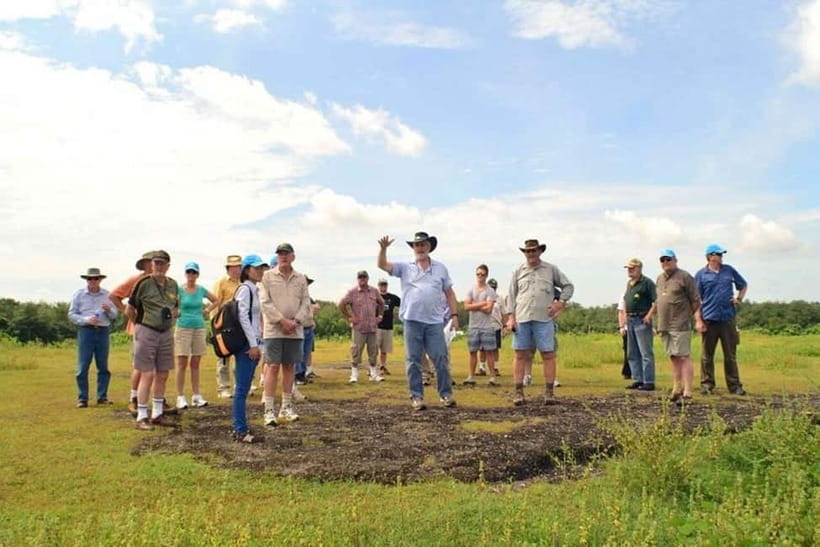
The first major part of the route takes you to Hoa Long village, also known as VC Home, and the former Nui Dat base. Australian soldiers established the base in 1966, and the area now contains reminders of the military setup rather than a fully preserved camp.
You may see old bunkers, the Kangaroo pad, SAS Hill, Luscombe airfield, and the battalion flagpole. These names can sound abstract until you are on the ground and hear how each location fitted into the base and its defenses.
This section rewards a guide who can explain the military layout in plain language. Tony, for example, is praised for answering questions and explaining the campaign in a way that is easy to follow. That matters because the physical remains alone are not always self-explanatory. A bunker, patch of ground, or former airfield needs context before it becomes meaningful.
Do not expect a polished museum complex at Nui Dat. The appeal is the setting and the connection to the original military site. Some visitors may find the remains modest, but that is also part of the point. You are seeing fragments in the place where events happened, not a recreated display behind glass.
If you have a strong interest in Australian military history, allow yourself time to listen closely here. The guide can explain the role of the base and link it to the later visit to Long Tan. If your interest is lighter, the stop still provides useful background before the memorial.
The Nui Dat Kindergarten and the story after the war
The Nui Dat Kindergarten adds a welcome change in tone. Australian veterans built the school in 2002 for children in the village, creating a direct link between the former military presence and a later effort to support local families.
I like this stop because it keeps the tour from becoming only a sequence of battle sites. War tours can sometimes focus so heavily on troop movements and equipment that the local population fades from view. Here, the kindergarten brings village life back into the story.
The visit is not presented as a large attraction, and you should not expect a long formal program. Its value comes from what it represents. A base once connected with conflict is now associated with a place for children to learn and gather.
This is also a useful moment to ask your guide about the relationship between Australian veterans and the local community. The guides are encouraged to discuss the war with respect for both sides, and that approach gives the tour a more thoughtful tone than a one-sided battlefield account.
Paying respects at the Long Tan Cross
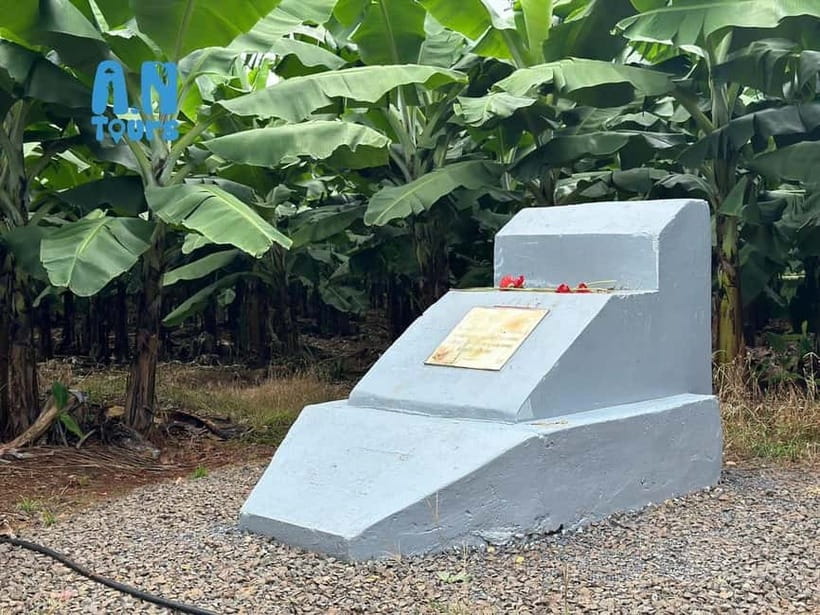
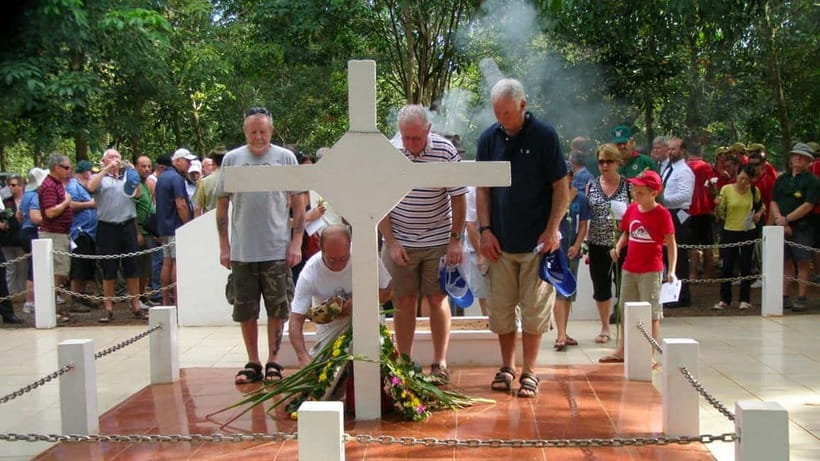
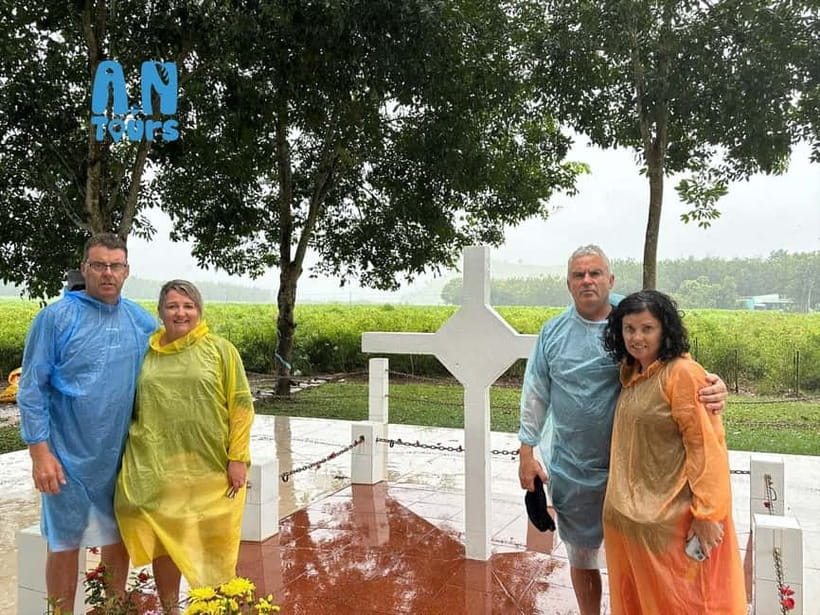
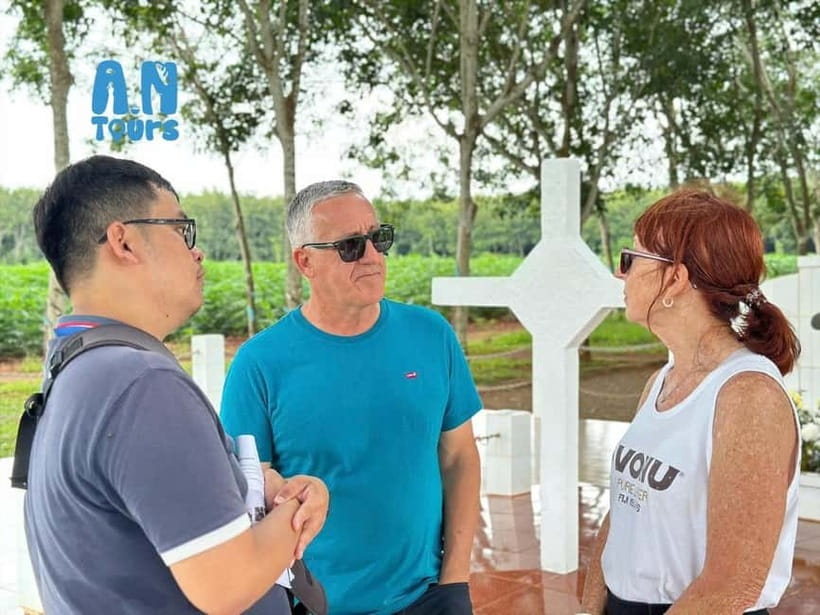
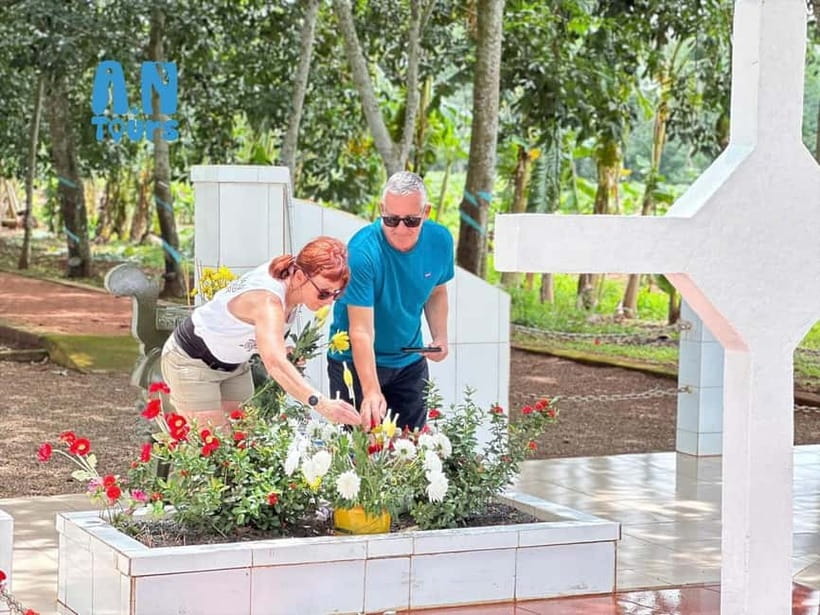
The Long Tan Cross is the emotional center of the excursion. It marks the memory of 18 Australian soldiers who died in the Battle of Long Tan in 1966. The cross was rebuilt by Australian veterans, and a flower for the memorial is included in the tour.
Expect a quiet visit rather than a busy attraction. The purpose is remembrance, so the guide will help you understand what happened and why the site remains important to Australian visitors. You have a chance to pause, place the flower, and pay your respects.
The emotional weight can be strong, especially if you have a family or military connection to Australia. One person described the tour as very emotional, while another called it a moving way to spend a morning. You do not need a personal connection to find the stop affecting. A memorial becomes more powerful when you know the basic story behind it, and the guide provides that context.
This is a good place to keep your expectations respectful. The cross is not a large visitor center, and there may not be extensive signage or displays. The experience comes from the site, the story, and the chance to stop in silence.
The memorial is also where the tour’s balanced approach matters most. You are visiting an Australian memorial in Vietnam, but the wider tour does not treat the war as a simple tale of heroes and villains. Guides explain the role of Australian soldiers while also discussing the campaign and the Vietnamese side of the conflict.
More Vung Tau trips:
- Vung Tau Essential: Beach, Christ Statue & Colonial Heritage
★ 5.0 · 284 reviews - Long Tan, Nui Dat & Vung Tau Highlights – 1 day Private Tour
★ 5.0 · 82 reviews - Vung Tau Full-Day Tour with Beach, Christ Statue & White Palace
★ 5.0 · 51 reviews - Vung Tau City Private Tour Full Day
★ 4.5 · 21 reviews
Entering the Long Phuoc Tunnel network
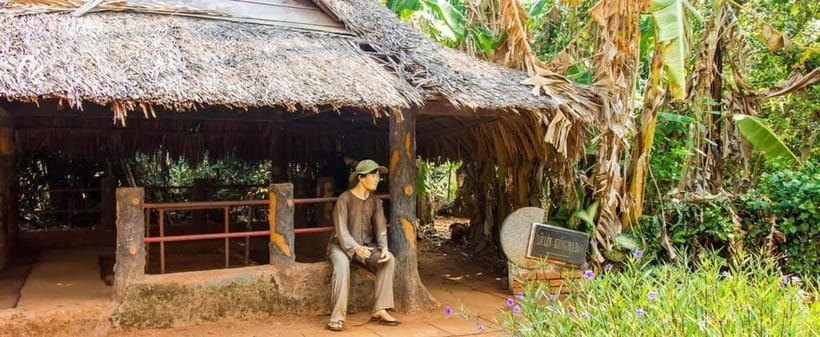
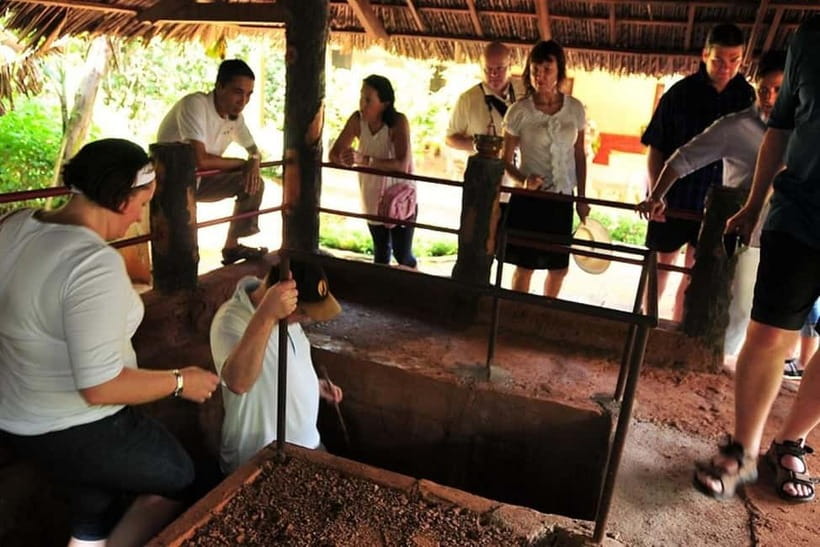
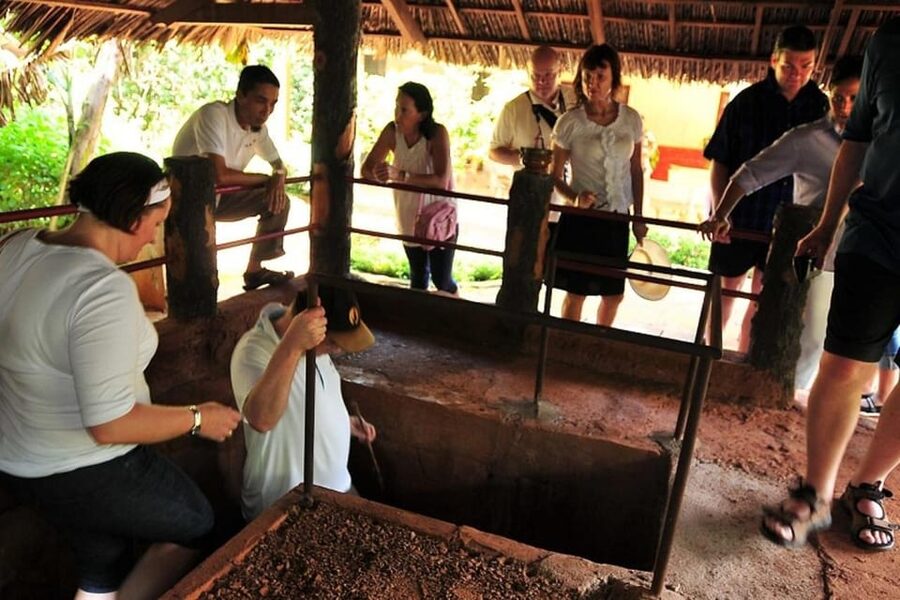
The Long Phuoc Tunnel is the most hands-on stop. It is part of a network of underground passages associated with local Viet Cong activity. You explore a section of the tunnels and get a sense of how underground movement and shelter shaped the conflict.
The word tunnel covers a lot of ground here. This is not simply a dark corridor with a few props. The visit is intended to show how extensive underground networks could support military activity and protect people from bombardment.
You should wear comfortable shoes, as advised for the tour. The ground may be uneven, and the enclosed setting is not ideal for everyone. If you dislike tight spaces, ask your guide about the section you will visit before entering. The tour data does not specify the length or exact size of the passage open to visitors, so it is best not to assume that every part of the network is accessible.
For many people, the tunnel is the most memorable physical experience of the day. At Nui Dat and the Long Tan Cross, you listen and look. In the tunnel, you use your body to understand the conditions. Even a short passage can make the war feel more immediate.
The stop also helps explain why the conflict was so hard to fight. Above ground, you see roads, fields, and former military positions. Below ground, you see a very different system of movement and shelter. That contrast is one of the tour’s strongest teaching tools.
Horseshoe Hill and the fire support base
The route also includes Horseshoe Hill, known as a former fire support base. This stop helps explain how artillery support fitted into military operations around the area.
As with the other military remains, Horseshoe Hill may not look dramatic at first glance. Its importance depends on the explanation. Your guide can connect the hill to the wider Australian deployment and show how a fire support base functioned during the war.
I would treat this as a context stop rather than a major sightseeing viewpoint. The tour is about understanding the locations and their roles, not collecting grand photo stops. If you prefer authentic sites with limited restoration, you will likely appreciate that quality. If you want a large museum, detailed signs, and preserved buildings, the experience may feel spare.
The stop also adds variety to the route. Nui Dat shows the base, Long Tan focuses on remembrance, the tunnels show underground warfare, and Horseshoe Hill helps explain artillery support. Each location answers a different question about the conflict.
Transport, guides, and the pace of the morning
The tour includes transfers, drinking water, entrance fees, travel permits, and a local English-speaking guide. The vehicle used by one group was described as clean, spacious, comfortable, and air-conditioned, with a courteous driver. That makes a real difference in the heat and on a route that links several rural sites.
The tour is sold as a half-day experience from Vung Tau or Ba Ria. Pick-up details deserve a careful check before you reserve. One person found the pick-up point and private-tour arrangement unclear, while another group joined from Ho Tram. Ask the provider to confirm your exact collection point, vehicle arrangement, and whether the booking is private for your date.
Guides such as Tony and Joe are a major part of the value. Tony is praised for his excellent English, humor, and ability to answer questions. Joe is described as caring and keen to make the day memorable. Binh is also praised for his guiding, and one guide even impressed a group with a good singing voice.
Those details matter because this is an explanation-heavy tour. You are not simply being driven from one site to the next. A good guide turns a bunker, flagpole, or hill into part of a connected story. The best approach is to bring questions and allow the guide to explain beyond the basic schedule.
The tour can also be adjusted in some situations. One booking involving two motorbikes was customized around timing and site choices. Do not assume every reservation includes that flexibility, but it is worth asking if you have a special transport need or want to make the most of a short visit.
Is $75 a fair price?
At $75 per person, this is not the cheapest way to see the countryside around Vung Tau. It is also not simply a taxi ride with a few stops. The price includes transport, an English-speaking guide, permits, entrance fees, water, and a flower for the Long Tan memorial.
That package makes the cost easier to justify, especially if you are interested in the history and want explanations at each site. A self-guided visit could cost less, but you would lose the military context and may struggle to understand what remains of Nui Dat, Horseshoe Hill, and the surrounding base areas.
The value is strongest for a small group or private booking, if that is confirmed for your date. Several people found the vehicle comfortable and the staff attentive, and one described the experience as exceptional value. Still, confirm the arrangement before paying, since the pick-up and private nature were not clear to everyone.
You should also budget for any personal expenses and a Vietnam holiday surcharge, which are not included. The tour does include the practical basics, so you do not need to pay separately for the listed permits, entrances, water, or memorial flower.
Who should book this experience?
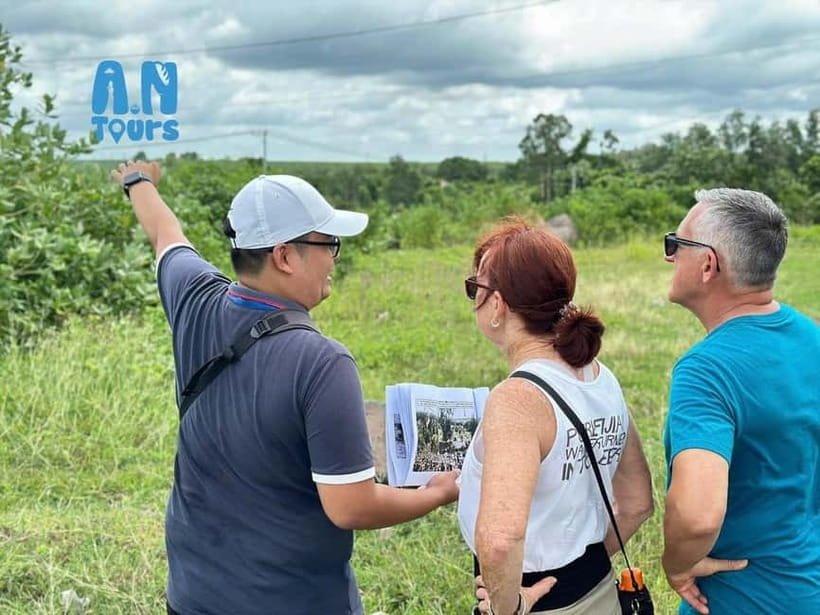
I would recommend this tour to you if you have an interest in the Vietnam War, Australian military history, memorials, or the way wartime places have changed. It suits people who want a focused half-day away from Vung Tau’s beaches and city sights.
It is also a good fit for families with older children who can engage with serious history. The kindergarten provides a more accessible part of the story, while the memorial and tunnels require a respectful attitude.
You may want a different outing if you are looking mainly for scenery, food, shopping, or relaxed sightseeing. The tour visits rural and military sites, and much of the enjoyment depends on listening to the guide. The Long Phuoc Tunnel may also be uncomfortable if you are uneasy in enclosed spaces.
Wear comfortable shoes and bring a thoughtful attitude. The Long Tan Cross is a memorial, not just a photo stop, and the tour works best when you allow time for the difficult parts of the story.
Should you book the Nui Dat and Long Tan tour?
Book it if you want a serious, personal look at the Australian role in the Vietnam War and prefer real locations to a standard city excursion. The combination of Nui Dat, the Long Tan Cross, Long Phuoc Tunnel, Horseshoe Hill, and the kindergarten gives you a fuller picture than any single stop could provide.
The strongest reasons to choose it are the guides, the respectful tone, and the chance to see military sites in their actual setting. The main reasons to hesitate are the modest remains, the unclear pick-up details for some bookings, and the physical demands of the tunnel.
Before you reserve, confirm your pick-up point, vehicle arrangement, and whether the tour is private. If those details suit you, $75 is a reasonable price for a guided half-day that includes the essential transport and admission costs.
FAQ
Where does the tour start?
The tour is offered from Vung Tau or Ba Ria. Pick-up details should be confirmed with the provider before booking, especially if you are staying outside those areas.
How long is the experience?
It is described as a half-day tour.
Which sites are included?
The route includes Nui Dat, the Nui Dat Kindergarten, the Long Tan Cross, Long Phuoc Tunnel, and Horseshoe Hill, also called the Horse Shoe Fire Support Base.
Is an English-speaking guide included?
Yes. A local English-speaking guide is included. Guides named in the experience information include Tony, Joe, and Binh, depending on the booking.
Are entrance fees and permits included?
Yes. Travel permits and entrance fees are included in the tour price.
What should I bring?
Bring comfortable shoes. Drinking water is provided.
Can I cancel for a full refund?
Yes. You can cancel up to 24 hours in advance for a full refund.
Just added around Ho Chi Minh City
- Ho Chi Minh city Street Food by scooter tour | female driver★ 5.0 · 3 reviews
- Vung Tau City Shore Excursion from Phu My Port★ 5.0 · 3 reviews
- Ho Chi Minh City: Full Long Tan Battlefield Tour★ 4.7 · 3 reviews
- Ride Saigon: Private Half-Day Motorbike Adventure★ 5.0 · 3 reviews
- Ho Chi Minh City: Guided Food Tour by Scooter★ 5.0 · 3 reviews
- PHU MY SHORE EXCURSION: Saigon Past and Present Tour★ 5.0 · 3 reviews
- Ho Chi Minh: Cai Be-Mekong Delta Local Village Full Day Tour★ 3.7 · 3 reviews
- 3D2N Mekong Delta Tour: Cycling – Kayaking – Floating Market★ 5.0 · 3 reviews
Cu Chi Tunnels Tours, compared.
Cu Chi Tunnels Tour from HCM City – Morning or Afternoon
Read our review →
Cu Chi Tunnels-Tapioca Small Group Tour Morning or Afternoon
Read our review →
Cu Chi Tunnels and Mekong Delta Signature Tour
Read our review →
Cu Chi Tunnels and Mekong Delta Full Day Tour – Max 12
Read our review →
Full-Day Cu Chi Tunnels and Mekong Delta Tour
Read our review →
Cu Chi Luxury Group Tour – Tapioca and Cake Half Day
Read our review →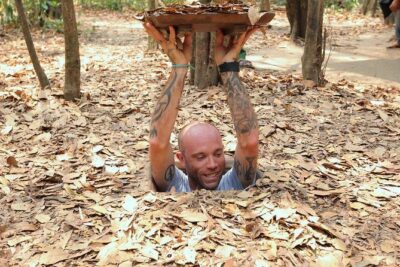
CuChi Tunnels&Mekong Delta-Boat,TukTuk,Coconut Village SmallGroup
Read our review →Browse the lists this tour appears in