
Reviewed · HISTORICAL TOURS
Remembering Long Tan- Nui Dat Battle : A Tour of Historic Sites
The most striking part of this tour is that it takes you beyond a museum display and into the former battle area itself. From Ho Chi Minh City, you follow old military maps around Nui Dat, Long Tan, Horseshoe Hill, and the Long Phuoc Tunnels, with Dingo Chien explaining the Australian and Vietnamese sides of the conflict. I like the clear focus on real places, and I like that lunch, water, transport, and hotel pickup are included. The main drawback is the long drive, with about four hours spent on the road.
I especially like the attention to small details, such as the 161 Kiwi artillery position, Kangaroo Pad, SAS Hill, and Luscombe airfield. Dingo is also praised for his strong English, good humor, command of Australian military terms, and detailed grasp of 6 RAR personnel, weapons, and tactics. Still, this is a serious military-history day, not a relaxed sightseeing outing, and the outdoor stops may feel brief if you want long periods at each site.
In This Review
- Key points to know before booking
- Why this Long Tan tour matters
- Leaving Ho Chi Minh City at 7:30 a.m.
- Reading the ground around Nui Dat
- Horseshoe Hill and the former Digger positions
- The Long Phuoc Tunnels and the hidden work of war
- Dingo Chien as your guide
- What the $107.10 price includes
- Who should book this experience?
- Practical details for a smoother day
- Should you book the Long Tan and Nui Dat tour?
- FAQ
- How long does the Long Tan and Nui Dat tour take?
- What time does hotel pickup begin?
- Is this a private tour?
- Which historic sites are included?
- Is lunch included?
- Can I cancel for a full refund?
Key points to know before booking
- Follow the Nui Dat military map: The tour links several former base positions rather than treating Long Tan as one isolated memorial.
- Meet guide Dingo Chien: He explains both sides of the conflict and is especially strong on Australian military history and language.
- See more than the Long Tan memorial: The route includes 161 Kiwi artillery, Kangaroo Pad, SAS Hill, Luscombe airfield, Luscombe Bowl, and the 6 RAR flagpole.
- Visit Horseshoe Hill: This was another base where Australian soldiers, known as Diggers, were stationed.
- Enter the Long Phuoc Tunnels: These tunnels were used to store ammunition, adding a different view of how the conflict was supported.
- Expect a private seven-hour outing: Hotel pickup begins around 7:30 a.m., with lunch, bottled water, and an air-conditioned vehicle included.
Why this Long Tan tour matters
Long Tan is not simply a name on a war memorial. This tour helps you connect the battle to the wider military network around Nui Dat and Ba Ria-Vung Tau Province. You move between artillery positions, airfield ground, former base areas, hills, and tunnel sites.
That wider view is useful because battles are rarely confined to one patch of ground. The stops show how artillery, air support, patrol bases, storage areas, and command positions worked together. You are not just looking at a monument and then returning to the city. You are trying to understand how the area functioned during the conflict.
The experience is also valuable for anyone with an Australian or New Zealand connection. The visit includes the 161 Kiwi artillery position, and the guide can place Australian units and military terms into context. The focus is not limited to one national story. Dingo Chien explains both sides of the conflict, which gives the day a more balanced tone.
You should come ready for a history lesson in the field. Some locations may be easier to picture with the help of the maps and explanations than through visible remains alone. That is normal for a former military area. The value comes from linking the ground beneath you with the events that took place there.
More history walks in Ho Chi Minh City:
- From Ho Chi Minh: Cu Chi Tunnels Half-Day History Tour with Guide
★ 5.0 · 480 reviews - Saigon Afternoon City Historical Scooter Tour |Opt: Ao Dai Riders
★ 5.0 · 466 reviews - Saigon Unseen, History, & Hidden Gems Sightseeing Motorbike Tour
★ 5.0 · 416 reviews
Leaving Ho Chi Minh City at 7:30 a.m.
The day begins with pickup from your hotel in Saigon at about 7:30 a.m. That early start matters. You have a substantial journey to Ba Ria-Vung Tau Province, followed by several historic sites, so a late departure would squeeze the visit too tightly.
Your transport is an air-conditioned vehicle, a practical feature in southern Vietnam. The tour includes hotel pickup and drop-off, so you do not need to arrange separate transport to a meeting point. Since this is a private activity, only your group participates. That can make it easier to ask questions, pause for clarification, and shape the conversation around your own interest in the history.
The outward drive includes a stop at the Ba Ria rest area. It is a simple break, but a welcome one after the first part of the road journey. The route from Ho Chi Minh City takes roughly two hours before the main historic visit begins, and the return trip takes about the same amount of time.
You should think of this as a full day outside the city rather than a quick side trip. The driving is part of the price and makes the sites reachable, but it also means the tour is not ideal if you have little patience for road time. Bring a hat and comfortable shoes, and keep some water nearby, even though bottled water is supplied.
Reading the ground around Nui Dat
The main historic section begins at the former Nui Dat army base. Rather than presenting only a single stop, the guide uses military maps to help you trace the different positions connected with the area.
This is where Dingo Chien’s role matters most. A guide who can explain the movement of units, artillery, air support, and base positions gives the stops a clear order. Dingo is praised for his strong English and for his detailed understanding of 6 RAR personnel, weapons, and tactics. His familiarity with Australian expressions and military language should also help if you have read Australian accounts of the conflict.
The first positions include the 161 Kiwi artillery site, Kangaroo Pad, and SAS Hill. Each name is more useful when connected to its purpose. Artillery sites help explain how fire support was organized. A pad or hill may seem like just another piece of ground until the guide shows its place within the base system.
You then continue toward Luscombe airfield and Luscombe Bowl. Luscombe Bowl has an unusual detail attached to it: it is identified as the place where little Dottie and Col Joy performed a concert during the Battle of Long Tan. That story adds a human note to a day otherwise centered on weapons, positions, and military movement.
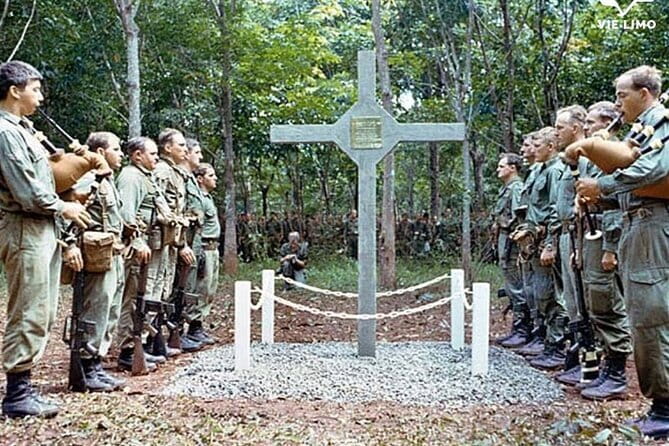
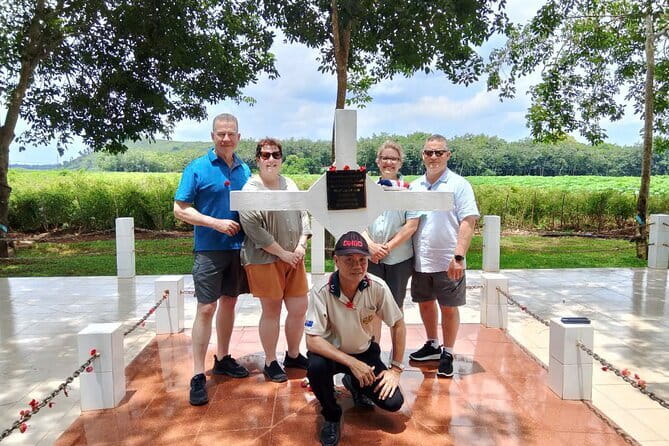
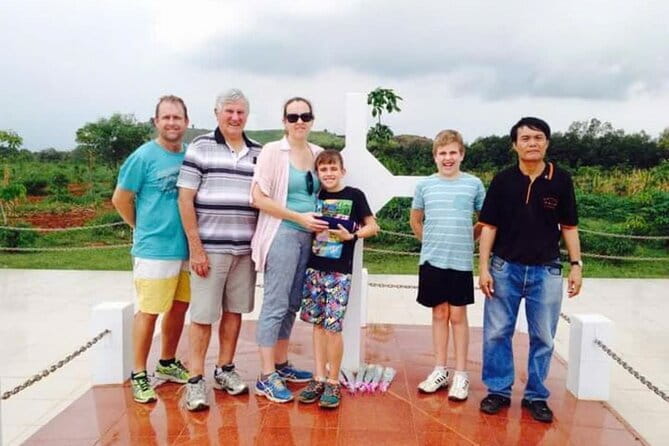
The stop at the 6 RAR flagpole provides a second memorial location. It gives the tour a more formal point of remembrance after the practical work of tracing the base. Flowers are included, which allows your group to make a simple tribute without arranging anything separately.
Do not expect every former base feature to look as it did during the war. Time, later development, and tropical weather change military sites. You are mainly here to understand the location and its connections, with the guide supplying the detail that the ground itself may no longer show.
Horseshoe Hill and the former Digger positions
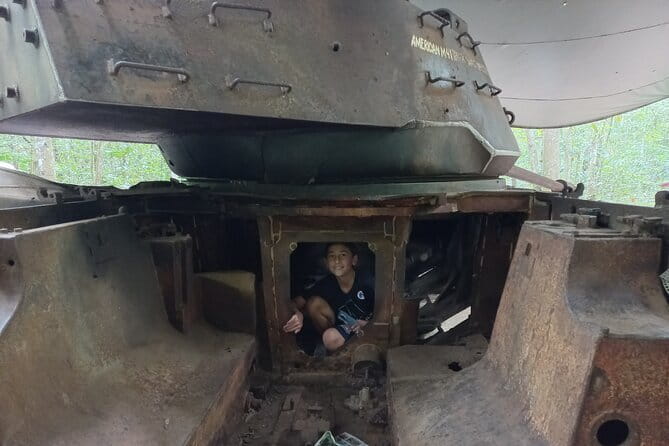
Horseshoe Hill adds another layer to the visit. It was another base where the Diggers were stationed, so the stop helps you compare the central Nui Dat area with a separate position used by Australian soldiers.
The best way to approach this stop is to listen for how the guide places it within the wider military arrangement. A hill is not important only because it is high. Its value may come from what it allowed soldiers to observe, defend, or connect with nearby positions. The tour’s map-based approach should help you make sense of that relationship.
For a visitor with a strong interest in Australian military history, Horseshoe Hill may be one of the most useful stops because it avoids reducing the story to the most famous battle name. It shows that the Australian presence involved several locations and day-to-day base activity, not only the clash remembered at Long Tan.
The tradeoff is that this is not a polished attraction with a large visitor center or a long list of displays. You need to stay engaged with the explanation. Ask questions if you want to understand how Horseshoe Hill related to Nui Dat, the artillery positions, or the wider operation.
A completely different kind of day out of Ho Chi Minh City:
- Cu Chi Tunnels Tour from HCM City – Morning or Afternoon
★ 5.0 · 15,833 reviews - From HCM City: Mekong Delta Tour with Sampan Journey
★ 4.5 · 13,132 reviews - Ho Chi Minh City Street Food Tour & Sightseeing By Motorbike
★ 5.0 · 9,413 reviews - HCM: Cu Chi Tunnels-Tapioca Small Group Tour Morning or Afternoon
★ 5.0 · 7,485 reviews
The Long Phuoc Tunnels and the hidden work of war
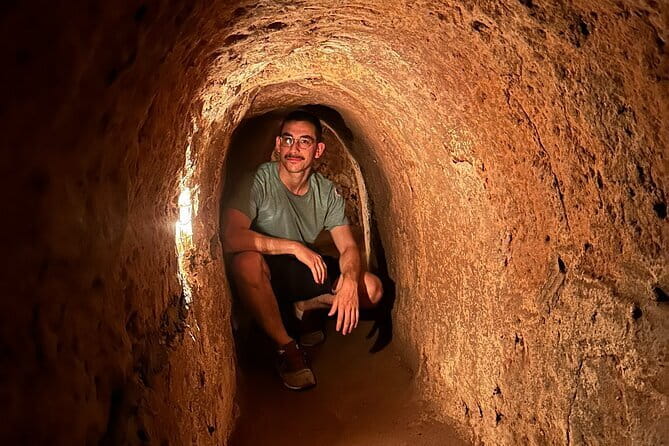
The Long Phuoc Tunnels are the final major historic stop. They were used to store ammunition, so they reveal the supply side of the conflict. That is an important contrast with the artillery and airfield locations visited earlier.
Military history can focus too easily on combat. The tunnels remind you that ammunition had to be stored, moved, and protected before it could be used. They also show how local underground spaces could support military activity.
This stop lasts about an hour, making it more than a quick photo opportunity. You should expect a different kind of visit here, with the tunnel system offering a physical sense of how storage and concealment worked. If you dislike enclosed spaces, consider that before booking, although the supplied information does not describe the exact conditions inside.
The tunnels also help balance the day. Nui Dat and Horseshoe Hill focus on bases and positions associated with Australian forces. Long Phuoc gives you a closer look at the opposing side’s support network. Together, the sites make the story less one-sided and more grounded in the practical realities of the war.
Dingo Chien as your guide
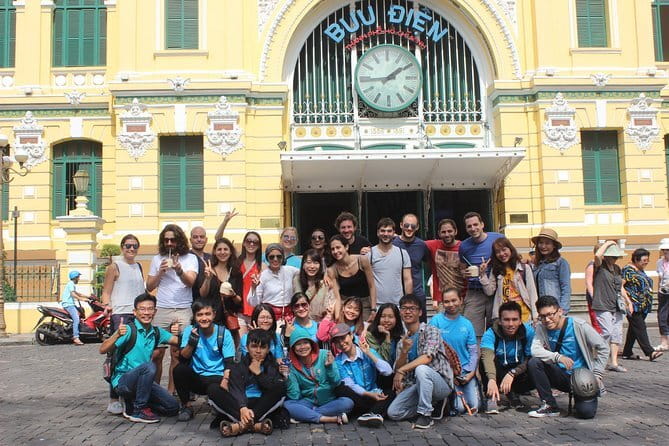
The guide can make or break a site-based history tour, and Dingo Chien is the named guide connected with this experience. His strongest qualities are his English, his detailed grasp of the Battle of Long Tan, and his ability to explain both sides of the conflict.
He is also described as having a good sense of humor and an understanding of Australian slang. That matters here because the tour uses terms such as Diggers, 6 RAR, SAS, and Kiwi artillery. If you know those words already, he can add detail. If you do not, you can ask him to slow down and explain them.
I would book this tour partly for the chance to have that kind of conversation. A printed account can tell you dates and unit names, but a guide can connect the names to the ground you are standing on. The private format should make that easier, since you are not sharing the vehicle with a large public group.
The information provided does not promise a particular guide on every departure, so you should confirm that Dingo will lead your outing if his expertise is a key reason for booking. The experience provider is Viet Kolors Tour.
What the $107.10 price includes
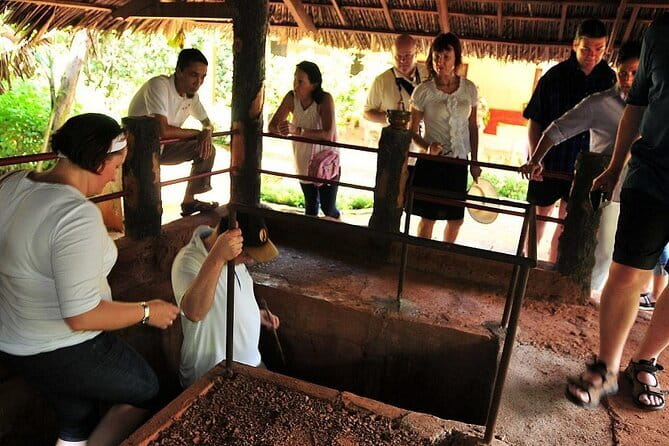
At $107.10 per person, the tour is not the cheapest way to spend a day outside Ho Chi Minh City. It is also more than a simple transfer, and the price needs to be judged against what is included.
You receive:
- Air-conditioned transport from your hotel and back
- An English-speaking guide
- Lunch
- Bottled water
- Flowers for the memorial visit
- Admission fees and taxes
- Private participation for your own group
That package gives the price real value, especially if you are traveling with family or friends and prefer not to arrange transport, food, entry fees, and a guide separately. Group discounts are also offered, though the supplied information does not state the exact discount.
The private format is another part of the value. You are paying for a focused day rather than a generic sightseeing route. If your main goal is Long Tan and military history, the time is directed toward that subject instead of being mixed with unrelated stops.
The value is weaker for someone who wants a broad tour of Vung Tau or a general list of attractions. This outing is tightly focused on military sites. You are paying for access, transport, interpretation, and convenience, not for beaches, city sightseeing, or a large museum collection.
Tips are optional and not included. Free cancellation is available if you cancel at least 24 hours before the start time. Changes or cancellations made inside that 24-hour period are not accepted for a refund.
Who should book this experience?
I would recommend this tour to you if you have a serious interest in the Vietnam War, Australian military history, New Zealand artillery, or the Battle of Long Tan. It also suits anyone who prefers to understand a place through its historical details rather than simply take photographs.
The private setup makes it a good choice for a couple, family, or small group that wants to ask questions. The early pickup and air-conditioned vehicle also make the long trip manageable.
You may want to skip it if your holiday time in Ho Chi Minh City is very short. About four hours of the seven-hour day are spent traveling to and from the sites. You should also skip it if you want a relaxed day with plenty of free time, shopping, or scenic stops.
This is a serious subject, and the experience is built around military memory. Approach it with respect. The flowers at the 6 RAR flagpole provide a small but meaningful way to acknowledge the people connected with the conflict.
Practical details for a smoother day
Wear comfortable clothing and shoes suitable for walking around outdoor historic locations. The tour information does not specify the exact walking conditions, so you should be prepared for uneven ground and warm weather without assuming that every stop has shade or facilities.
Keep the morning free from other plans. Pickup is scheduled for around 7:30 a.m., and the tour returns to your hotel after the sites and the drive back to Saigon. The stated duration is approximately seven hours, so allow some flexibility around the return time.
Use the drive to prepare questions. You might ask about the relationship between Nui Dat and Horseshoe Hill, the role of the 161 Kiwi artillery, or how the Long Phuoc Tunnels fitted into the conflict. A map-based visit becomes much more useful when you know what connections you want the guide to explain.
The tour has a mobile ticket and confirmation is received when you book. Most people can participate, and the activity is near public transportation, though hotel pickup is the more convenient option.
Should you book the Long Tan and Nui Dat tour?
Book it if Long Tan is one of the main reasons you want to leave Ho Chi Minh City. The combination of Nui Dat, Horseshoe Hill, Luscombe airfield, the 6 RAR flagpole, and Long Phuoc Tunnels gives you a fuller picture than a single memorial visit.
The strongest reason to choose it is the guide. Dingo Chien brings detailed Australian military knowledge, clear English, humor, and an understanding of both sides of the conflict. Add private transport, lunch, entry fees, water, and hotel service, and the $107.10 price is reasonable for a specialized full-day outing.
Skip it if you dislike long drives or want a general sightseeing day. For the right history-minded visitor, though, this is a focused and practical way to reach places that would be difficult to visit independently.
FAQ
How long does the Long Tan and Nui Dat tour take?
The experience lasts approximately seven hours, including the drive from Ho Chi Minh City and the return to your hotel in Saigon.
What time does hotel pickup begin?
Pickup begins at about 7:30 a.m. from your hotel.
Is this a private tour?
Yes. Only your group participates in the activity.
Which historic sites are included?
The tour visits Nui Dat army base, the 161 Kiwi artillery position, Kangaroo Pad, SAS Hill, Luscombe airfield, Luscombe Bowl, the 6 RAR flagpole, Horseshoe Hill, and the Long Phuoc Tunnels.
Is lunch included?
Yes. Lunch, bottled water, flowers, admission fees, taxes, an English-speaking guide, and air-conditioned transport are included.
Can I cancel for a full refund?
Yes, if you cancel at least 24 hours before the experience start time. Cancellations or changes made less than 24 hours before the start are not refunded or accepted.
Just added around Ho Chi Minh City
- Vung Tau City Shore Excursion from Phu My Port★ 5.0 · 3 reviews
- Ho Chi Minh city Street Food by scooter tour | female driver★ 5.0 · 3 reviews
- Ho Chi Minh City: Full Long Tan Battlefield Tour★ 4.7 · 3 reviews
- Ride Saigon: Private Half-Day Motorbike Adventure★ 5.0 · 3 reviews
- Ho Chi Minh City: Guided Food Tour by Scooter★ 5.0 · 3 reviews
- PHU MY SHORE EXCURSION: Saigon Past and Present Tour★ 5.0 · 3 reviews
- Ho Chi Minh: Cai Be-Mekong Delta Local Village Full Day Tour★ 3.7 · 3 reviews
- 3D2N Mekong Delta Tour: Cycling – Kayaking – Floating Market★ 5.0 · 3 reviews
Historical Tours, compared.
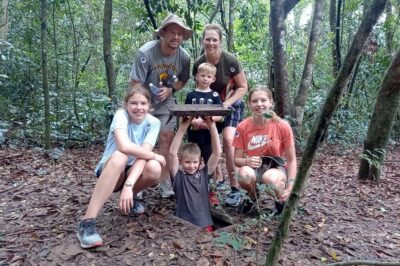
Cu Chi Tunnels Half-Day History Tour with Guide
Read our review →
Saigon Afternoon City Historical Scooter Tour |Opt: Ao Dai Riders
Read our review →
Saigon Unseen, History, & Hidden Gems Sightseeing Motorbike Tour
Read our review →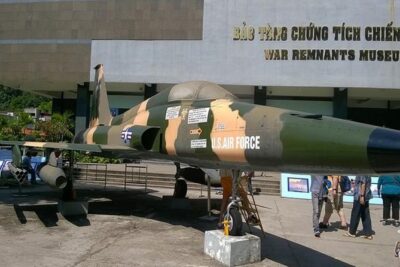
Saigon Morning City Historical Scooter Tour w Ao Dai Rider option
Read our review →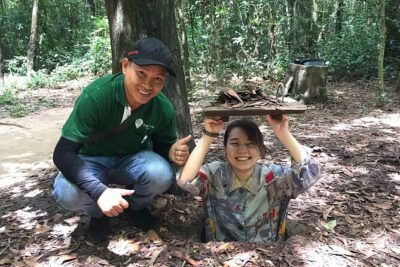
6 Hours Historical Tour in Cu Chi Tunnel with Free Snack
Read our review →
Vung Tau Essential: Beach, Christ Statue & Colonial Heritage
Read our review →
Full-Day Ho Chi Minh City Tour with Colonial Heritage & Chinatown
Read our review →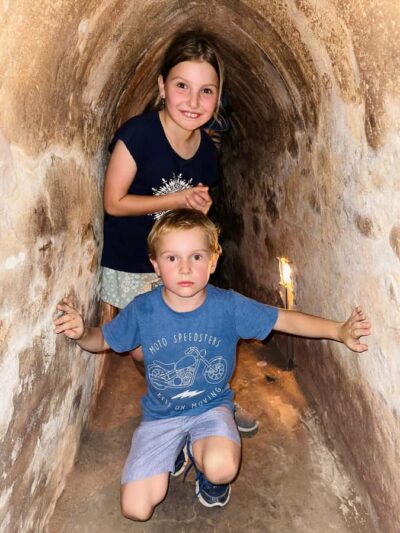
Cu Chi Tunnels Guided Tour: Vietnam War History Half-Day
Read our review →Browse the lists this tour appears in