
Reviewed · CU CHI TUNNELS TOURS
6 Hours Historical Tour in Cu Chi Tunnel with Free Snack
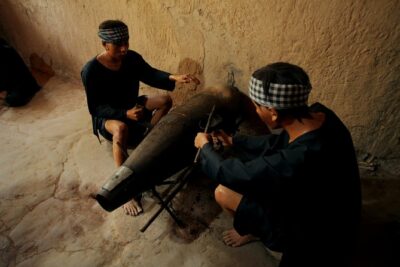
The most striking part of this six-hour trip is the underground world at Cu Chi Tunnels, where hospitals, kitchens, schools, and theaters once operated beneath the ground. You also see concealed entrances, war-era traps, and the cramped passageways that made this site so hard to overcome.
I like the clear Vietnamese perspective on the Vietnam War, and I like that the tour lets you taste tapioca with pandan tea, rather than treating the tunnels as a quick photo stop. The main drawback is the long drive, about 1.5 hours each way, and an optional factory stop can reduce time at the main site.
In This Review
- Key points at a glance
- Why the Cu Chi Tunnels still matter
- Leaving Ho Chi Minh City at 8:00 or 12:30
- The documentary sets the scene
- Hidden doors and war-era traps
- Crawling through a short tunnel
- Tapioca and pandan tea underground
- The optional AK-47 range
- A factory stop and the question of time
- How much value do you get for $19.79?
- Who will enjoy this tour most?
- Cancellation and booking details to know
- Should you book the Cu Chi Tunnel tour?
- FAQ
- How long does the Cu Chi Tunnel tour last?
- What departure times are available?
- Where does the tour start and finish?
- Is hotel pickup available?
- What food and drinks are included?
- Does the tour include AK-47 shooting?
Key points at a glance
- A six-hour half-day trip with roughly 1.5 hours of driving each way from Ho Chi Minh City.
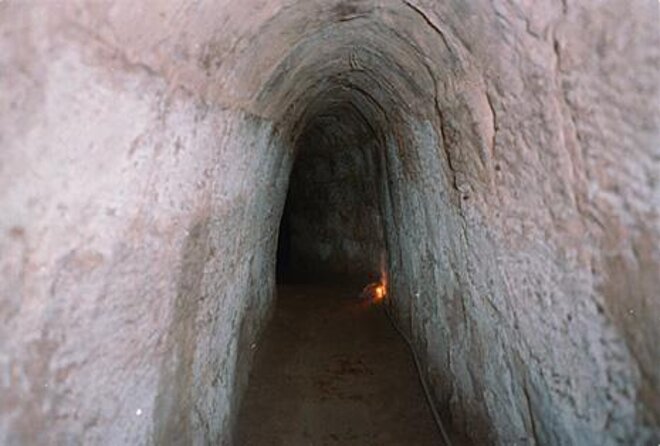
- A short crawl through a tunnel, plus concealed entrances and examples of booby traps.
- A documentary and guide commentary help explain how life worked underground during the war.
- Tapioca, pandan tea, and bottled water are included in the price.
- Optional AK-47 shooting is available, but ammunition costs extra.
- Small-group format, capped at 25 people, with central District 1 pickup offered.
Why the Cu Chi Tunnels still matter

The Cu Chi Tunnels are not simply underground corridors. They were part of a large defensive network built for survival during the Vietnam War. The site shows how people lived, worked, treated injuries, prepared food, and organized daily life under extreme pressure.
That is what makes this visit more worthwhile than a standard war museum stop. You are not only looking at objects behind glass. You can see the hidden entrances, walk through a short tunnel section, and taste the simple foods associated with life in the tunnels.
The experience also gives you a Vietnamese account of the conflict. That viewpoint matters. Much of the English-language discussion of the war comes from outside Vietnam, so a local explanation can help you understand how the conflict affected this part of the country and why Cu Chi became so important.
You should not expect a quiet archaeological site. The tunnels are a major attraction, arranged for public visits and built around demonstrations. That makes the history easier to grasp, but it also means the experience has a tourist-friendly structure rather than the feel of an untouched wartime site.
More ways to visit the Cu Chi tunnels:
- Cu Chi Tunnels Tour from HCM City – Morning or Afternoon
★ 5.0 · 15,833 reviews - HCM: Cu Chi Tunnels-Tapioca Small Group Tour Morning or Afternoon
★ 5.0 · 7,485 reviews - Cu Chi Tunnels and Mekong Delta Signature Tour
★ 5.0 · 7,328 reviews
Leaving Ho Chi Minh City at 8:00 or 12:30
You can choose a morning departure at 8:00 am or an afternoon departure at 12:30 pm. The tour offers pickup from hotels in central District 1, or you can meet at 268 Đề Thám in Phường Phạm Ngũ Lão.
The drive takes about 1.5 hours. That is a substantial part of a six-hour tour, so keep your expectations realistic. You are spending several hours on the road, not six hours underground.
Still, the journey has value. As you leave Ho Chi Minh City, you get views of the countryside and a change from the city streets. The vehicle is air-conditioned, which matters in southern Vietnam, particularly after time spent outside at the tunnel site.
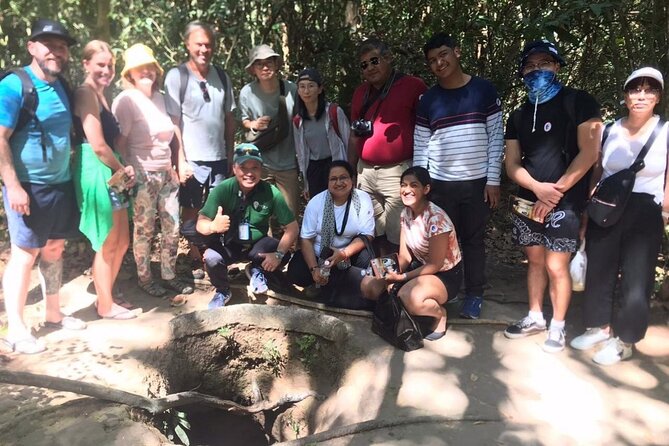
The group size can reach 25 people. That is not a private outing, but it is smaller and easier to manage than a large coach packed with dozens of people. Your guide needs to keep the group moving through a busy attraction, so the pace may feel brisk at certain points.
The documentary sets the scene
At Cu Chi, the visit begins with an introductory documentary about the tunnel area during the war. This is useful because the site can otherwise seem like a series of disconnected displays: a trap here, a doorway there, a tunnel entrance somewhere else.
The film gives you a basic framework before you begin walking around. Pay attention to the practical details, such as how the tunnel network supported daily life and why secrecy mattered. The better you understand the setting, the more meaningful the small features become.
The quality of the explanation depends heavily on the guide leading your departure. Guides Bao and Son have received especially warm praise for clear explanations, patience, friendliness, and a good sense of humor. At the same time, one person reported poor English and weak answers to questions, so the guide is an important variable.
If you have questions, ask them early. A good guide can connect the documentary, the displays, and the tunnel visit into one story. If the explanation is rushed, you may get a more basic sightseeing stop.
Hidden doors and war-era traps
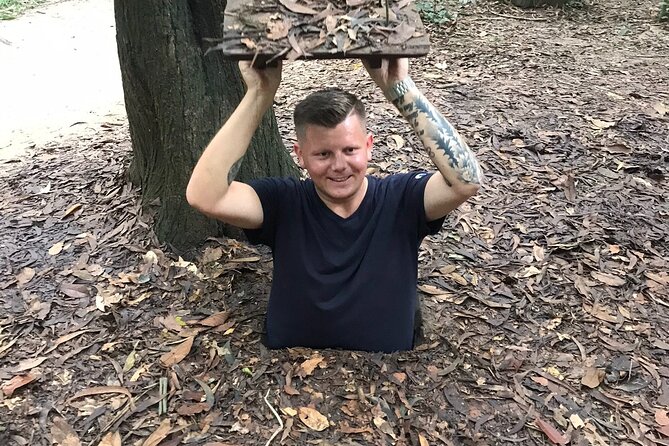
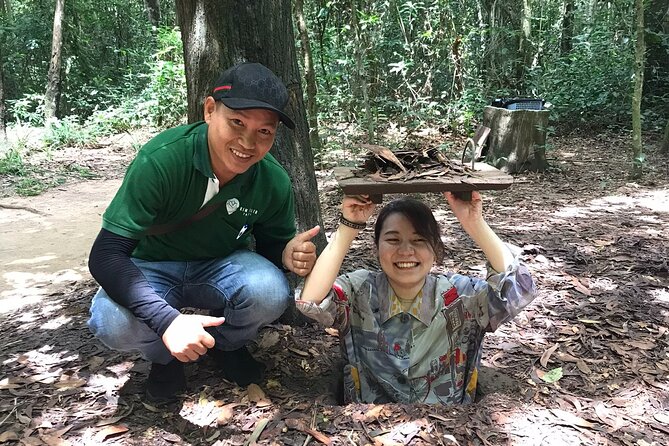
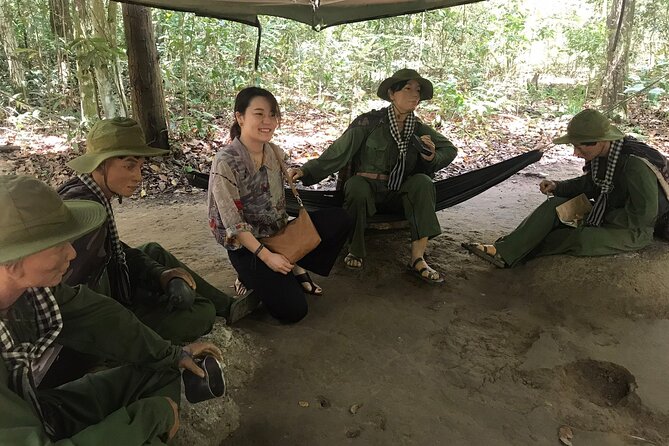
One of the most memorable demonstrations is the concealed tunnel entrance. A small wooden door covered with camouflage leaves could blend into the surrounding ground, making it difficult to spot. The opening is notably narrow, and the display helps explain why the tunnel system was so hard for outside forces to find and use.
You will also see examples of booby traps used during the war. These are not merely mechanical curiosities. They show how the forest and soil were turned into part of a defensive system.
The trap displays can be disturbing, especially for younger children, but they also provide a direct lesson in the dangers of ground warfare. Children aged five and nine have found the visit interesting and exciting, with the traps proving a particular highlight for the older child. Parents should still decide how much detail is suitable for their own children.
Take care with the outdoor portions of the site. The tour includes walking between displays, and you will likely spend time in warm conditions. Bottled water is included, but comfortable clothing and sensible footwear will make the visit easier.
More history walks in Ho Chi Minh City:
- From Ho Chi Minh: Cu Chi Tunnels Half-Day History Tour with Guide
★ 5.0 · 480 reviews - Saigon Afternoon City Historical Scooter Tour |Opt: Ao Dai Riders
★ 5.0 · 466 reviews - Saigon Unseen, History, & Hidden Gems Sightseeing Motorbike Tour
★ 5.0 · 416 reviews - Saigon Morning City Historical Scooter Tour w Ao Dai Rider option
★ 5.0 · 349 reviews
Crawling through a short tunnel
The tunnel crawl is the activity most likely to determine if this tour suits you. You go through a short section rather than spending hours underground, but the passage is still tight and enclosed.
That brief crawl gives you a physical sense of the conditions in a way that a documentary cannot. Even a few minutes can make the scale of underground life feel more real. You begin to understand the lack of space, the need for discipline, and the challenge of moving through a hidden network.
If you are claustrophobic, you can still find value in the site without treating the crawl as a test of courage. One person with a claustrophobic partner found that the historical material remained enjoyable even though the confined passage was a concern. The supplied details do not state whether an alternative route is available, so ask the guide before entering if you are unsure.
The tunnel section is short, but do not assume it will feel easy for everyone. The original passages were famously small, and the tour description specifically emphasizes their narrow design. Follow the guide’s instructions, move at your own pace where possible, and do not enter simply because others in the group do.
Tapioca and pandan tea underground
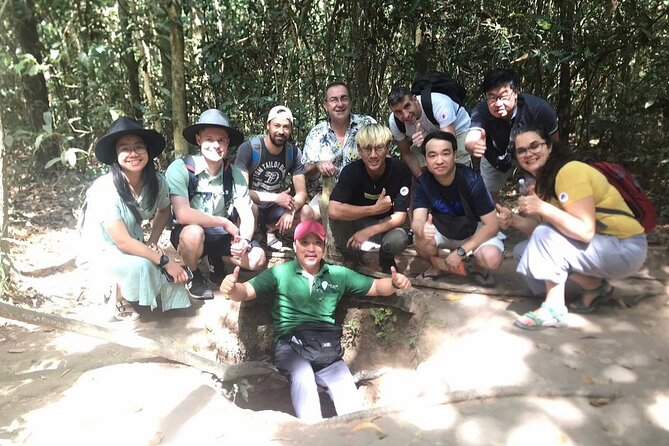
The included snack is a small but useful part of the experience. You taste tapioca, a simple root food associated with wartime life, and drink tea made with pandan leaves.
This is more than a free bite between activities. Food helps explain how people managed daily life with limited supplies. The snack will not replace lunch, so plan accordingly, especially if you choose the morning departure and tend to eat early.
Bottled water is also included. That is practical after walking outdoors and spending time in the heat. The tour includes all admission fees and taxes, so you do not need to budget separately for the main entry or the snack.
The optional AK-47 range
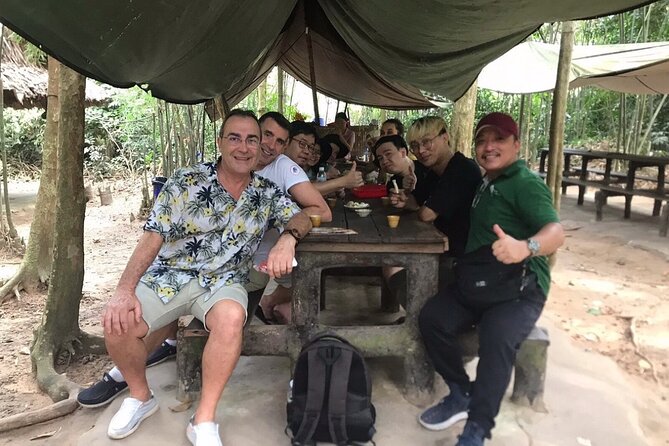
You can try rifle shooting with an AK-47 at the site, but ammunition is not included. Bullets are an extra personal expense, so check the cost before deciding to participate.
This part will appeal to some people, while others will prefer to focus on the historical displays. It can feel out of step with a serious war-history visit, and you should not view it as an essential part of the tour. The tunnels, traps, documentary, and guide commentary provide the main content.
If you do choose the range, allow for the possibility that it may affect the pace of your visit. The tour has a fixed schedule and still needs to return to Ho Chi Minh City. Ask how much time is available before committing to the activity.
A factory stop and the question of time
One departure included a stop at a disabled artists’ workshop or factory on the route. This can be an interesting look at local craft production, and the countryside drive gives the journey some variety.
However, it may not be what you want from a six-hour historical tour. If you are focused on the Cu Chi Tunnels, any extra stop takes time away from the main site. One person specifically felt that the stop was unnecessary and that the time would have been better spent at Cu Chi.
You can ask your guide at the start of the day if such a stop is planned. That gives you a clearer idea of how the six hours will be divided. The supplied tour details do not promise the factory visit as a standard stop, so treat it as a possible addition rather than a guaranteed feature.
How much value do you get for $19.79?
At $19.79 per person, this is an inexpensive way to reach Cu Chi from Ho Chi Minh City. The price includes an air-conditioned vehicle, English-speaking guide, admission, taxes, bottled water, tapioca, and hot tea.
The value is strongest if you want a straightforward shared tour and do not need a private car. Transport alone can make the Cu Chi visit more complicated, so having a set departure and return to the central meeting point saves planning time.
The price also explains some of the compromises. This is not a slow private tour with unlimited time at each display. A group of up to 25 people must follow a schedule, and the long drive takes a large share of the day.
The optional shooting range costs extra, and tips and travel insurance are not included. Set aside money only if you want to shoot. You should also arrange your own insurance if that matters to you, since it is specifically excluded.
Who will enjoy this tour most?
I would choose this experience if you want the main Cu Chi highlights without spending a full day on a private arrangement. It suits first-time visitors to Ho Chi Minh City who want historical context, a guide, transport, and a short hands-on experience in one package.
Families can find plenty to hold their attention, especially at the trap displays and tunnel entrance. The long drive may test young children, but the six-hour total is manageable compared with a longer countryside excursion.
This is also a good choice for people curious about the Vietnamese side of the war. The guide’s explanation is central, so you will get more from the trip if you listen closely and ask questions.
You may want another option if you dislike group schedules, cannot tolerate narrow enclosed spaces, or want a quiet, academic visit. The tour is designed for general sightseeing, and the quality of the English explanation can vary by guide.
Most people can participate, but the short tunnel crawl and outdoor walking deserve thought. If you have concerns about enclosed spaces or physical comfort, ask before entering the tunnel. The meeting point is near public transportation, and the tour returns to the same location at the end.
Cancellation and booking details to know
Free cancellation is available if you cancel at least 24 hours before the start time. Cancellations made within 24 hours are not refunded, and changes during that period are not accepted.
The activity depends on suitable weather and a minimum number of people. If poor weather or low enrollment causes cancellation, you can choose another date or experience, or receive a full refund.
Should you book the Cu Chi Tunnel tour?
Book it if you want an affordable, organized visit with the essential Cu Chi experiences: a documentary, concealed entrances, traps, a short tunnel crawl, local wartime food, and an English-speaking guide.
The strongest reason to choose it is the balance of price and content. You get transport from central Ho Chi Minh City and the main admission costs for less than many private excursions. Guides such as Bao and Son have made the historical side especially engaging on some departures.
Go in knowing that the road trip is long, the group may include up to 25 people, and a possible factory stop could limit time at the tunnels. Ask about the day’s exact schedule, skip the shooting range if it does not interest you, and decide in advance how comfortable you are with the crawl.
For most first-time visitors with a morning or afternoon to spare, I would book it. The site is important, the price is fair, and the combination of physical displays and local food makes the war history easier to understand than a lecture alone.
FAQ
How long does the Cu Chi Tunnel tour last?
The tour lasts approximately six hours, including the drive from Ho Chi Minh City and the return journey.
What departure times are available?
You can choose an 8:00 am departure or a 12:30 pm departure.
Where does the tour start and finish?
The meeting point is 268 Đề Thám, Phường Phạm Ngũ Lão, District 1, Ho Chi Minh City. The tour ends back at the meeting point.
Is hotel pickup available?
Pickup is offered for guests staying at hotels in central District 1.
What food and drinks are included?
The tour includes tapioca, hot pandan leaf tea, and bottled water.
Does the tour include AK-47 shooting?
The shooting range is optional. Ammunition is not included and must be paid for separately.
Just added around Ho Chi Minh City
- Vung Tau City Shore Excursion from Phu My Port★ 5.0 · 3 reviews
- Ho Chi Minh city Street Food by scooter tour | female driver★ 5.0 · 3 reviews
- Ho Chi Minh City: Full Long Tan Battlefield Tour★ 4.7 · 3 reviews
- Ride Saigon: Private Half-Day Motorbike Adventure★ 5.0 · 3 reviews
- Ho Chi Minh City: Guided Food Tour by Scooter★ 5.0 · 3 reviews
- PHU MY SHORE EXCURSION: Saigon Past and Present Tour★ 5.0 · 3 reviews
- Ho Chi Minh: Cai Be-Mekong Delta Local Village Full Day Tour★ 3.7 · 3 reviews
- 3D2N Mekong Delta Tour: Cycling – Kayaking – Floating Market★ 5.0 · 3 reviews
Cu Chi Tunnels Tours, compared.

Cu Chi Tunnels Tour from HCM City – Morning or Afternoon
Read our review →
Cu Chi Tunnels-Tapioca Small Group Tour Morning or Afternoon
Read our review →
Cu Chi Tunnels and Mekong Delta Signature Tour
Read our review →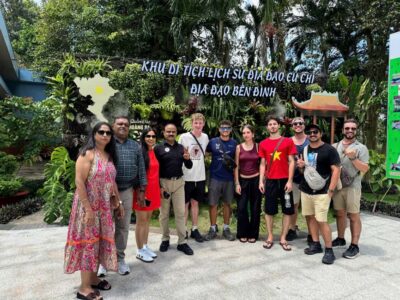
Cu Chi Tunnels and Mekong Delta Full Day Tour – Max 12
Read our review →
Full-Day Cu Chi Tunnels and Mekong Delta Tour
Read our review →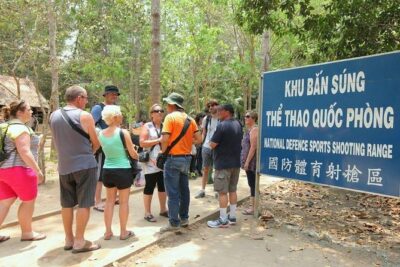
Cu Chi Luxury Group Tour – Tapioca and Cake Half Day
Read our review →
CuChi Tunnels&Mekong Delta-Boat,TukTuk,Coconut Village SmallGroup
Read our review →Browse the lists this tour appears in