
Reviewed · WORKSHOPS
Ho Chi Minh City: Stained Glass Art Workshop in Saigon
Stained glass turns a few pieces of colored glass into something that changes with the light. In this 210-minute Saigon workshop, you learn the basic craft, hear how stained glass reached Vietnamese colonial and modern buildings, and make a small piece of your own.
I like the chance to take home a handmade souvenir, not another factory-made trinket. I also like the calm pace and the freedom to choose a traditional or modern design. The main consideration is instruction: one booking received excellent English support, while another found communication difficult and spent much of the session working alone.
In This Review
- Key points
- Why stained glass makes a memorable Saigon souvenir
- Entering the peaceful Saigon studio
- Learning how glass becomes a design
- Choosing between traditional and modern patterns
- Working with color, light, and shape
- Hearing the Vietnamese story behind the craft
- Finishing an ornament, coaster, or mini panel
- Is $35 a fair price?
- Who will enjoy this workshop most?
- Should you book the Saigon stained glass workshop?
- FAQ
- How long does the stained glass workshop last?
- How much does the workshop cost?
- Is the workshop suitable for beginners?
- What can I make during the class?
- Is the instructor able to speak English?
- Are transportation and materials included?
Key points
- Make your own keepsake: Choose an ornament, coaster, or mini panel and take the finished piece home.
- Learn real craft skills: Practice glass cutting, shaping, and assembling with studio tools and materials provided.
- Connect art with Vietnam: Hear how stained glass became part of colonial and modern architecture in the country.
- Quiet creative setting: The studio offers a slower break from Saigon’s busy streets.
- Good for beginners: You need curiosity, not previous art training.
- Plan for focused work: The session lasts three and a half hours, and the pace may include periods of independent work.
Why stained glass makes a memorable Saigon souvenir
A souvenir is more useful when it carries a story. This workshop gives you both the object and the process behind it.
You are not simply picking a finished design from a shop shelf. You choose a pattern, work with colored glass, and take part in turning separate pieces into a small artwork. That gives the final object a personal connection to your time in Ho Chi Minh City.
The workshop also adds a cultural layer. Stained glass is often linked in people’s minds with European churches and old civic buildings, but it found a place in Vietnam as well. During the session, you hear about its role in colonial-era and modern Vietnamese architecture.
The supplied designs include traditional and modern patterns. That choice matters because it lets you decide how strongly you want the piece to reflect local visual ideas. You can select something that feels connected to Vietnamese architecture, or choose a simpler contemporary shape that fits your home.
The activity is especially appealing if you prefer making something over simply looking at something. You leave with a small object, but you also gain a better sense of how light, color, and structure work together.
A few more Ho Chi Minh City half-days to weigh up
- Cai Be Mekong Delta Tour: Cooking Class, Cycling & Craft Villages
★ 5.0 · 1,881 reviews - Chef Vu Cooking Class Plus Market Trip in Saigon Center (Pick up by Cyclo)
★ 5.0 · 477 reviews - Immersive Cooking Class & Market Tour By Local Chef+Cookbook
★ 4.8 · 426 reviews
Entering the peaceful Saigon studio
This is a studio-based activity rather than a city tour. Transportation is not included, so you need to make your own way to the meeting point. Check the starting time when booking and allow enough time to arrive without rushing.
The quiet setting is part of the appeal. Saigon can be noisy and energetic, so three to three and a half hours spent concentrating on a careful craft can feel like a useful change of pace.
Do not expect a quick drop-in craft class. The session lasts 210 minutes, which gives you time to understand the materials and work through the stages. It also means you should not schedule a tightly timed attraction immediately afterward.
The workshop is designed for beginners. You do not need to know how to cut glass or draw a pattern before arriving. You only need curiosity and a willingness to follow safety instructions.
Children under 12 are not permitted, and the activity is not suitable for people with mobility impairments. Those limits may matter if you are arranging an activity for a family or group with different needs.
Learning how glass becomes a design
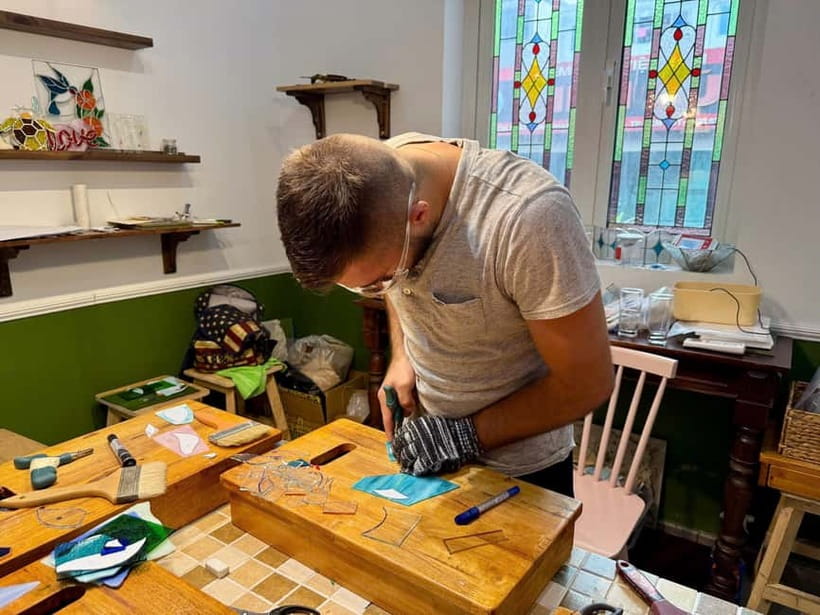
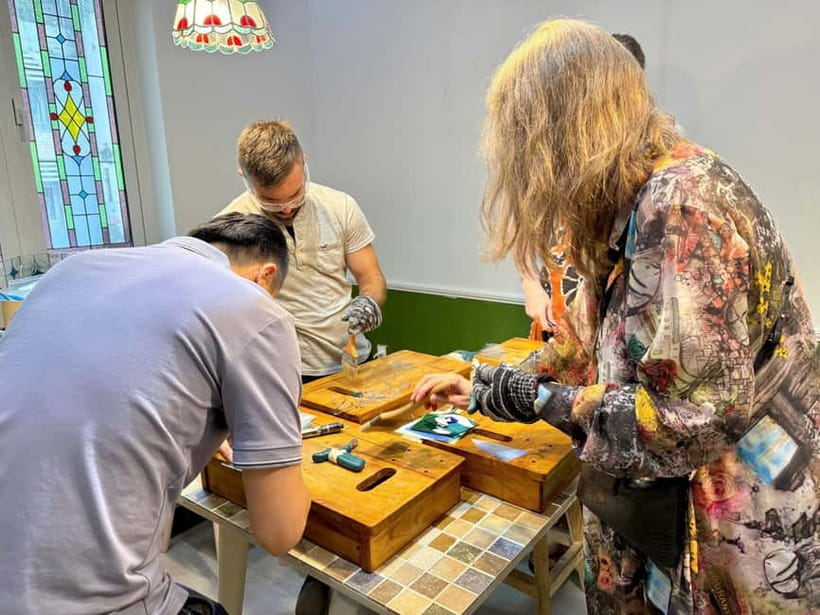
The first part of the class introduces the tools and materials. You learn how to handle stained glass equipment safely before attempting the practical work.
That safety briefing is important. Glass cutting is a hands-on process, and the value of an instructor is not only in explaining the artistic side. You also need clear guidance on how to hold, shape, and assemble the materials without rushing.
The workshop covers three basic skills:
- Glass cutting
- Glass shaping
- Glass assembly
These steps sound simple, but each requires care. Cutting is not just a matter of following a line. Shaping helps the pieces fit the design, while assembly brings the separate colors and forms together.
The instructor speaks English, and all tools and materials are included in the price. One highly positive booking described the English as excellent and praised the calm instructors, who were ready to help when needed. That is good news if you want a relaxed class rather than a fast, demanding lesson.
Still, you should know that the teaching style may feel light-touch. Another booking described limited explanation, difficult communication despite the English-language description, and long periods of working alone. The practical lesson is simple: if you are unsure about a step, ask for help before moving on.
Choosing between traditional and modern patterns
Once you understand the basic process, you choose a design. The available patterns include traditional and modern options inspired by local architecture.
This is one of the more personal parts of the activity. A traditional pattern may give your souvenir a stronger connection to Vietnam, while a modern pattern may produce a cleaner look for your home. The important point is that you are not locked into a single finished example.
You may want to think about the final use before choosing. An ornament can be displayed in a window or on a wall. A coaster is a practical choice for a small household item. A mini panel works well if you want something that feels more like a small decorative artwork.
The supplied information does not specify the exact pattern catalogue, size, or color range. For that reason, avoid arriving with a very specific design in mind. Bring a general idea, then choose from what the studio offers.
I like this approach because it keeps the workshop manageable for beginners. You are learning a craft in a limited time, not trying to produce a large architectural panel. A smaller project gives you a realistic chance to finish something you will be happy to take home.
A completely different kind of day out of Ho Chi Minh City:
- Cu Chi Tunnels Tour from HCM City – Morning or Afternoon
★ 5.0 · 15,833 reviews - From HCM City: Mekong Delta Tour with Sampan Journey
★ 4.5 · 13,132 reviews - Ho Chi Minh City Street Food Tour & Sightseeing By Motorbike
★ 5.0 · 9,413 reviews - HCM: Cu Chi Tunnels-Tapioca Small Group Tour Morning or Afternoon
★ 5.0 · 7,485 reviews
Working with color, light, and shape
The central pleasure of stained glass is the way light changes the appearance of the piece. A color can look different when placed beside another color, and the shape of each section affects the finished pattern.
As you work, you begin to see why stained glass is more than colored decoration. The material must be cut and shaped to fit a plan, but the final result depends on how the pieces relate to one another.
The session gives you a taste of that process without requiring previous art experience. You do not need to be a confident painter or a skilled maker. You need patience, attention, and a willingness to make small adjustments.
The pace may suit you if you enjoy quiet concentration. A positive booking described the class as three and a half hours in a bubble, with no pressure and help available when needed. That suggests a gentle workshop atmosphere rather than a competitive one.
If you prefer constant explanation, you may find the class less satisfying. One less positive booking reported being left alone for about 70 percent of the time and having to signal whenever a stage was complete. I would treat that as a reason to stay proactive. Ask questions, show your work as you finish each stage, and do not assume silence means you are doing everything correctly.
Hearing the Vietnamese story behind the craft
The workshop is not only about technique. It also explains how stained glass became part of Vietnam’s built environment.
You hear about its place in colonial and modern buildings, which gives the craft a local setting instead of treating it as a decorative skill with no connection to the city. That context helps you notice stained glass differently when you encounter it elsewhere in Vietnam.
The activity does not present itself as a full architecture tour, and you should not expect visits to buildings around Ho Chi Minh City. The cultural material is delivered inside the studio while you work.
That combination works well for an afternoon or morning when you want something more active than sightseeing but less strenuous than a long walking tour. You are learning through your hands, with the architectural background giving the craft a clear reason for being in Saigon.
The symbolism of stained glass also comes through the relationship between light and design. Patterns can carry visual meaning, while the changing light keeps the object from feeling static. Even a small coaster or ornament can remind you of the way art can shape a room.
Finishing an ornament, coaster, or mini panel
The project you make is intended to be finished during the session and taken home. Your choices include an ornament, coaster, or mini panel.
Each option suits a different kind of souvenir hunter. An ornament is easy to display and may be the simplest choice if you want a decorative reminder of the class. A coaster has a practical role, while a mini panel gives you a small display piece with a stronger art focus.
The finished object is included in the price. You do not need to buy your own glass, tools, or equipment separately, which makes the class easier to plan.
The final result may not look like professional gallery work, and that is part of the point. You are making a first piece under guidance, not buying an expertly finished panel. Small irregularities can be a reminder that your souvenir was made by your own hands.
Take care when packing it for the journey home. The activity information confirms that you can take the piece with you, but it does not specify protective packaging or shipping. If you are continuing your trip, ask the studio how the item will be wrapped before leaving.
Is $35 a fair price?
At $35 per person, this workshop offers solid value if you want an activity rather than a short demonstration. The price covers the English-speaking local instructor, all tools and materials, and the finished glass piece.
You are paying for three and a half hours of studio time, instruction, and a souvenir. Compared with buying a small decorative item without learning how it was made, the workshop gives you more involvement and a clearer connection to the object.
The value depends on your preferred pace. If you like practical classes and creative work, $35 is reasonable. If you mainly want to collect souvenirs quickly, a shop visit will take less time and may cost less.
The biggest question is not the material cost. It is how much guidance you receive. One booking praised the excellent English and calm, helpful instructors. Another found the communication difficult and wanted more explanation. Since the overall rating is 4.1 from three reviews, I would book with realistic expectations: this is a relaxed beginner workshop, but you may need to speak up and request help.
The reserve-now-and-pay-later option also helps if your schedule is still changing. Free cancellation is available up to 24 hours before the activity for a full refund. Keep those terms in mind when fitting the class into your Saigon plans.
Who will enjoy this workshop most?
I would recommend this class to adults and older children who enjoy making things, learning a craft, and bringing home a personal souvenir. It suits art lovers, curious beginners, and anyone who wants a quiet break from museums, food stops, and street activity.
It is also a good choice for people who value process. The finished piece is meaningful because you took part in choosing, shaping, and assembling it.
You may want to choose another activity if you need very detailed step-by-step teaching at every moment. The feedback shows that instruction can vary, and the class may include independent work between demonstrations.
It is not suitable for children under 12 or people with mobility impairments. The available information does not give a group size, so you should ask the provider if that detail affects your decision.
Bring curiosity and creativity. The provider does not list special equipment or materials that you must bring, since the tools and supplies are included.
Should you book the Saigon stained glass workshop?
Book it if you want to make something personal, enjoy calm hands-on work, and like the idea of connecting a craft with Vietnamese architecture. The 210-minute length gives you enough time to learn the basics without turning the class into a rushed souvenir stop.
I especially like the combination of a finished object and cultural background. You can choose a traditional or modern pattern, hear about stained glass in Vietnam, and leave with an ornament, coaster, or mini panel made during your visit.
Go in prepared to ask questions. The strongest experience seems to come when you take an active role in the process rather than waiting for constant instruction. At $35, the workshop is a fair choice for creative people who value the memory of making something, not just the item itself.
FAQ
How long does the stained glass workshop last?
The activity lasts 210 minutes, or about three to three and a half hours.
How much does the workshop cost?
The price is $35 per person.
Is the workshop suitable for beginners?
Yes. No previous experience is needed, and the class covers basic glass cutting, shaping, assembly, and safe handling of tools and materials.
What can I make during the class?
You can make a stained glass ornament, coaster, or mini panel, depending on the available designs and materials.
Is the instructor able to speak English?
Yes. An English-speaking local instructor is included, and English is the listed language for the activity.
Are transportation and materials included?
All tools and materials are included, along with your finished piece. Transportation and personal expenses are not included.
Just added around Ho Chi Minh City
- Ho Chi Minh city Street Food by scooter tour | female driver★ 5.0 · 3 reviews
- Vung Tau City Shore Excursion from Phu My Port★ 5.0 · 3 reviews
- Ho Chi Minh City: Full Long Tan Battlefield Tour★ 4.7 · 3 reviews
- Ride Saigon: Private Half-Day Motorbike Adventure★ 5.0 · 3 reviews
- Ho Chi Minh City: Guided Food Tour by Scooter★ 5.0 · 3 reviews
- PHU MY SHORE EXCURSION: Saigon Past and Present Tour★ 5.0 · 3 reviews
- Ho Chi Minh: Cai Be-Mekong Delta Local Village Full Day Tour★ 3.7 · 3 reviews
- 3D2N Mekong Delta Tour: Cycling – Kayaking – Floating Market★ 5.0 · 3 reviews
Workshops, compared.

Cai Be Mekong Delta Tour: Cooking Class, Cycling & Craft Villages
Read our review →
Chef Vu Cooking Class Plus Market Trip in Saigon Center (Pick up by Cyclo)
Read our review →
Immersive Cooking Class & Market Tour By Local Chef+Cookbook
Read our review →
Immersive Cooking Class & Wet Market Tour by Local Chef +Cookbook
Read our review →
Fun & Easy Vietnamese Coffee Workshop in Hồ Chí Minh City
Read our review →
Small-group 2-Day Mekong Delta: Floating market, Cooking Class…
Read our review →
Authentic Vietnamese Cooking Class with Market Visit in HCMc
Read our review →
Cai Rang Floating Market Biking Cooking Class in Can Tho Rural
Read our review →Browse the lists this tour appears in