
Reviewed · CU CHI TUNNELS TOURS
Ho Chi Minh City Private Tour: Half Day, Full Day, Cu Chi Tunnel
Ho Chi Minh City’s past comes at you from several directions on this private day tour: presidential rooms, war photographs, Taoist worship, Chinese temples, wholesale markets, and a former weapons cellar hidden in an ordinary house. The route gives you a useful first look at Saigon without making you choose between monuments and everyday city life.
I like the private format, since your guide can spend more time on the subjects that catch your interest. I also like the unusual mix of stops, especially the Secret Weapon Cellar and the lacquerware workshop, which offer something different from the standard cathedral-and-market circuit.
The main drawback is pace. Nine stops in about 10 hours means some visits are brief, and the Notre Dame Cathedral stop lasts only five minutes. Also, despite the tour title mentioning Cu Chi Tunnel, the supplied itinerary does not list a Cu Chi visit, so you should confirm that point before booking.
In This Review
- Key points at a glance
- A full day that connects Saigon’s many pasts
- Independence Palace and the story of April 1975
- French colonial details at the Central Post Office and Notre Dame Cathedral
- Jade Emperor Pagoda and living religious practice
- Lacquerware at Phuongnam Lacquerware
- War Remnants Museum: the day’s most demanding stop
- Ba Thien Hau Temple in Cholon
- Binh Tay Market, a working wholesale center
- The Secret Weapon Cellar in District 3
- What $33.54 per person really buys
- Who should book this private day?
- FAQ
- How long does the tour last?
- Is this a private tour?
- Is pickup included?
- Is an English-speaking guide provided?
- Are entrance fees included?
- Does the price include food?
- Does this tour visit the Cu Chi Tunnels?
- Should you book it?
Key points at a glance
- Nine contrasting stops in one day: See political landmarks, museums, temples, markets, and craft workshops rather than only the central colonial sights.
- Private English-speaking guide: Your group travels alone, with a chance to shape the conversation around history, religion, art, or local life.
- The War Remnants Museum: Allow time for difficult photographs, military equipment, and material about the French and American conflicts.
- Chinatown beyond the usual tourist route: Ba Thien Hau Temple and Binh Tay Market show the religious and commercial life of Cholon.
- A lesser-known war site: The Secret Weapon Cellar gives the itinerary an unusual final chapter.
- Good value at $33.54 per person: The price includes transport, entrance fees, bottled water, and pickup within central District 1.
A full day that connects Saigon’s many pasts
This tour is best understood as a broad introduction rather than a slow study of one subject. You move from the former South Vietnamese government center to French colonial architecture, then to religious sites, a workshop, a war museum, Chinatown, and a small wartime site.
That range is the strongest reason to choose it. Ho Chi Minh City can feel confusing at first, with its layers of Vietnamese, Chinese, French, and modern commercial life all operating at once. A guide who links the stops together can help you see those layers as part of one city.
The schedule is also demanding. The listed visits add up to roughly four hours, leaving the rest of the 10-hour day for driving, traffic, meals or breaks, and moving between districts. You should expect a sightseeing day with many short stops, not a relaxed walking tour.
Pickup and drop-off are offered within central District 1. If you are staying outside that area, the supplied details do not promise pickup there, so check the meeting arrangement before paying. An air-conditioned vehicle and bottled water are included, useful comforts during a long day around the city.
More ways to visit the Cu Chi tunnels:
- Cu Chi Tunnels Tour from HCM City – Morning or Afternoon
★ 5.0 · 15,833 reviews - HCM: Cu Chi Tunnels-Tapioca Small Group Tour Morning or Afternoon
★ 5.0 · 7,485 reviews - Cu Chi Tunnels and Mekong Delta Signature Tour
★ 5.0 · 7,328 reviews
Independence Palace and the story of April 1975
The first listed stop is the Independence Palace, with about 40 minutes inside and admission included. During the war, it served as the residence and office of South Vietnamese President Nguyen Van Thieu. The building is closely tied to the fall of Saigon and the political events that changed Vietnam in 1975.
Forty minutes is enough for a focused visit, though not enough to study every room in detail. I would use this stop to pay attention to the building’s political purpose: it was not simply a grand residence, but a working center of government during a period of intense conflict.
The palace gives the day an important starting point because later visits at the War Remnants Museum and Secret Weapon Cellar make more sense after you have seen the place where national decisions were made. Your guide can also help explain the different names used for the building, since it is known both as the Independence Palace and Reunification Palace.
French colonial details at the Central Post Office and Notre Dame Cathedral
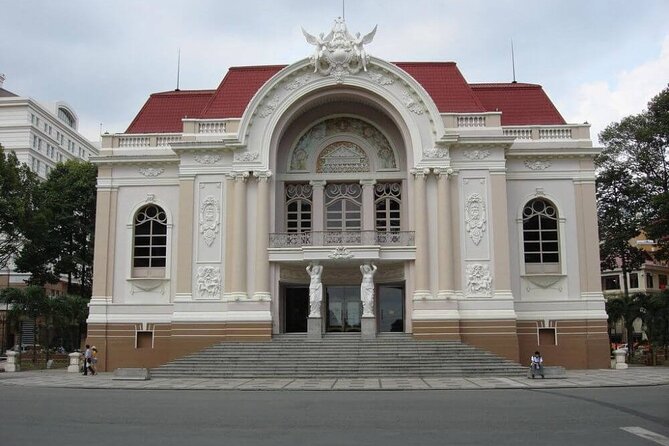
The Central Post Office receives 15 minutes, while Notre Dame Cathedral receives only five. These stops are close together in the city center and work mainly as architectural photo stops.
The post office was built during the French colonial period and remains one of the city’s best-known historic public buildings. With only 15 minutes, you will have time to look at the interior and take photographs, but not linger over every detail or treat it as a full architectural visit.
The five-minute cathedral stop is especially short. It is enough for an exterior photograph if traffic and timing cooperate, but you should not expect to enter, attend a service, or explore the building at length. The description calls Notre Dame one of Southeast Asia’s most notable cathedrals, but the practical point is simpler: this is a quick look at an important central landmark.
These two stops are useful for first-time visitors, yet they are not the heart of the tour. If colonial architecture is your main reason for booking, you may want to ask how much time the guide can actually provide at each site.
Jade Emperor Pagoda and living religious practice
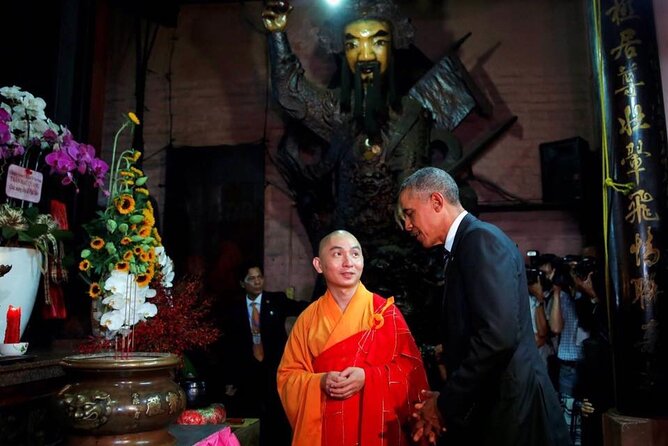
The Jade Emperor Pagoda, also called Chùa Ngọc Hoàng, receives about 30 minutes. It was built between 1892 and 1900 by Luu Minh, a Chinese man who moved to Vietnam for business and believed strongly in Buddhism and Taoism.
This is where the itinerary shifts from government and colonial buildings to local worship. A pagoda is not just a decorative stop. It is a place where people come to pray, make offerings, and follow religious traditions, and a guide can explain what you are seeing without reducing it to a quick photograph.
Thirty minutes gives you a reasonable amount of time for a compact visit. Dress and behave respectfully, since this is an active religious site. The supplied information does not specify a dress code, so your guide is the right person to ask on the day.
I like this stop because it adds cultural context to the war and colonial history. You see how ordinary religious life continued through the political changes that dominate many accounts of Ho Chi Minh City.
A few more Ho Chi Minh City half-days to weigh up
- Cu Chi Tunnels and Mekong Delta Full Day Tour – Max 12
★ 5.0 · 6,257 reviews - Ho Chi Minh: Full-Day Cu Chi Tunnels and Mekong Delta Tour
★ 4.8 · 4,616 reviews - Mekong Delta Small Group Full Day Tour
★ 5.0 · 2,652 reviews - VIP Tour Cuchi Tunnels & Mekong Delta Cruise Full Day Group 12pax
★ 5.0 · 1,650 reviews
Lacquerware at Phuongnam Lacquerware
The 30-minute workshop visit introduces lacquerware, a traditional craft in which resin from a tree is mixed with colored pigments to decorate objects. The practice was probably introduced from China in the first century CE.
You will see craftsmen at work and colorful arrangements of handmade art products. This is more useful than a shop stop alone because you get a look at the labor behind the finished pieces. The workshop also gives the day a change of rhythm after several formal historic sites.
The practical question is shopping pressure. The provided details identify the place as a lacquerware factory and describe the craft, but they do not state whether buying is required or how long you can spend browsing. If you are interested in Vietnamese handicrafts, this could be a worthwhile stop. If you are not, 30 minutes may feel longer than necessary, especially on an already full schedule.
Still, the visit has value because lacquerware is part of Vietnam’s traditional art scene, and the guide can explain how the resin, pigments, and handwork come together.
War Remnants Museum: the day’s most demanding stop
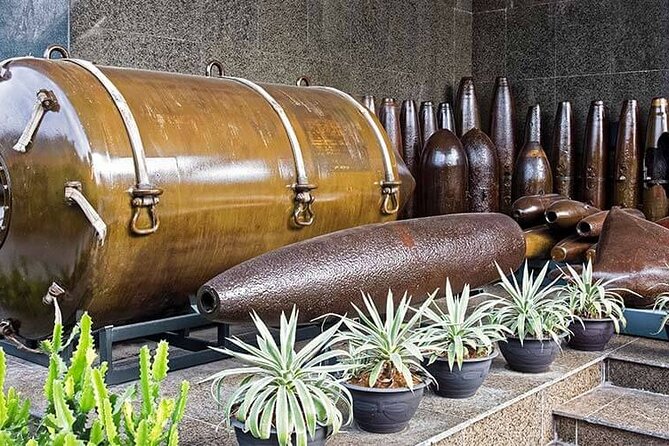
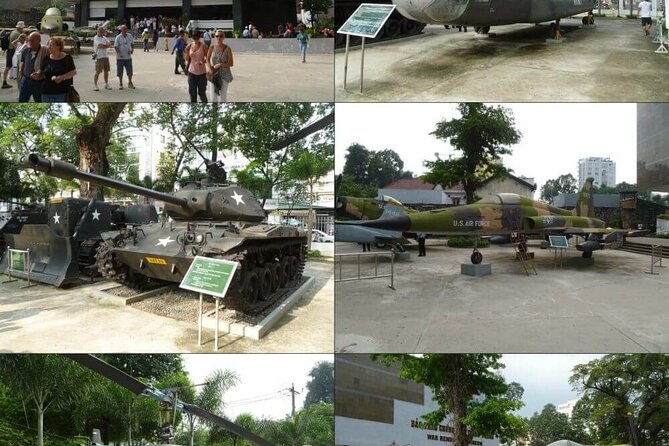
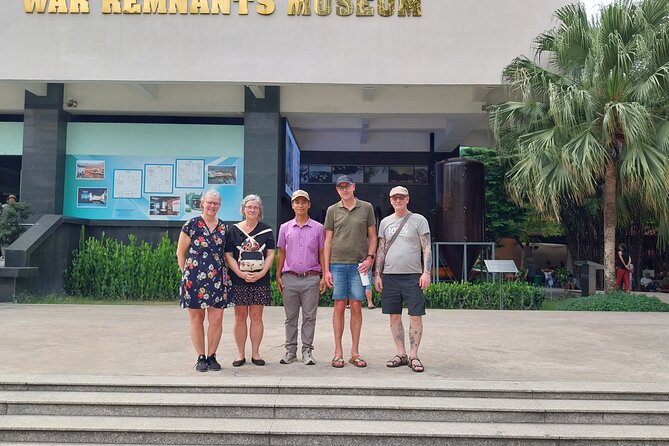
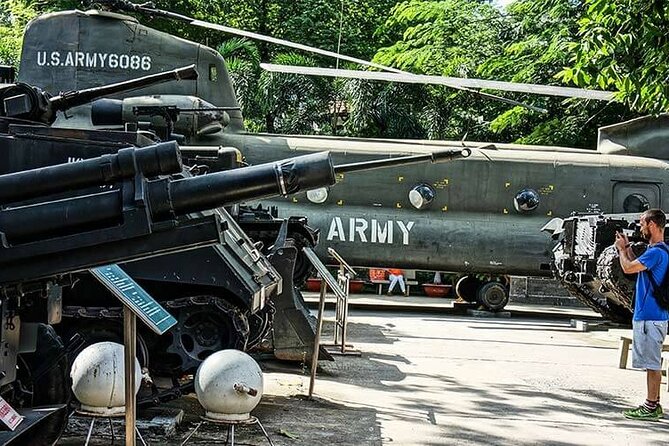
The War Remnants Museum receives 50 minutes. This is one of the most important visits on the route, but it is also the one most likely to leave you quiet afterward.
The museum presents Vietnam’s conflicts through photographs, military equipment, and displays about the effects of war. The tour description specifically points to images connected with deceased American and Vietnamese photographers and journalists who worked during the French and American conflicts.
The museum’s presentation is strongly shaped by Vietnam’s point of view. That is not a flaw, but you should know it before entering. The displays can be painful and politically charged, and 50 minutes allows for a meaningful introduction without giving you time to read every panel.
I would save your attention for the photography and the human cost of the conflict rather than trying to race through the entire collection. The museum is not a light sightseeing stop, and it may be wise to leave a little quiet time afterward if the schedule permits.
This stop also makes the private arrangement more useful. You can ask your guide for background, clarification, or context as you go. The guide is not simply leading you from one address to the next. At its best, this part of the day becomes a conversation about how history is remembered.
Ba Thien Hau Temple in Cholon
The route then moves to Cholon, Ho Chi Minh City’s Chinatown, for a 30-minute visit to Ba Thien Hau Temple. The temple was built around 1760 by a Cantonese congregation and is one of the oldest Chinese temples in the city.
This stop connects neatly with the Jade Emperor Pagoda, but the two sites are not interchangeable. The Jade Emperor Pagoda introduces Chinese-influenced Buddhism and Taoism in a different setting, while Ba Thien Hau reflects the long presence of Cantonese communities in Cholon.
Give yourself time to notice the atmosphere and the details of the worship space. Incense, figures, and temple decoration are part of a living tradition, not a museum display. Your guide can help explain who Thien Hau is and why the temple matters to the local Chinese-Vietnamese community, though the supplied information does not name the guide or provide a detailed explanation of the religious program.
Thirty minutes is enough for a compact visit. As at the Jade Emperor Pagoda, respectful behavior matters.
Binh Tay Market, a working wholesale center
Binh Tay Market receives another 30 minutes. It is described as the largest wholesale trading center in Ho Chi Minh City and as a place with a more everyday commercial character than Ben Thanh Market.
That distinction matters. Ben Thanh is familiar to most people planning a first visit, while Binh Tay gives you a look at goods moving through a working market. The value is less about checking off a famous attraction and more about seeing how Cholon functions as a trading district.
Half an hour will give you a taste, not a full market study. You may find the market crowded, noisy, or difficult to navigate, and the pace of a guided vehicle tour means you will not have unlimited time to shop. The supplied information does not identify specific products or provide a shopping allowance, so treat this as an observation stop unless your guide says otherwise.
I like placing Binh Tay after Ba Thien Hau Temple. The temple shows the spiritual side of Cholon; the market shows its commercial side. Together, they make this section of the tour more meaningful than a quick photo beside a market entrance.
The Secret Weapon Cellar in District 3
The final listed stop is the Secret Weapon Cellar of the Saigon Rangers, with about 20 minutes. It is located in a narrow alley in District 3, inside a house that looks ordinary from the outside.
The cellar was used to conceal weapons during the Vietnam War. That small scale is what makes the visit memorable. Instead of another large museum with broad displays, you see a discreet site connected to underground wartime activity.
Twenty minutes is brief, but the compact visit suits the place. There is no need for a long walk through galleries. The main value comes from understanding how an unremarkable house could serve a dangerous purpose during the war.
This stop also helps the day finish with a less familiar piece of history. The Independence Palace presents power at the top; the cellar points to covert action at street level. That contrast gives the itinerary a better shape than a simple string of famous buildings.
What $33.54 per person really buys
At $33.54 per person, the price is appealing for a private 10-hour tour if your group has enough people to share the cost. You receive an air-conditioned vehicle, an English-speaking guide, bottled water, entrance fees, and pickup and drop-off within central District 1.
That package removes several small expenses that can add up during a long day. You do not need to arrange separate transport between the central district, Cholon, and District 3, and admission fees are already covered.
The value depends on your priorities. A private vehicle and guide are more useful here than on a compact walking route because the stops are spread across several parts of the city. On the other hand, the schedule is broad, and the short visits mean you are paying for access to many places rather than long, careful time at each one.
Tips, gratuities, and personal expenses are not included. The supplied information also does not mention meals, so plan for that cost separately. Group discounts are available, but no discount amount is provided.
Who should book this private day?
I would recommend this tour to a first-time visitor who wants a strong overview of Ho Chi Minh City in one day. It suits you especially well if you want history, religion, Chinatown, markets, and craft traditions in one package.
The private format is also a good fit for families or small groups with mixed interests. One person can ask about the war, another about architecture, and another about shopping or religious customs. The published rating is 5 out of 5, with a 100 percent recommendation rate from 17 ratings, and the strongest praise centers on the personalized feel and the amount people learned from the post office, Jade Emperor Pagoda, and War Remnants Museum.
I would hesitate if you prefer a slow day with long museum visits. The tour covers a lot of ground and gives many sites only 15 to 30 minutes. You should also clarify the Cu Chi Tunnel issue. The title includes Cu Chi, but the detailed stops provided here do not include the tunnels. Do not assume that a visit is part of the day without written confirmation.
Free cancellation is available until 24 hours before the start time for a full refund. Cancellations or changes made within 24 hours are not accepted for a refund.
FAQ
How long does the tour last?
The tour lasts approximately 10 hours.
Is this a private tour?
Yes. Only your group participates in the activity.
Is pickup included?
Pickup and drop-off are included for locations within central District 1 in Ho Chi Minh City, as specified in the tour details.
Is an English-speaking guide provided?
Yes. An English-speaking tour guide is included.
Are entrance fees included?
Yes. Entrance fees for the listed stops are included.
Does the price include food?
No meal is listed as included. Bottled water is included, while personal expenses are not.
Does this tour visit the Cu Chi Tunnels?
The tour title mentions Cu Chi Tunnel, but the detailed itinerary supplied for this experience does not list a Cu Chi Tunnel stop. Confirm this directly with Saigon Foody Tour before booking.
Should you book it?
Book this tour if you want one private day covering many sides of Ho Chi Minh City, and if you value having transport, admission fees, and an English-speaking guide bundled into the price. The War Remnants Museum, Cholon temples, Binh Tay Market, and Secret Weapon Cellar give the day more substance than a basic colonial-landmark tour.
Skip it if you want a slow, specialist visit to only one or two sites. Before booking, get clear confirmation about the Cu Chi Tunnel, then expect a full schedule with several short stops. For a first day in the city, the mix is strong and the $33.54 price offers good practical value.
Just added around Ho Chi Minh City
- Ho Chi Minh city Street Food by scooter tour | female driver★ 5.0 · 3 reviews
- Vung Tau City Shore Excursion from Phu My Port★ 5.0 · 3 reviews
- Ho Chi Minh City: Full Long Tan Battlefield Tour★ 4.7 · 3 reviews
- Ho Chi Minh City: Guided Food Tour by Scooter★ 5.0 · 3 reviews
- Ride Saigon: Private Half-Day Motorbike Adventure★ 5.0 · 3 reviews
- PHU MY SHORE EXCURSION: Saigon Past and Present Tour★ 5.0 · 3 reviews
- Ho Chi Minh: Cai Be-Mekong Delta Local Village Full Day Tour★ 3.7 · 3 reviews
- 3D2N Mekong Delta Tour: Cycling – Kayaking – Floating Market★ 5.0 · 3 reviews
Cu Chi Tunnels Tours, compared.
Cu Chi Tunnels Tour from HCM City – Morning or Afternoon
Read our review →
Cu Chi Tunnels-Tapioca Small Group Tour Morning or Afternoon
Read our review →
Cu Chi Tunnels and Mekong Delta Signature Tour
Read our review →
Cu Chi Tunnels and Mekong Delta Full Day Tour – Max 12
Read our review →
Full-Day Cu Chi Tunnels and Mekong Delta Tour
Read our review →
Cu Chi Luxury Group Tour – Tapioca and Cake Half Day
Read our review →
CuChi Tunnels&Mekong Delta-Boat,TukTuk,Coconut Village SmallGroup
Read our review →Browse the lists this tour appears in