
Reviewed · HISTORICAL TOURS
Ho Chi Minh City Private City Tour – History, Culture, Local Life
The most useful feature here is the private, flexible format. In four hours, you move from the War Remnants Museum and the Independence Palace to a hidden wartime cellar, a Chinese-influenced pagoda, and a flower market. That gives you more than a parade of famous buildings. You get a quick look at how Saigon remembers its past and lives today.
I like the way the tour mixes major sights with places many short city tours skip, especially the Thích Quảng Đức Monument and secret weapon cellar. I also like the relaxed approach to timing. One guest arriving before hotel check-in needed coffee and a slower start, and the guide adjusted the plan rather than racing through every stop. The main drawback is simple: four hours is tight, so some landmarks are only viewed from outside or passed by.
In This Review
- Key points to know before booking
- Why this four-hour tour works for a first look at Saigon
- War Remnants Museum: begin with Vietnam’s difficult modern history
- Colonial landmarks and the city’s civic center
- Thích Quảng Đức Monument and the meaning of the intersection
- The secret weapon cellar and the 1968 offensive
- Nguyễn Huệ Street, the Café Apartment, and old District 3
- Chùa Vạn Phật and Chinese influence in Chợ Lớn
- Flower markets and the value of seeing ordinary routines
- A private guide who can adjust the pace
- Is $31.57 per person good value?
- Who should book this Ho Chi Minh City tour?
- Final verdict: book it for range and flexibility
- FAQ
- How long does the Ho Chi Minh City private tour last?
- Is hotel pickup included?
- Is this a private tour?
- What transportation can be used?
- Is the War Remnants Museum ticket included?
- Is Independence Palace admission included?
- Can I cancel for a full refund?
Key points to know before booking
- A private four-hour introduction: Your group travels with its own English-speaking guide, so the pace can bend around your interests.
- History beyond the standard landmarks: The War Remnants Museum, Thích Quảng Đức Monument, and secret weapon cellar add serious context to the city.
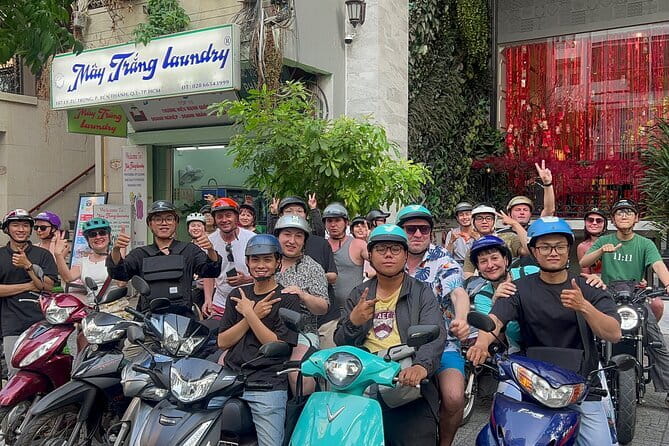
- Several transport choices: The tour can operate by motorbike, jeep, car, walking, or cyclo.
- Local life is part of the plan: You visit a flower market and see older apartment buildings and everyday neighborhoods.
- Central hotel pickup is included: Pickup and drop-off cover hotels in Districts 1, 3, and 4.
- Budget-friendly private touring: At $31.57 per person, the value improves when two or more people share the booking.
Why this four-hour tour works for a first look at Saigon
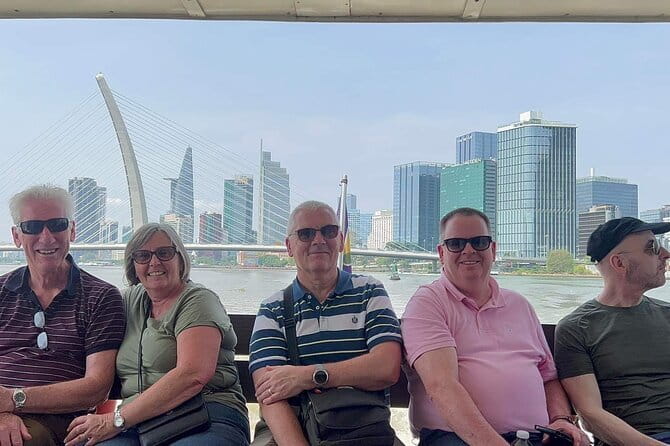
Ho Chi Minh City can feel like several cities at once. Colonial buildings sit beside crowded streets, sleek cafés occupy old apartment blocks, and a quiet pagoda may be only a short ride from a major boulevard. This tour gives you a guided first pass through those contrasts without asking you to organize several separate visits.
The plan is especially useful during a short stay. You cover District 1 landmarks, a few important sites in District 3, and a Chinatown temple in one outing. You also get private transportation, which saves time in a city where crossing even a short distance can take longer than expected.
The tour is not designed for long museum visits or a slow architectural study. Think of it as a carefully packed introduction. You get enough time to understand each stop, then move on before the four-hour clock runs out.
The private setup makes a real difference. If you are curious about the war, your guide can give more attention to the museum and cellar. If you want local street life, you can ask for more time around the market or neighborhood stops. The available transport styles also let you choose the mood, from the practical comfort of a car to the closer street-level feel of a motorbike, cyclo, or walking route.
More history walks in Ho Chi Minh City:
- From Ho Chi Minh: Cu Chi Tunnels Half-Day History Tour with Guide
★ 5.0 · 480 reviews - Saigon Afternoon City Historical Scooter Tour |Opt: Ao Dai Riders
★ 5.0 · 466 reviews - Saigon Unseen, History, & Hidden Gems Sightseeing Motorbike Tour
★ 5.0 · 416 reviews
War Remnants Museum: begin with Vietnam’s difficult modern history
The War Remnants Museum is the tour’s main historical stop. You spend about 30 minutes looking at photographs, artifacts, and accounts connected with Vietnam’s modern conflicts. The material is serious and sometimes distressing, so this is not a light opening to the day. It is, however, an important one.
The museum helps explain many of the later stops. The Thích Quảng Đức Monument, the wartime weapon cellar, and the country’s political landmarks make more sense after you have seen the photographs and displays here. I recommend treating the visit as an introduction rather than trying to absorb every exhibit in half an hour.
Admission is not included. The entrance fee is 40,000 Vietnamese dong, so bring some local cash or confirm the current payment method with your guide. The museum closes after 5 p.m., which matters if you choose a later departure.
Thirty minutes is a useful compromise for a city overview, but it may feel short if modern Vietnamese history is your main interest. You can ask your guide to keep the rest of the route moving if you want more museum time, though the tour includes many other stops.
Colonial landmarks and the city’s civic center
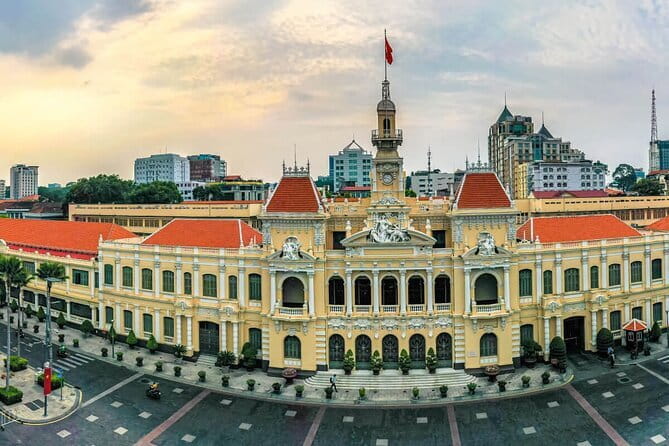
After the museum, the route takes you through the central area, where French colonial buildings and newer urban life share the same streets. The Saigon Central Post Office is one of the most recognizable stops. Built during the French Indochina period, it remains a working post office near Notre-Dame Cathedral.
This is a good place to notice the difference between a monument and a living building. The post office is not simply a decorative shell. It still functions as a public service, while its architecture gives you a clear reminder of the city’s colonial past.
You also pass the Saigon Opera House, another fine example of colonial-era design. Since it is a pass-by stop, do not expect a theater visit or an interior tour. The value is in seeing how the building fits into the city center, especially when your guide points out its setting and purpose.
The Independence Palace, also called Reunification Convention Hall, is another major landmark on the route. It was designed by architect Ngô Viết Thụ and served as the home and workplace of the president of the Republic of Vietnam. The tour may include it as a view or brief stop, while admission is listed separately at 40,000 Vietnamese dong.
That distinction matters. If you want to enter the palace and see its rooms, you should confirm the timing with your guide before the tour begins. If you only need a strong outside view and a short explanation, the planned format should suit you better.
Thích Quảng Đức Monument and the meaning of the intersection

The Thích Quảng Đức Monument is a short but weighty stop. You spend about 15 minutes here, at the site connected with the monk’s self-immolation on June 11, 1963. He was protesting the persecution of Buddhists by South Vietnam’s government.
This is one of the tour’s most valuable stops because it links a physical street corner with a major political and religious event. The monument is not as easy to understand from a quick photograph. A guide can explain why the event mattered and how it affected public opinion during a tense period.
You do not pay an admission fee here. The visit is brief, but I would not hurry it. If the subject interests you, ask for a little more context. The tour’s private format makes that possible, although extra time here means less time elsewhere.
A few more Ho Chi Minh City half-days to weigh up
- Private Street Food Tour by Motorbike/Car with Local Students
★ 5.0 · 3,950 reviews - Private Street Food Evening Walking Tour in Ho Chi Minh City
★ 5.0 · 3,175 reviews - Private Street Food Motorbike Tour in Ho Chi Minh City
★ 5.0 · 2,180 reviews - Cu Chi Ben Duoc Tunnels Tour (max 12 people) with Private Option
★ 5.0 · 1,885 reviews
The secret weapon cellar and the 1968 offensive
The Hầm Vũ Khí Bí Mật, or Secret Weapon Cellar, offers a different view of wartime Saigon. The small site is linked with weapons storage during the period around the 1968 Tết Offensive. You spend about 15 minutes here, with no admission fee listed.
The cellar is useful precisely because it is modest. You are not looking at a large museum with rows of displays. You are seeing a concealed wartime location inside the city, which helps explain how conflict could operate close to ordinary homes and streets.
This stop also breaks up the larger public landmarks. The War Remnants Museum presents photographs and objects in a formal setting. The cellar gives you a more physical sense of secrecy and urban wartime activity. The two visits work well together.
As with the monument, 15 minutes is enough for an introduction but not a full historical study. If you want detailed military background, tell your guide early. The available time may favor a clear explanation over a long stop.
Nguyễn Huệ Street, the Café Apartment, and old District 3

The route then shifts from political history to present-day city life. Nguyễn Huệ Walking Street is a broad central boulevard and one of Saigon’s best-known public spaces. Its history reaches back to the city’s older thoroughfares, but today it is associated with open pedestrian space, city views, and a steady flow of local activity.
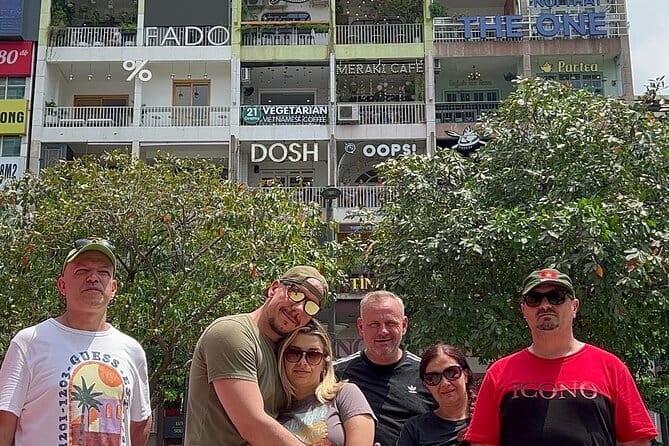
Nearby, the Café Apartment offers a glimpse of how Ho Chi Minh City reuses older buildings. The structure is an apartment block filled with cafés and small businesses. Even if you do not stop for a drink, it is worth seeing because it shows how residents adapt existing spaces instead of clearing everything away for new construction.
The Nguyễn Thiện Thuật apartment buildings provide another look at older urban housing. These American-built historic buildings in District 3 are less polished than the grand central landmarks, and that is the point. They help you see the city as a place where daily life takes place in aging, practical spaces rather than only in postcard settings.
The itinerary also includes views of local neighborhoods. This portion may be the most revealing for anyone who wants more than a checklist of monuments. You see the city’s narrow mix of homes, shops, apartments, and traffic from the chosen vehicle or on foot.
Chùa Vạn Phật and Chinese influence in Chợ Lớn
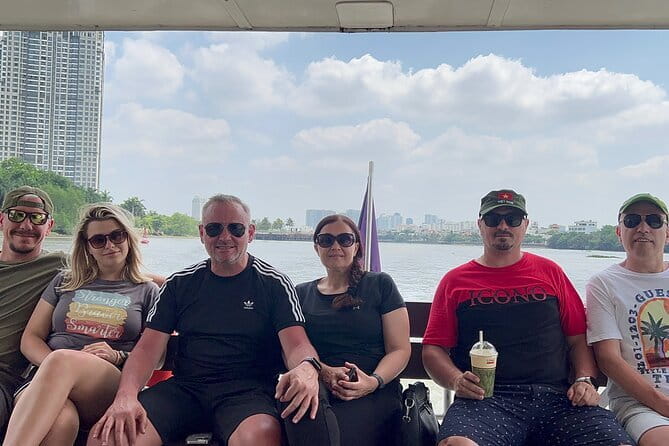
Chùa Vạn Phật, also called the Temple of Ten Thousand Buddhas, brings a spiritual and cultural change of pace. The temple or pagoda is in Chinatown, and you spend about 30 minutes here without an admission fee.
The stop introduces Chinese cultural influence in Ho Chi Minh City, which is easy to miss if you stay around District 1. Religious buildings often explain a neighborhood better than a general drive-by. Here, your guide can help you notice the traditions, symbols, and setting that connect the temple with the wider Chinese-Vietnamese community.
Dress and behavior should be respectful at any temple. The supplied tour details do not give a formal dress code, so it is sensible to choose modest clothing and follow local instructions. The temple visit is long enough for a calm look, rather than a rushed photograph.
This is also a useful counterpoint to the war-related stops. After the museum, monument, and cellar, the pagoda reminds you that the city’s identity is not only political. Religion, migration, family, and neighborhood traditions remain part of everyday life.
Flower markets and the value of seeing ordinary routines
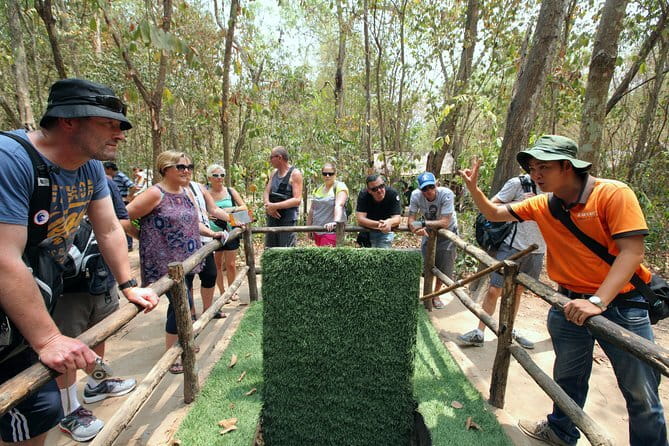
The flower market is the final local-life stop. You observe one of the city’s lively markets and see a side of Ho Chi Minh City that a central sightseeing route cannot provide. Market visits work best when you pay attention to small details: what is being sold, how people move through the space, and how the market fits into the surrounding streets.
The tour does not promise a shopping session or a meal here. It is more about observation. If you enjoy street scenes and local routines, this may be one of the most memorable parts of the morning or afternoon.
It also gives the tour a sensible ending. You begin with national history and famous civic buildings, then finish among ordinary commercial activity. That progression makes the city feel less like a museum and more like a living place.
A private guide who can adjust the pace
The strongest practical feature is the guide’s ability to respond to your needs. One early-arriving guest had hours to fill before hotel check-in and needed coffee, food, and a slower start. The guide was willing to change the pace and make room for those needs instead of forcing every listed stop into the schedule.
That detail tells you what private touring can do well. You are not tied to a large group’s speed. You can ask for more explanation at the museum, pause for coffee, or spend less time at a landmark that does not interest you.
The guide speaks English, and private transportation is included. Pickup and drop-off are available at central hotels in Districts 1, 3, and 4. If you stay outside those districts, check the pickup arrangement before booking rather than assuming it is included.
You can choose between motorbike, jeep, car, walking, and cyclo operation. The data does not specify which option is available at every departure or how pricing changes by vehicle, so confirm your preferred style in advance. A car or jeep may feel easier for a mixed-age group, while a motorbike or cyclo can give you a closer view of street life.
Is $31.57 per person good value?
At $31.57 per person, this is a reasonable price for a private four-hour city introduction, especially if two or more people share the booking. You receive an English-speaking guide, private transportation, and hotel pickup and drop-off in the covered central districts.
The price does not include the War Remnants Museum ticket or Independence Palace admission. Each is listed at 40,000 Vietnamese dong. Tips and holiday surcharges are also separate. These extra costs are modest, but you should count them when comparing this tour with an outing that includes admissions.
The value comes less from the number of tickets and more from the time saved. Organizing the museum, central landmarks, District 3 neighborhoods, Chinatown, temple, and market on your own would require several rides and careful route planning. A private guide also gives you a chance to ask questions as the city changes around you.
The tradeoff is depth. You cannot spend an hour at the museum, tour every room of the palace, and linger at each neighborhood within four hours. If you want a single attraction in detail, book a focused visit instead. If you want orientation and variety on your first day, the price makes good sense.
Who should book this Ho Chi Minh City tour?
I would choose this tour for a first visit, a short stop, or an early arrival when you want structure without committing to a full-day program. It is also a good fit if you prefer private touring and want to shape the pace around your group.
History-focused visitors should pay special attention to the museum, monument, cellar, and palace. People interested in architecture will appreciate the Central Post Office, Opera House, Independence Palace, Café Apartment, and older apartment buildings. Anyone curious about local life gets the flower market, neighborhoods, and temple.
Families and mixed groups may like the private format because the guide can adjust the balance between serious history and lighter street viewing. It can also work well for people who do not want to manage several taxis or figure out the city’s districts on their own.
I would hesitate only if you want a slow, detailed visit at every site. The route covers a lot, and some landmarks are pass-by views. The four-hour length is its strength for orientation, but its limit for depth.
Final verdict: book it for range and flexibility
Book this tour if you want a well-shaped introduction to Ho Chi Minh City, with serious historical stops, colonial architecture, religious culture, and everyday neighborhoods in one private outing. The secret cellar, Thích Quảng Đức Monument, temple, and flower market give it more character than a route made only of famous buildings.
Before you pay, decide which stops matter most. Tell the guide if the War Remnants Museum deserves extra time, ask about entering Independence Palace, and confirm your preferred transport type. If you do that, the tour should give you a useful first map of Saigon without forcing you into a rigid schedule.
Free cancellation is available until 24 hours before the start time. Inside that window, the payment is not refunded and changes are not accepted.
FAQ
How long does the Ho Chi Minh City private tour last?
The tour lasts approximately four hours.
Is hotel pickup included?
Pickup and drop-off are included for center hotels in Districts 1, 3, and 4.
Is this a private tour?
Yes. Only your group participates in the activity.
What transportation can be used?
The tour can operate by motorbike, jeep, car, walking, or cyclo. Confirm your preferred option when booking.
Is the War Remnants Museum ticket included?
No. The museum entrance fee is listed as 40,000 Vietnamese dong.
Is Independence Palace admission included?
No. The Independence Palace entrance fee is listed as 40,000 Vietnamese dong.
Can I cancel for a full refund?
Yes. You can cancel at least 24 hours before the experience start time for a full refund. Cancellations or changes made within 24 hours are not accepted for a refund.
Just added around Ho Chi Minh City
- Ho Chi Minh city Street Food by scooter tour | female driver★ 5.0 · 3 reviews
- Vung Tau City Shore Excursion from Phu My Port★ 5.0 · 3 reviews
- Ho Chi Minh City: Full Long Tan Battlefield Tour★ 4.7 · 3 reviews
- Ride Saigon: Private Half-Day Motorbike Adventure★ 5.0 · 3 reviews
- Ho Chi Minh City: Guided Food Tour by Scooter★ 5.0 · 3 reviews
- PHU MY SHORE EXCURSION: Saigon Past and Present Tour★ 5.0 · 3 reviews
- Ho Chi Minh: Cai Be-Mekong Delta Local Village Full Day Tour★ 3.7 · 3 reviews
- 3D2N Mekong Delta Tour: Cycling – Kayaking – Floating Market★ 5.0 · 3 reviews
Historical Tours, compared.
Cu Chi Tunnels Half-Day History Tour with Guide
Read our review →
Saigon Afternoon City Historical Scooter Tour |Opt: Ao Dai Riders
Read our review →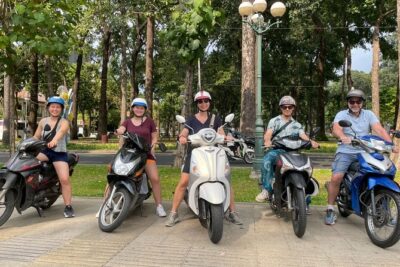
Saigon Unseen, History, & Hidden Gems Sightseeing Motorbike Tour
Read our review →
Saigon Morning City Historical Scooter Tour w Ao Dai Rider option
Read our review →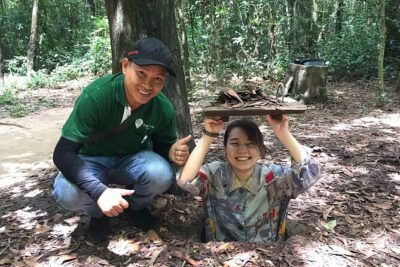
6 Hours Historical Tour in Cu Chi Tunnel with Free Snack
Read our review →
Vung Tau Essential: Beach, Christ Statue & Colonial Heritage
Read our review →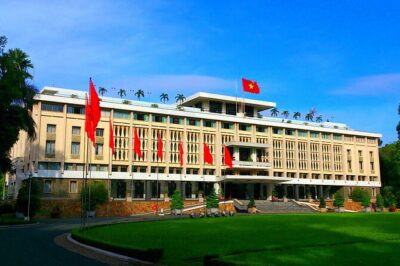
Full-Day Ho Chi Minh City Tour with Colonial Heritage & Chinatown
Read our review →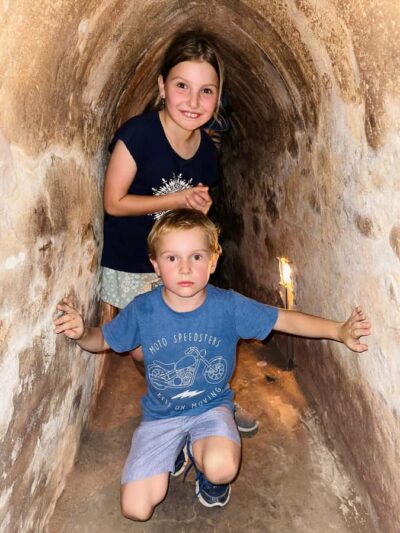
Cu Chi Tunnels Guided Tour: Vietnam War History Half-Day
Read our review →Browse the lists this tour appears in