
Reviewed · CU CHI TUNNELS TOURS
Explore Cu Chi Tunnels & Saigon History 1 Day Tour
The most striking part of this day is the chance to crawl through a section of the Cu Chi Tunnels, then see the traps, tanks, and underground spaces that made this area so important during the Vietnam War. Back in Saigon, the War Remnants Museum and a secret weapons cellar add a more personal, city-based view of the conflict.
I like the small maximum of 10 people, since it gives you a better chance to hear the English-speaking guide and ask questions. I also like the mix of serious history and ordinary city landmarks, including the Central Post Office and Notre-Dame Cathedral Basilica. The drawback is the pace: this is a long day, with roughly 10 to 11 hours on the road and several emotionally heavy stops.
In This Review
- Key points to know before booking
- Why this Cu Chi and Saigon combination works
- The 7:30 am pickup and the road to Cu Chi
- Entering the Cu Chi Tunnels
- Returning to Saigon for pho
- Facing the past at the War Remnants Museum
- The Secret Weapons Cellar in central Saigon
- Saigon’s French-era landmarks in brief
- The Last Helicopter and the final wartime image
- What $63 includes, and where the value lies
- Who should book this day tour
- Booking, cancellation, and practical points
- Should you book the Cu Chi and Saigon history tour?
- FAQ
- What time does the tour start?
- Where is pickup available?
- How long does the experience last?
- How many people can join the tour?
- Is lunch included?
- What refreshments are provided?
- What happens if I cancel or the tour is canceled?
Key points to know before booking
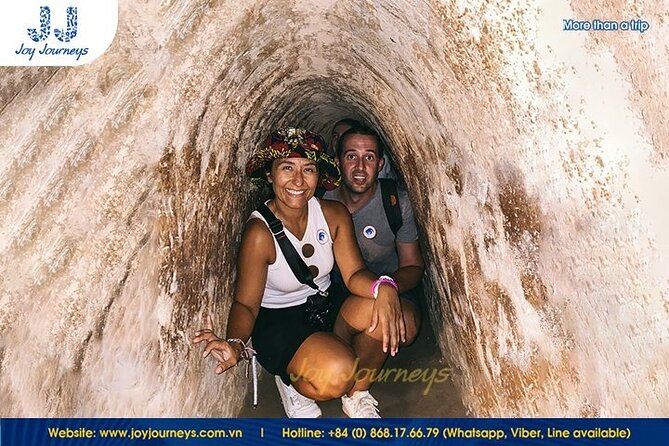
- Crawl through the Cu Chi Tunnels: See the underground passages, wartime traps, an ex-US Army tank, and the Viet Cong food tapioca.
- Small groups capped at 10: A useful size for questions and a more personal guiding style.
- War history continues in central Saigon: The War Remnants Museum and Secret Weapons Cellar add context after Cu Chi.
- Lunch and refreshments are included: Pho, vegetarian food by advance request, two bottles of water, and snacks are provided.
- A full day from 7:30 am: Pickup, Cu Chi, lunch, museums, and colonial-era landmarks fill the schedule.
- Pickup is limited to three districts: Hotel collection is offered in Districts 1, 3, and 4.
Why this Cu Chi and Saigon combination works
Many Cu Chi excursions use most of the day getting to the tunnels and back. This one adds several central Saigon sights, so you get more than an underground war site and a long drive. The result is a packed day that connects the rural battlefield with the city where the war’s political and military story played out.
I find that useful because Cu Chi can seem isolated when viewed by itself. At the tunnels, you see how guerrilla forces lived, moved supplies, and set traps. At the museum and city sites, you face the wider human and political cost of the war. The two settings help each other make sense.
The small group is another practical strength. With no more than 10 people, the guide can explain details without speaking to a large crowd. The tour description promises experienced, well-English-speaking guides, but no guide names are provided, so you cannot choose a particular guide in advance.
The day is not designed for slow sightseeing. You will spend time in a vehicle, change from outdoor tunnel exploration to indoor museum viewing, and make several short stops in central Saigon. If you prefer one major attraction with plenty of free time, this will feel rushed. If you want a broad first look at Vietnam’s wartime past, the full schedule makes good use of one day.
More ways to visit the Cu Chi tunnels:
- Cu Chi Tunnels Tour from HCM City – Morning or Afternoon
★ 5.0 · 15,833 reviews - HCM: Cu Chi Tunnels-Tapioca Small Group Tour Morning or Afternoon
★ 5.0 · 7,485 reviews - Cu Chi Tunnels and Mekong Delta Signature Tour
★ 5.0 · 7,328 reviews
The 7:30 am pickup and the road to Cu Chi
Pickup begins at 7:30 am from accommodation in District 1, District 3, or District 4. The collection process usually takes about 30 minutes, so you should be ready at the start time rather than waiting for a precise hotel-door departure.
The air-conditioned vehicle matters here. The complete experience lasts about 10 to 11 hours, and the trip includes travel outside central Ho Chi Minh City before returning for lunch. Air conditioning and bottled water make the long day easier, especially in warm weather.
The route gives you time to shift from modern Saigon to the wartime setting around Cu Chi. The journey itself is not the main attraction, but it creates useful contrast. You leave the city’s streets and colonial buildings behind, then arrive at a place shaped by underground warfare and rural supply routes.
Two bottles of water per person and snacks are included. That is a small but welcome detail on a day with walking, tunnel exploration, and several hours of transport.
Entering the Cu Chi Tunnels
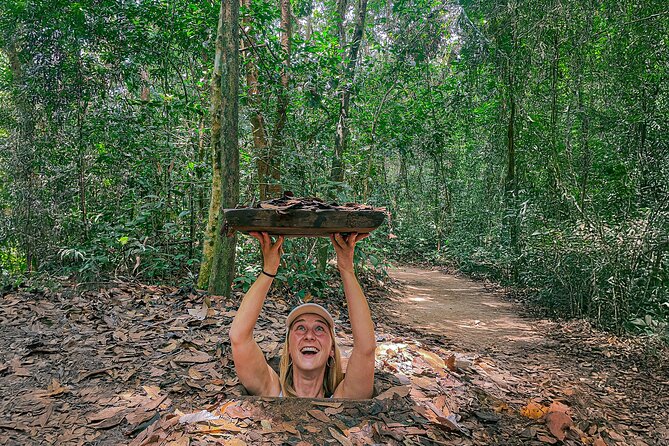
The Cu Chi Tunnels are the heart of the experience. This extensive underground network served as a strategic base during the Vietnam War, with tunnels used for movement, shelter, supplies, and guerrilla operations.
You will see examples of the booby traps used during the war. This part can be unsettling, but it is important. The traps show how fighters with fewer conventional resources used the local terrain and concealment to make movement dangerous for opposing forces.
You also get to examine an ex-US Army tank and touch it. That physical contact gives the site a stronger sense of place than a museum display alone. It is one thing to read about armored vehicles, and another to put your hand on one in the setting where the conflict took place.
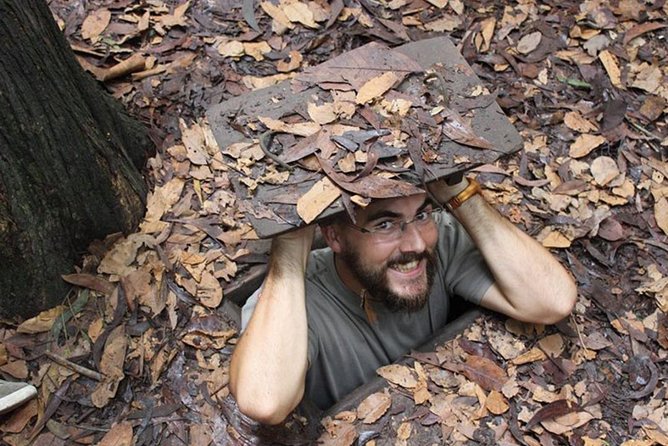
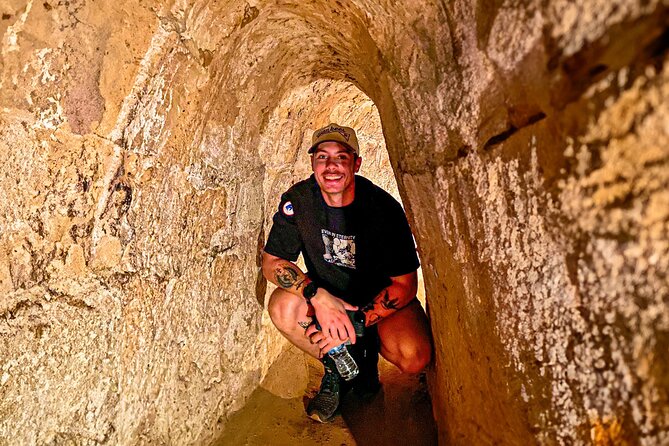
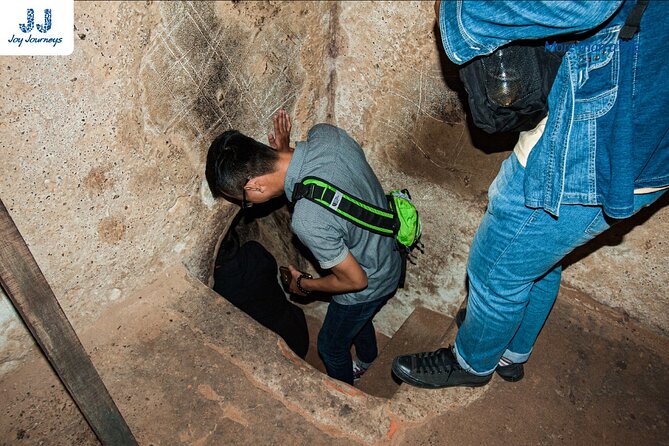
The most memorable activity is crawling through a tunnel section. These passages are narrow by design, and the experience is not simply a walk through a large underground room. You should expect a confined space and a physical activity that may not suit everyone, even though the tour information says most people can participate.
The tunnel visit lasts about two and a half hours. That is long enough to see more than one feature and hear explanations about the site’s wartime role, but it also means you should pace yourself. Wear practical clothing and shoes suitable for walking and crouching. The provided information does not give a dress code, so the sensible choice is comfort rather than style.
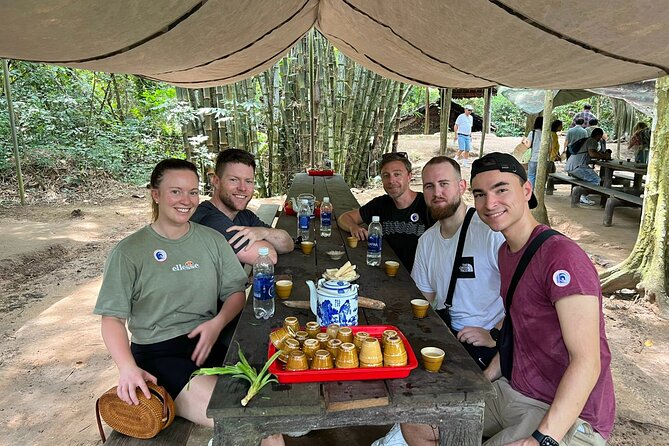
Near the tunnels, you can taste tapioca, a locally grown food associated with the Viet Cong. This is a modest tasting, not a full meal, but it adds an everyday detail to a place often presented only through military hardware and combat stories. Food helps you think about how people living underground obtained and used basic supplies.
Cu Chi is an important place, but it can also simplify a complicated war if you only see it as a clever tunnel system. That is why the later museum visit matters. The tunnels show tactics and survival. The museum gives a wider, harsher account of the conflict’s consequences.
Returning to Saigon for pho
After Cu Chi, the group returns to Ho Chi Minh City for lunch. Pho, the familiar Vietnamese noodle soup with beef or chicken, is served at a local restaurant.
Vegetarian lunch is available with advance notice. You should request it before the tour rather than assume it can be arranged on the day. The included meal keeps the schedule practical and means you do not need to spend time finding a restaurant between major stops.
The lunch portion of the schedule is listed as about three hours, which appears to include the return journey and the meal rather than three hours at the restaurant. Either way, this is the main pause in a long day. Use it to eat, drink water, and reset before the museum and city sightseeing.
Do not expect the meal to be a major food tour. The value is convenience and a local Vietnamese staple, not a menu of many dishes. For this kind of history-focused day, that is a sensible arrangement.
More history walks in Ho Chi Minh City:
- From Ho Chi Minh: Cu Chi Tunnels Half-Day History Tour with Guide
★ 5.0 · 480 reviews - Saigon Afternoon City Historical Scooter Tour |Opt: Ao Dai Riders
★ 5.0 · 466 reviews - Saigon Unseen, History, & Hidden Gems Sightseeing Motorbike Tour
★ 5.0 · 416 reviews - Saigon Morning City Historical Scooter Tour w Ao Dai Rider option
★ 5.0 · 349 reviews
Facing the past at the War Remnants Museum
The War Remnants Museum is one of the most serious stops in Ho Chi Minh City. It documents the Vietnam War and its human cost, including the effects of military action on civilians.
You have about one hour here. That is enough for a focused visit, but not enough to read every display in detail. The museum can be emotionally difficult, so plan to move at your own pace and take a break if needed.
Its viewpoint is strongly shaped by Vietnam’s experience of the war. That perspective is valuable, but you should also recognize that it is not a neutral presentation from every side. A good guide can help place the exhibits within the larger conflict, and the small group makes it easier to ask for context.
This stop balances the Cu Chi visit. The tunnels can seem clever, concrete, and tactical. The museum shifts attention toward destruction, injury, displacement, and long-term consequences. Together, they offer a more complete day than either site alone.
The Secret Weapons Cellar in central Saigon
The Secret Weapons Cellar provides a different kind of wartime story. The underground space was built by the Viet Cong and used as a base for guerrilla warfare and for moving weapons and supplies without detection by American and South Vietnamese forces.
You spend about 30 minutes here. That makes it a short but focused stop, with less time than the museum or tunnels. Its value is the city connection: the war was not only fought in distant countryside. Hidden spaces inside Saigon also supported underground activity.
The site is described as a hidden bunker and secret weapons cellar. The name may vary in casual use, but the point is the same: you see how concealment and logistics supported guerrilla operations. This is a good place to listen closely to the guide, since the significance comes from the explanation as much as from the physical room.
Saigon’s French-era landmarks in brief
The tour then turns from wartime sites to two of the city center’s best-known historic buildings.
You have about 20 minutes at Saigon Notre-Dame Cathedral, officially the Notre-Dame Cathedral Basilica of Saigon. The cathedral was built in the late 19th century during the French colonial period, and its architecture gives you a clear reminder that Ho Chi Minh City’s past includes more than the twentieth-century war.
The stop is brief, so treat it as an exterior look rather than a long architectural visit. The provided details do not promise interior access. Twenty minutes is enough for photographs and a short explanation, but not for a leisurely study of the building.
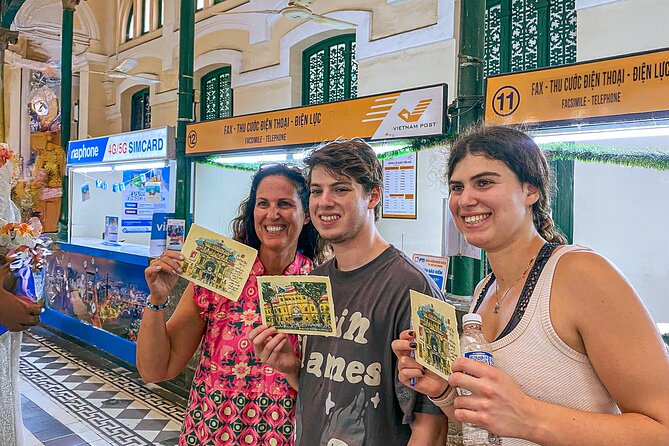
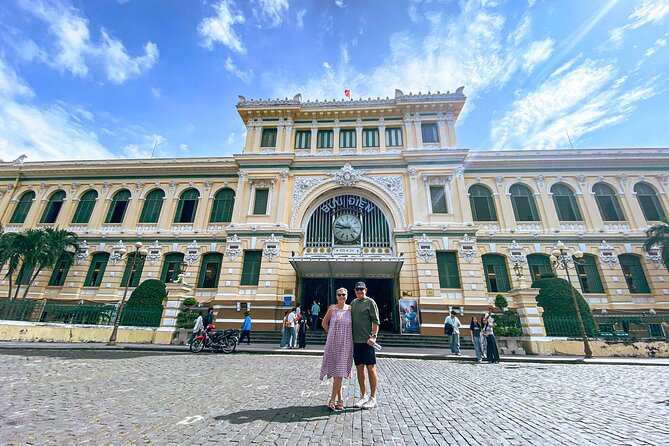
The Central Post Office receives another 20 minutes. This historic structure also dates from the French colonial period and remains one of the city’s most recognizable public buildings. The short visit lets you see the architecture and get your bearings in central Saigon without turning the day into a full city tour.
These landmarks may seem less connected to the tunnels, but they widen the story. Vietnam’s modern identity was shaped by colonial rule, independence movements, war, and reunification. Seeing the cathedral and post office after the wartime sites gives you a quick visual reminder of the layers beneath present-day Saigon.
The Last Helicopter and the final wartime image

The final listed sight is The Last Helicopter, a sculpture commemorating the end of the Vietnam War. It depicts a Huey helicopter, one of the most recognizable symbols of that conflict, lifting off.
The stop is not given a specific duration, so think of it as a short final image rather than a long museum visit. Its strength is symbolic. After seeing tunnels, weapons storage, traps, and museum evidence, you finish with a sculpture linked to the war’s closing moments.
This is a fitting end to a day built around contrasts. You start with underground movement and survival, then see the effects of war in a museum, followed by colonial-era buildings and a sculpture marking the conflict’s end.
What $63 includes, and where the value lies
At $63 per person, the price covers a very full day. You receive an air-conditioned vehicle, pickup in selected central districts, lunch, bottled water, snacks, entrance fees, and a small-group setting capped at 10 people.
The main value is not simply the number of sights. It is the combination of transport, interpretation, and entry costs in one booking. Organizing Cu Chi, lunch, the museum, the bunker, and the central city stops independently would take more planning, especially if you want to fit them into one day.
The small group also helps justify the price. A maximum of 10 is more manageable than a large coach, particularly at the tunnels where you may want to hear explanations and ask questions.
There are limits. Tips are not included, and anything not specifically listed is extra. The experience is history-centered rather than food-centered, and the tight schedule leaves little room for wandering or shopping.
I would call it good value for a first visit when you want structure and broad coverage. It is less suitable if you already know Saigon well or want to spend a whole day at Cu Chi alone.
Who should book this day tour
I would recommend it most strongly to first-time visitors who want a clear introduction to Vietnam’s wartime past. You get the physical setting of Cu Chi, a major museum, a hidden urban bunker, and several central landmarks without having to arrange separate transport.
It also suits history-minded visitors who appreciate seeing both military tactics and civilian consequences. The guide’s English explanations are an important part of the experience, since many of the sites need context to make sense.
The day may be tiring for anyone who dislikes long vehicle journeys or confined spaces. The tunnel crawl is a key feature, not a minor extra, so think carefully if crouching underground sounds uncomfortable.
It may also feel heavy. The War Remnants Museum deals with painful material, and the tunnels and weapons cellar focus on warfare rather than light sightseeing. That is not a flaw, but it is worth knowing before you book.
The tour can accommodate most people according to the supplied information, but no detailed accessibility information is provided for the tunnels. If you have mobility concerns, ask Joy Journeys before booking.
Booking, cancellation, and practical points
Confirmation is received when you book, and a mobile ticket is provided. Pickup is available from accommodation in Districts 1, 3, and 4, with the tour starting at 7:30 am.
Free cancellation is available when you cancel at least 24 hours before the start time. Cancellations or changes made less than 24 hours in advance are not accepted for a refund.
The experience requires good weather. If poor weather cancels the tour, you are offered another date or a full refund. The tour also requires a minimum number of participants, and if that minimum is not met, you are offered another date or experience, or a full refund.
Should you book the Cu Chi and Saigon history tour?
Book it if you want one efficient, small-group day that connects the Cu Chi Tunnels with the War Remnants Museum and central Saigon. The tunnel crawl, ex-US Army tank, tapioca tasting, secret weapons cellar, and included pho give the day plenty of specific experiences for $63.
Skip it if you want a relaxed pace, extensive museum time, or a day focused only on food and architecture. The schedule is long and serious, but for a first visit, it gives you a useful framework for understanding how Vietnam’s war shaped both the countryside and the city.
FAQ
What time does the tour start?
The tour starts at 7:30 am.
Where is pickup available?
Pickup is offered from accommodation in District 1, District 3, and District 4 in Ho Chi Minh City.
How long does the experience last?
The experience lasts approximately 10 to 11 hours.
How many people can join the tour?
The tour has a maximum of 10 guests.
Is lunch included?
Yes. Lunch includes pho with beef or chicken. Vegetarian lunch is available with advance notice.
What refreshments are provided?
Each guest receives two bottles of water and snacks.
What happens if I cancel or the tour is canceled?
You can receive a full refund by canceling at least 24 hours before the start time. Poor weather or failure to meet the minimum number of participants may lead to another date, another experience, or a full refund.
More 1-Day Tours in Ho Chi Minh City
- Cu Chi Tunnels and Mekong Delta 1 Day Tour With Small Group
★ 5.0 · 2,337 reviews - Small-Group Mekong Delta Day Trip: Boat Ride, Cottages & Pagoda
★ 5.0 · 1,327 reviews - Mekong Delta tour: My Tho – Ben Tre 1 day by DGT
★ 5.0 · 1,178 reviews - Small-group Mekong Floating Market Day Trip from Ho Chi Minh City
★ 5.0 · 886 reviews
Just added around Ho Chi Minh City
- Ho Chi Minh city Street Food by scooter tour | female driver★ 5.0 · 3 reviews
- Vung Tau City Shore Excursion from Phu My Port★ 5.0 · 3 reviews
- Ho Chi Minh City: Full Long Tan Battlefield Tour★ 4.7 · 3 reviews
- Ho Chi Minh City: Guided Food Tour by Scooter★ 5.0 · 3 reviews
- Ride Saigon: Private Half-Day Motorbike Adventure★ 5.0 · 3 reviews
- PHU MY SHORE EXCURSION: Saigon Past and Present Tour★ 5.0 · 3 reviews
- Ho Chi Minh: Cai Be-Mekong Delta Local Village Full Day Tour★ 3.7 · 3 reviews
- 3D2N Mekong Delta Tour: Cycling – Kayaking – Floating Market★ 5.0 · 3 reviews
Cu Chi Tunnels Tours, compared.
Cu Chi Tunnels Tour from HCM City – Morning or Afternoon
Read our review →
Cu Chi Tunnels-Tapioca Small Group Tour Morning or Afternoon
Read our review →
Cu Chi Tunnels and Mekong Delta Signature Tour
Read our review →
Cu Chi Tunnels and Mekong Delta Full Day Tour – Max 12
Read our review →
Full-Day Cu Chi Tunnels and Mekong Delta Tour
Read our review →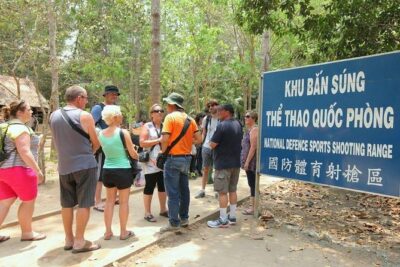
Cu Chi Luxury Group Tour – Tapioca and Cake Half Day
Read our review →
CuChi Tunnels&Mekong Delta-Boat,TukTuk,Coconut Village SmallGroup
Read our review →Browse the lists this tour appears in