
Reviewed · CU CHI TUNNELS TOURS
Chu Chi Tunnel With Cao Dai Temple Tour From Ho Chi Minh
The day’s most unusual moment comes at the Cao Dai Temple, where a midday ceremony brings together a religion shaped by Buddhism, Christianity, and Confucianism. Later, you enter the Cu Chi Tunnels, the underground base that helped Viet Cong forces operate during the Vietnam War.
I like the private transportation, since this is a long day with two distant stops, and I like the rare chance to combine religion and wartime history in one outing. The main drawback is the pace: nine to ten hours on the road and at the sites can feel tiring, especially with an 8:00 am start.
In This Review
- Key points at a glance
- One day, two sides of southern Vietnam
- The early start and the long road to Tay Ninh
- The Great Holy See and its all-seeing eye
- What the Cao Dai ceremony adds
- Moving on to the Cu Chi Tunnels
- The introductory film and underground exploration
- Tea, cassava, and the final return
- What the $135 price really gives you
- Who should book this day trip
- Practical booking advice before you leave
- Should you book the Cao Dai Temple and Cu Chi Tunnels tour?
- FAQ
- Where does this tour take place?
- What time does the tour start?
- How long does the experience last?
- Is this a private tour?
- Is hotel pickup included?
- Is transportation included?
- Is there an English-speaking guide?
- Are entrance fees included?
- What food or drinks are included?
- Can I cancel for a full refund?
Key points at a glance
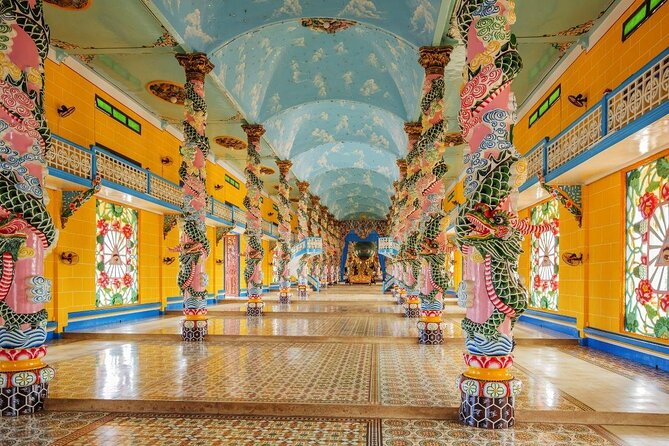
- Midday ceremony at Cao Dai Temple: Time your visit for the daily mass at the Great Holy See in Tay Ninh.
- Private day trip: Only your group takes part, with an English-speaking guide and air-conditioned vehicle.
- Two very different sights: Move from a living religious center to a former wartime underground base.
- Cu Chi underground network: See tunnel entrances, living areas, storage spaces, kitchens, command centers, and weapons facilities.
- War-era food and drink: Finish the Cu Chi visit with tea and cassava, described as guerrilla food during the war.
- Long but efficient schedule: The tour begins at 8:00 am and lasts about nine to ten hours, with admission fees and bottled water included.
One day, two sides of southern Vietnam
This tour links two major sights outside Ho Chi Minh City that are usually visited separately: the Cao Dai Temple in Tay Ninh and the Cu Chi Tunnels. That combination gives you a useful contrast. At Cao Dai, you see a living faith with its own architecture, symbols, and ceremony. At Cu Chi, you examine the practical machinery of war.
I like that this is not just a standard city escape built around scenery or shopping. The temple offers a look at modern Vietnamese religious life, while the tunnels show how people lived and fought below ground during the war. You return to Ho Chi Minh City with two very different stories in your head.
The price is listed as $135. For a private tour, that figure includes an English-speaking guide, private transportation, an air-conditioned vehicle, bottled water, admission fees, and taxes. That is more useful than a low headline price that later adds entrance tickets and transport, but you still need to budget for drinks, tips, personal expenses, and anything else not clearly included.
The tour has a current rating of 4.6 from 16 ratings, with 94 percent recommending it. That is a strong overall signal, but the small number of ratings matters. One serious complaint describes a failed pickup in which the operator did not arrive and the booking was still charged. I would confirm the pickup details with Vietnam Sightseeing before the morning of departure and keep the cancellation terms in mind.
More ways to visit the Cu Chi tunnels:
- Cu Chi Tunnels Tour from HCM City – Morning or Afternoon
★ 5.0 · 15,833 reviews - HCM: Cu Chi Tunnels-Tapioca Small Group Tour Morning or Afternoon
★ 5.0 · 7,485 reviews - Cu Chi Tunnels and Mekong Delta Signature Tour
★ 5.0 · 7,328 reviews
The early start and the long road to Tay Ninh
The advertised start time is 8:00 am. The first part of the day takes you from Ho Chi Minh City toward Tay Ninh, where the Cao Dai Temple is located. Since the tour lasts nine to ten hours and includes another major stop afterward, the morning departure is necessary rather than decorative.
The private format helps here. You do not share the vehicle with another group, so the day is not built around a large coach schedule. You can focus on the guide’s explanation and the passing countryside, although the supplied details do not specify the exact pickup location or the length of each transfer.
Your vehicle is air-conditioned, and bottled water is included. Those are small details on paper, but they matter during a full day outside the city. Drinks beyond the supplied water are not included, so bring money for beverages if you want more than what is provided.
An English-speaking guide accompanies you. No guide’s name is supplied, so you cannot request a particular guide from the available details. I would treat the guide as especially important at both sites: the temple needs religious context, and the tunnels need careful historical explanation rather than a quick walk through dark passages.
The Great Holy See and its all-seeing eye
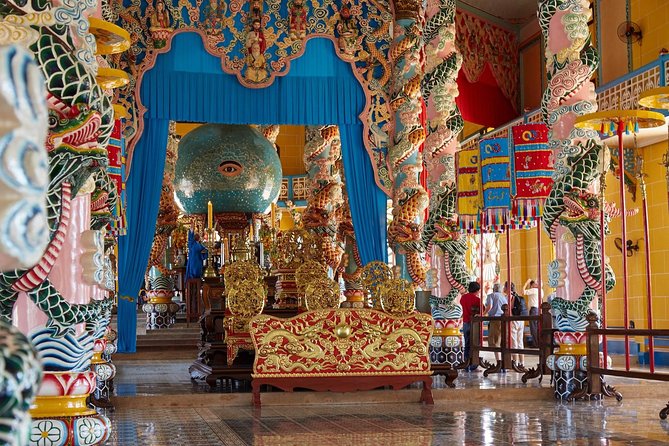
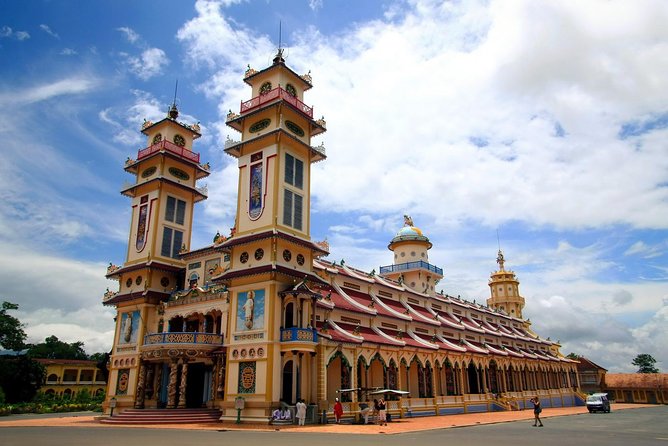
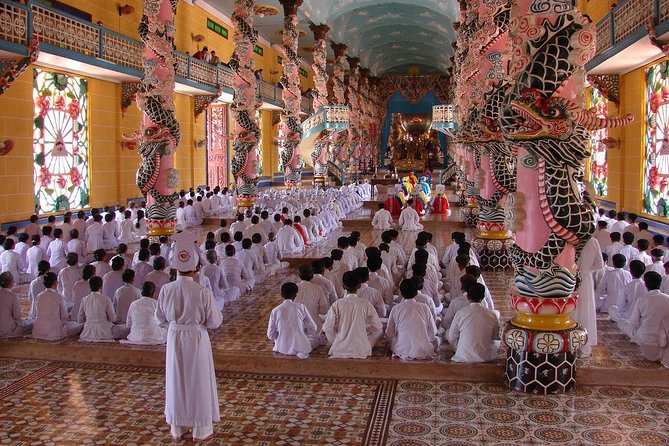
The first major stop is the Great Holy See Temple, built in 1926. It is the headquarters of Caodaism, a Vietnamese religion that brings together elements associated with Buddhism, Christianity, and Confucianism.
The building is described as one of South-East Asia’s most striking religious structures. The most memorable symbol is the all-seeing holy eye above the entrance. Even before the ceremony begins, that detail gives you a clear sense that this is not an ordinary Buddhist pagoda or Christian church. The temple has its own visual language.
The tour allows about two hours at the temple, with admission included. That gives you time to look at the building and attend the midday ceremony rather than simply stopping for a photograph. The ceremony is the main reason to visit at this particular time of day.
What the Cao Dai ceremony adds
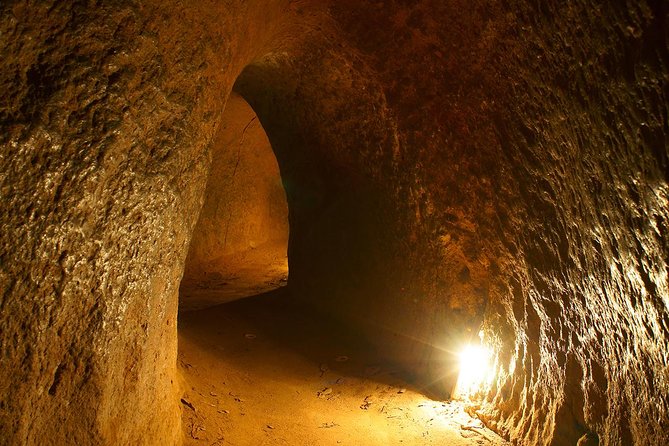
The midday mass is described as an extravaganza, with Cao Dai followers carrying out their daily religious service. You are there to watch the ceremony and to see the temple functioning as a place of worship, not merely as a historic building.
That distinction matters. Architecture can tell you what a community built, but a ceremony shows you what a community still practices. I like this part of the day because it offers a direct encounter with a living religion rather than another museum-style presentation.
You should approach the service respectfully. The supplied information does not set out a dress code or photography policy, so your guide is the best person to ask before the ceremony begins. Keep your voice low, follow instructions, and remember that people are attending for religious reasons.
The two-hour stop may feel generous if you only want a quick look at the exterior. It makes more sense if you care about the service and want time to understand the temple’s symbols. If you are mainly interested in the Cu Chi Tunnels, the temple still earns its place because it changes the character of the day.
More Cao Dai temple and Tay Ninh trips:
- Tay Ninh – Cao Dai & Ba Den Mountain + Optional Cu Chi Tunnels
★ 5.0 · 275 reviews - Small-Group 1-day: Cao Dai Temple & Ba Den Mountain
★ 5.0 · 249 reviews - Cu Chi Tunnels – Cao Dai Temple & Black Virgin Mountain Full Day
★ 5.0 · 200 reviews - HCM: Cu Chi Tunnels, Cao Dai Temple, Black Virgin Mountain
★ 4.7 · 176 reviews
Moving on to the Cu Chi Tunnels
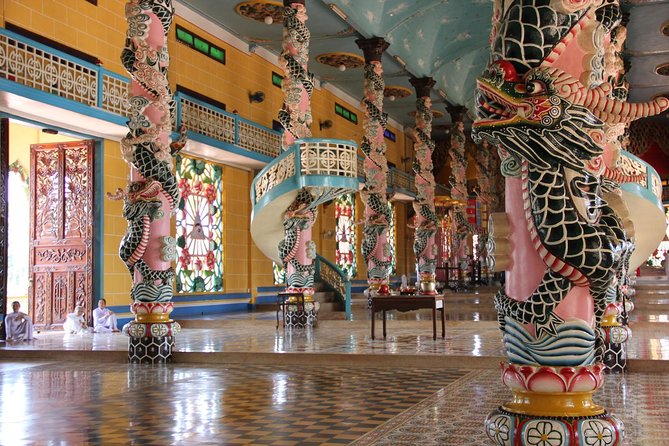
After Cao Dai Temple, the tour continues to Cu Chi. This is the second large stop, with about three hours allocated to the site and an admission ticket included.
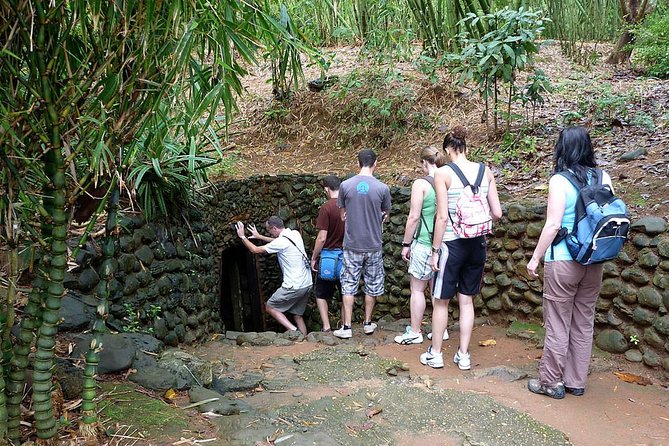
Cu Chi became famous for its network of more than 200 kilometers of tunnels. During the war, the underground system served as far more than a hiding place. It included living areas, storage facilities, weapons factories, field hospitals, command centers, kitchens, and trap doors.
That list helps you understand the scale of the operation. The tunnels were not a single narrow passage used for a short escape. At their height, they functioned as underground communities and military facilities. You are looking at a system built to support daily life and combat under extreme conditions.
The site also contains evidence of fierce fighting during the 1960s, when Cu Chi was designated a Free Target Zone. That phrase is a stark reminder that this was not an isolated military position. The area was caught up in sustained conflict, and the underground network was part of a much larger campaign.
The introductory film and underground exploration
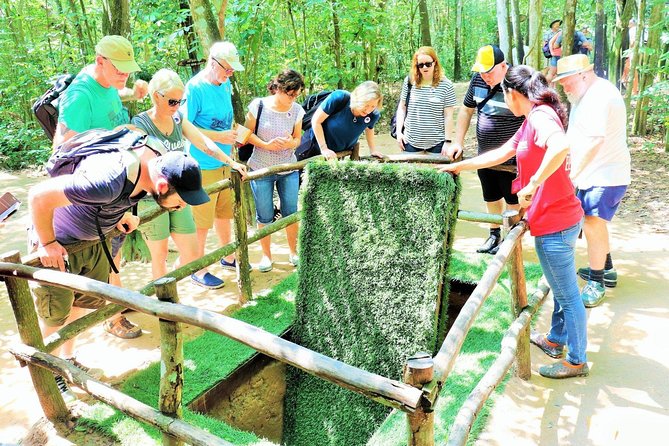
Before entering the tunnels, you can watch a short introductory video explaining how the network was constructed. I consider this a useful step, since it gives the underground spaces a purpose. Without context, the tunnel visit can become a sequence of low doorways and dark passages. With context, you can connect each feature to survival, storage, command, or movement.
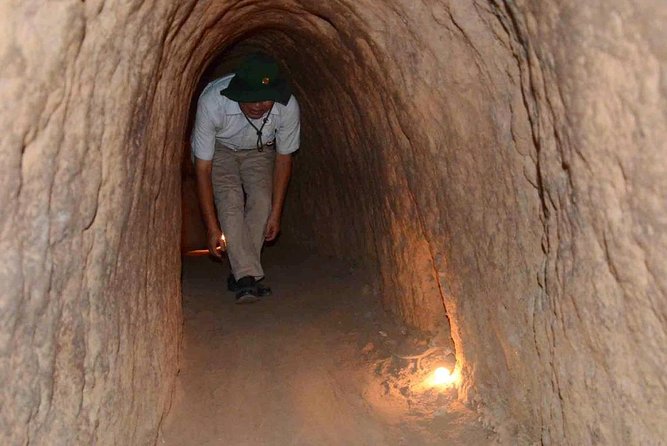
The tour allows about one hour for tunnel exploration. The description specifically mentions trap doors, living areas, storage spaces, weapons factories, field hospitals, command centers, and kitchens. Exactly how much of the network you enter is not specified, so you should not assume that the full 200-kilometer system is open for a single visit.
This is also the part of the day to judge honestly against your own comfort. You will be exploring a historic tunnel site, and the available information does not provide measurements or accessibility details. Most people can participate, according to the tour information, but anyone concerned about confined spaces should ask the operator for current conditions before booking.
The historical value is considerable. Cu Chi shows war as an engineering and supply problem, not just a series of battles on a map. You see how underground rooms supported cooking, medical care, storage, and command. That practical detail is what makes the stop stick with you.
Tea, cassava, and the final return
After the tunnel exploration, you receive tea and cassava, identified as guerrilla food during wartime. This is a modest finish, but it connects food to the realities of underground life. It also gives you a pause before the journey back to Saigon.
The tour then returns to Ho Chi Minh City. With nine to ten hours in total, you should keep the whole day open. This is not a short morning excursion with a free afternoon waiting at the end.
The long duration is the trade-off for seeing both sites in one trip. If you book separate half-day outings, you may get more breathing room at each location but lose the convenience of combining them. Here, the private vehicle and single itinerary make the pairing practical.
What the $135 price really gives you
At $135, the value rests on the private format and the number of inclusions. You receive:
- An English-speaking guide
- Private transportation
- An air-conditioned vehicle
- Bottled water
- Entrance fees
- Taxes
That package removes several common add-on costs. You are not paying separately for the two stated admissions, and you are not being placed in a shared group vehicle. For a party that values privacy, that can make the price reasonable.
The value is less clear if you are a solo visitor who mainly wants the cheapest possible way to reach Cu Chi. The tour covers two distant destinations and includes a guide, so it is designed for a full experience rather than a bare transfer.
Drinks, tips, personal expenses, travel insurance, and beverages are not included. The wording separates bottled water from other drinks, so plan on paying for anything beyond the supplied bottle. The price also needs to be checked carefully at booking because the supplied information does not clarify whether $135 applies per person or to the private group.
Who should book this day trip
I would recommend this experience to you if you want a private, guided day outside Ho Chi Minh City and have a strong interest in both culture and war history. It is especially useful for a first visit, since it combines two major sights without requiring you to arrange separate transport.
It also suits families or small groups who value having their own vehicle. Group discounts are offered, though the actual discount is not specified. Since only your group participates, the format may be easier to manage than a large scheduled coach tour.
I would hesitate if you dislike long days, want plenty of free time, or only care about one of the two sites. The nine to ten-hour schedule is fixed around a midday temple ceremony and a substantial Cu Chi visit. You are trading flexibility for coverage.
The temple makes the tour more than a war-history outing. If you want a day focused only on military sites, another Cu Chi option may fit better. If you want a broader picture of the region, the Cao Dai stop is the part that gives this tour its character.
Practical booking advice before you leave
Confirmation is provided when you book. The stated pickup time is 8:00 am, but the exact meeting point is not included in the available details. I would verify the pickup location and reconfirm with Vietnam Sightseeing, especially because one reported booking problem involved the operator not showing up.
Free cancellation is available up to 24 hours before the start time for a full refund. Cancellations or changes made less than 24 hours before departure are not accepted for a refund, and the cut-off follows local time.
Keep the booking confirmation accessible on your phone, since this is a mobile-ticket experience. Wear something suitable for a religious site and ask the guide about ceremony etiquette when you arrive. Also keep your schedule clear for the full day, since traffic and the two-site plan leave little room for another appointment.
Should you book the Cao Dai Temple and Cu Chi Tunnels tour?
Book it if you want two major southern Vietnam experiences in one private day and value an English-speaking guide, included admissions, and your own air-conditioned vehicle. The living Cao Dai ceremony is the unusual feature, while Cu Chi supplies the strongest historical content.
Skip it if nine to ten hours sounds excessive or if you prefer to explore at a slow pace. The tour is efficient rather than leisurely, and the failed pickup complaint means you should confirm the arrangements before departure.
For the right group, $135 can be fair value because it covers transport, guiding, taxes, water, and entry fees. Just verify the price basis, pickup details, and current operator confirmation before you commit.
FAQ
Where does this tour take place?
The tour begins in Ho Chi Minh City and visits the Cao Dai Temple in Tay Ninh and the Cu Chi Tunnels.
What time does the tour start?
The stated start time is 8:00 am.
How long does the experience last?
The full tour lasts approximately nine to ten hours.
Is this a private tour?
Yes. Only your group participates in the activity.
Is hotel pickup included?
Pickup is offered, but the supplied information does not specify the exact pickup location or whether every hotel is covered. Confirm this with the provider.
Is transportation included?
Yes. Private transportation in an air-conditioned vehicle is included.
Is there an English-speaking guide?
Yes. An English-speaking guide is included.
Are entrance fees included?
Yes. Admission tickets for the Cao Dai Temple and Cu Chi Tunnels are included.
What food or drinks are included?
Bottled water is included. At Cu Chi, you receive tea and cassava. Other drinks, beverages, and personal expenses are not included.
Can I cancel for a full refund?
Yes, if you cancel at least 24 hours before the experience begins. Cancellations or changes made less than 24 hours before the start time are not accepted for a refund.
Just added around Ho Chi Minh City
- Vung Tau City Shore Excursion from Phu My Port★ 5.0 · 3 reviews
- Ho Chi Minh city Street Food by scooter tour | female driver★ 5.0 · 3 reviews
- Ho Chi Minh City: Full Long Tan Battlefield Tour★ 4.7 · 3 reviews
- Ride Saigon: Private Half-Day Motorbike Adventure★ 5.0 · 3 reviews
- Ho Chi Minh City: Guided Food Tour by Scooter★ 5.0 · 3 reviews
- PHU MY SHORE EXCURSION: Saigon Past and Present Tour★ 5.0 · 3 reviews
- Ho Chi Minh: Cai Be-Mekong Delta Local Village Full Day Tour★ 3.7 · 3 reviews
- 3D2N Mekong Delta Tour: Cycling – Kayaking – Floating Market★ 5.0 · 3 reviews
Cu Chi Tunnels Tours, compared.
Cu Chi Tunnels Tour from HCM City – Morning or Afternoon
Read our review →
Cu Chi Tunnels-Tapioca Small Group Tour Morning or Afternoon
Read our review →
Cu Chi Tunnels and Mekong Delta Signature Tour
Read our review →
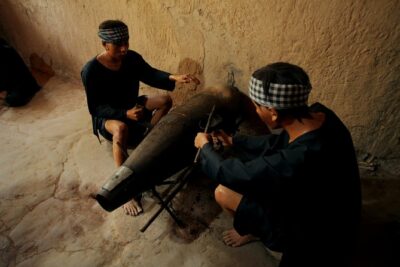
Cu Chi Tunnels and Mekong Delta Full Day Tour – Max 12
Read our review →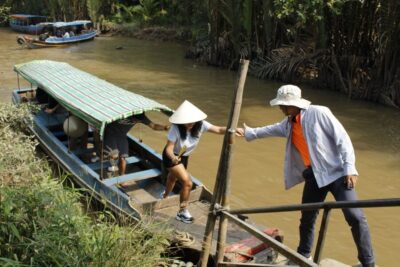
Full-Day Cu Chi Tunnels and Mekong Delta Tour
Read our review →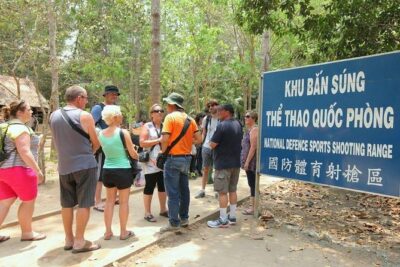
Cu Chi Luxury Group Tour – Tapioca and Cake Half Day
Read our review →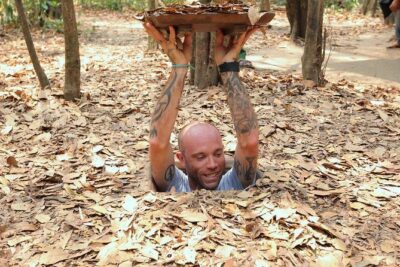
CuChi Tunnels&Mekong Delta-Boat,TukTuk,Coconut Village SmallGroup
Read our review →Browse the lists this tour appears in