
Reviewed · CU CHI TUNNELS TOURS
Ho Chi Minh City: Cu Chi Tunnels Morning or Afternoon Tour
The most striking part of the Cu Chi Tunnels is how much of a wartime community existed below the ground. You will see trap doors, kitchens, field hospitals, command rooms, weapons workshops, storage areas, and ventilation shafts, then squeeze into a tunnel built for guerrilla warfare.
I like the strong guides and the low price. Guides such as Bao, Tommy, Luna, Lam, Kelvin, and Phong have been praised for clear English, humor, patience, and thoughtful explanations. I also like the short rural ride, with rice fields, farmers, and buffaloes along the way. The main drawback is the transport: some vans feel cramped and warm, especially for taller people.
In This Review
- Key points to know before you book
- Why the Cu Chi Tunnels matter
- The morning pickup and ride from Ho Chi Minh City
- The first Cu Chi stop and your orientation
- Traps, hidden doors, and guerrilla tactics
- Crawling through the tunnel
- Cassava, tea, and wartime food
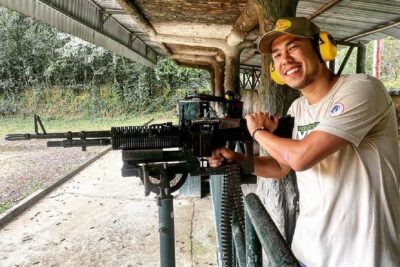
- The shooting range and optional AK47 or M16 session
- How the guides shape the day
- Morning or afternoon: which should you choose?
- What you get for $13
- Who should book this Cu Chi tour?
- Final verdict: strong value with a few rough edges
- FAQ
- How long does the Cu Chi Tunnels tour last?
- Where is hotel pickup available?
- Where does the tour end?
- Is the shooting range included in the tour price?
- Is the tour suitable for wheelchair users?
- What should I bring?
Key points to know before you book
- The tunnels are more than a crawl-through attraction: You see traps, kitchens, hospitals, command rooms, and hidden entrances that explain how the underground network worked.
- Guides make a big difference: Bao, Tommy, Luna, Lam, Kelvin, and others have been praised for history lessons that are lively without losing sight of the human cost of war.
- The $13 price is excellent value: Transport, admission, guide, water, tea, cassava, snacks, and travel insurance are included.
- The tunnel section is hot and tight: Bring comfortable clothes, sturdy shoes, water, and an extra shirt if you dislike heat.
- The shooting range is optional and costs extra: You can fire an M16 or AK47, but the fee is not part of the tour price.
- Pickup is limited to central districts: Hotel pickup covers Districts 1, 3, and 4, with drop-off in District 1.
Why the Cu Chi Tunnels matter
The Cu Chi area lies at the end of the Ho Chi Minh Trail and served as a base for Vietnamese guerrilla forces operating against Saigon. Its underground network stretched as far as Cambodia, making it much more than a collection of small hiding holes.
The tunnels supported daily life as well as combat. Meeting rooms, kitchens, hospitals, storage rooms, weapons factories, and command centers were connected below the forest floor. That detail matters because it changes how you see the site. You are not simply looking at a clever military trick. You are seeing how people organized work, shelter, food, and medical care under extreme conditions.
A short propaganda film forms part of the visit. It presents the war from the Vietnamese point of view, so I would treat it as one historical perspective rather than a complete account of the conflict. The guide’s explanation is especially useful here, since a good guide can connect the film, the tunnels, and the wider war.
The visit can feel unsettling. The traps are real historical displays, and the stories involve deaths, injury, fear, and years of conflict. I appreciate that the best guides balance facts with a little humor, but this is not a light entertainment stop from beginning to end.
More ways to visit the Cu Chi tunnels:
- Cu Chi Tunnels Tour from HCM City – Morning or Afternoon
★ 5.0 · 15,833 reviews - HCM: Cu Chi Tunnels-Tapioca Small Group Tour Morning or Afternoon
★ 5.0 · 7,485 reviews - Cu Chi Tunnels and Mekong Delta Signature Tour
★ 5.0 · 7,328 reviews
The morning pickup and ride from Ho Chi Minh City
Morning pickup takes place between about 7:30 and 8:30 AM, with the exact time confirmed around 15 minutes before collection. The van may arrive 30 minutes to an hour before the formal start time, so keep your phone nearby and be ready in the hotel lobby.
Pickup is available from centrally located hotels in Districts 1, 3, and 4. If you stay elsewhere, you need to reach Kim Travel’s office at 17 Thu Khoa Huan Street in Ben Thanh Ward, District 1. The return drop-off is in District 1, which is handy if you plan to continue sightseeing there.
The drive takes roughly an hour in the morning, followed by another 45-minute van journey later in the route. Traffic can affect the timing, so do not plan a tight appointment immediately after the tour. The total activity lasts about 390 minutes, or six and a half hours.
The ride gives you a useful change of scene. Ho Chi Minh City gradually gives way to rice fields, local farms, and water buffaloes. It is not a dedicated countryside tour, but the view helps you understand that Cu Chi is more than an urban day trip.
Transport is air-conditioned, but comfort can vary. Several people have found the minibus old, warm, or a little cramped. One taller passenger at about 1.85 meters found the ride a squeeze. If you are tall, ask for a seat with more legroom when possible, and bring water even though a bottle is included.
The first Cu Chi stop and your orientation
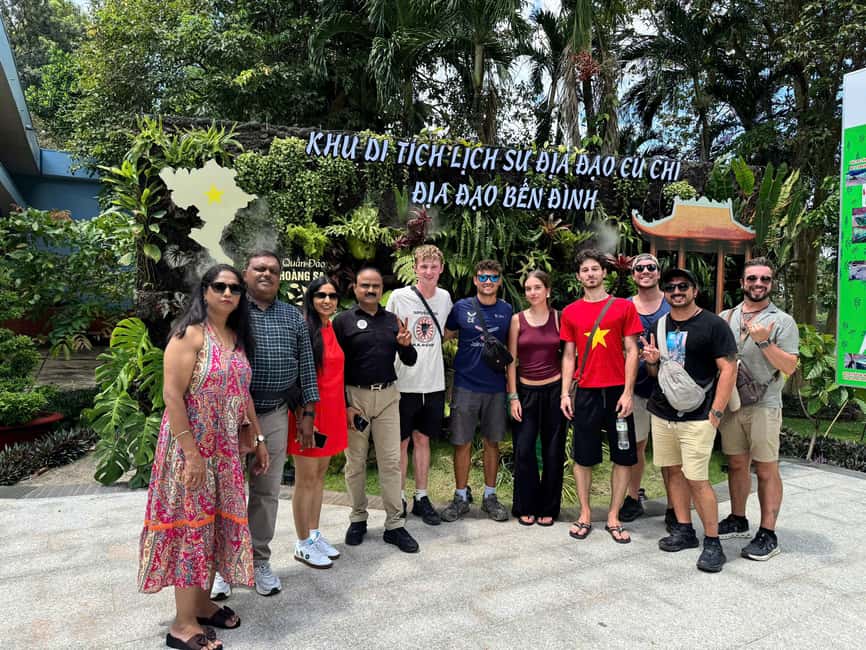
The route includes a break and photo stop near Cu Chi before the main tunnel visit. This pause breaks up the road journey and gives you time to stretch before walking around the site.
At the tunnel complex, your guide provides a safety briefing and explains how to move through the grounds. Expect a mix of guided sections, free time, walking, sightseeing, and some self-guided exploration. This format gives you a little room to look at displays, but the guide remains important for understanding what you are seeing.
The whole main visit lasts about two hours. That sounds generous, but the site includes several separate areas, and the heat can make a long walk tiring. One useful point from the experience is that guides may adjust the pace and route to avoid the worst queues while still covering the main displays.
The site can be busy, particularly at popular stations. A guide who manages time well helps you see more without spending the day waiting behind large groups. Small-group and private options are available if you prefer a quieter format, though the standard price and group size can vary by option.
Traps, hidden doors, and guerrilla tactics
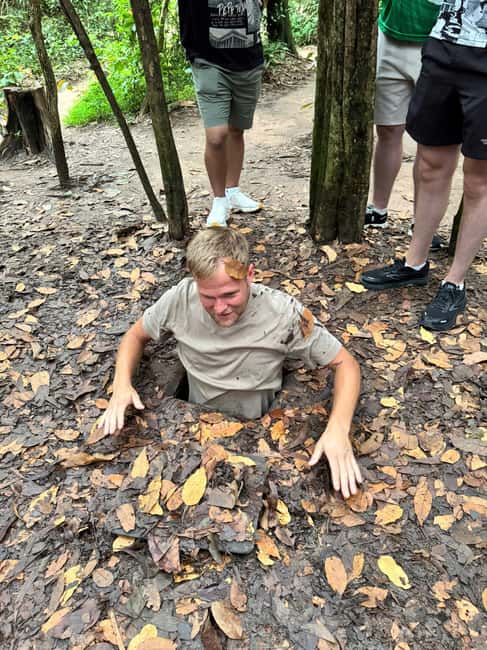
The trap displays are among the most memorable parts of the visit. You will see examples of concealed pits and other devices designed to injure or stop enemy soldiers who did not know where the danger lay.
These displays are disturbing by design, and they can be hard to look at. Still, they explain why the tunnel system worked. The fighting was based on concealment, patience, local knowledge, and surprise rather than open-field battle.
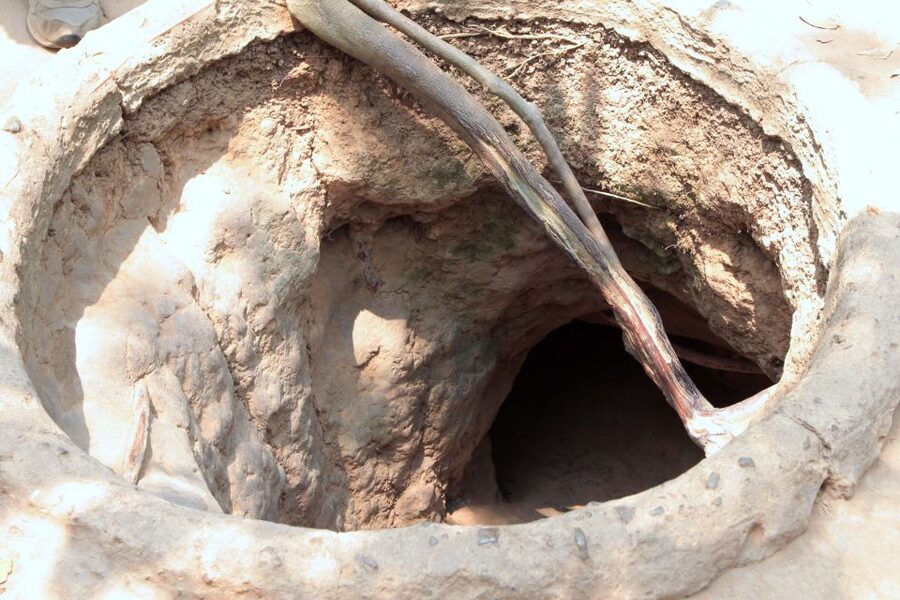
You also get to see hidden entrances and manholes. Some are adapted for visitors, so the experience is not identical to entering an original wartime passage. Even so, standing beside a small opening and watching it disappear under the surrounding ground gives you a clear idea of how difficult it was to detect the network.
Your guide will likely explain how the tunnel system used ventilation and concealed routes. Do not expect every underground feature to remain untouched or original. The site has been prepared for visitors, and some sections have been enlarged or adapted, but the displays still show the basic scale and purpose of the wartime system.
A few more Ho Chi Minh City half-days to weigh up
- Small-Group Cu Chi Tunnel Half-day Tour: Morning or Afternoon
★ 5.0 · 1,521 reviews - Cu Chi Tunnels tour In The Morning by DGT
★ 5.0 · 1,321 reviews - Morning CuChi Tunnels-Tapioca-Secret Traps Luxury Speedboat 2Ways
★ 5.0 · 688 reviews - Morning Saigon Unseen Adventure Scooter with Ao Dai Riders Option
★ 5.0 · 646 reviews
Crawling through the tunnel
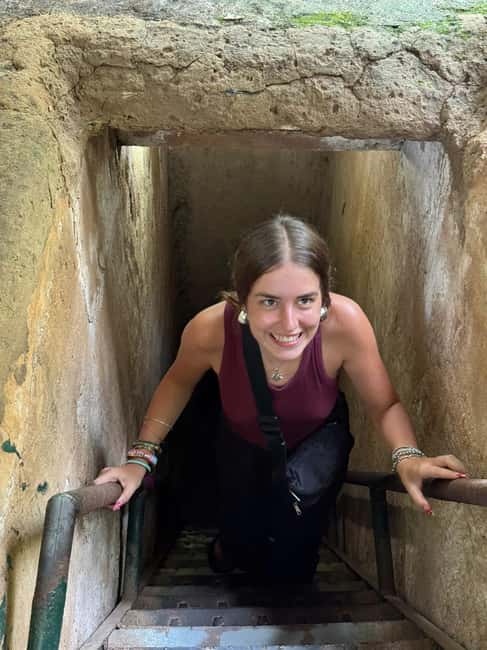
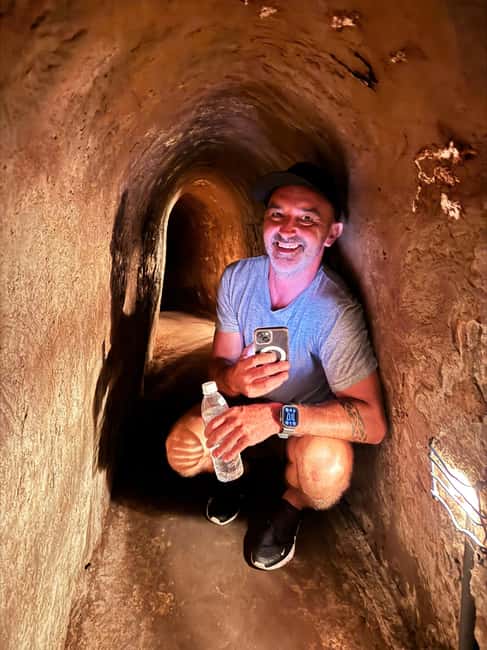
The tunnel crawl is the activity’s most physical moment. You enter a short section of the underground network and move through it at your own pace, following the safety instructions.
It is hot, low, and narrow. You do not need to be an athlete, but you should be comfortable crouching and moving carefully. Anyone with heart problems should not take this tour, and the site is not suitable for wheelchair users.
The adapted tourist sections allow more room than some original passages, but the experience can still feel intimidating. One practical tip is to wear clothes that can get dusty and shoes with a secure grip. An extra T-shirt is sensible in the heat.
You can usually choose how far to continue through the tunnel section. If you feel uncomfortable, do not force yourself. The above-ground displays and the guide’s explanations contain much of the tour’s value, so skipping part of the crawl does not mean missing everything.
The time underground is limited, partly because the heat builds quickly. That can feel brief if you want a long exploration, but it is also a sensible limit for comfort and safety. I would rather have a short, memorable tunnel passage than an extended stretch that leaves you overheated.
Cassava, tea, and wartime food
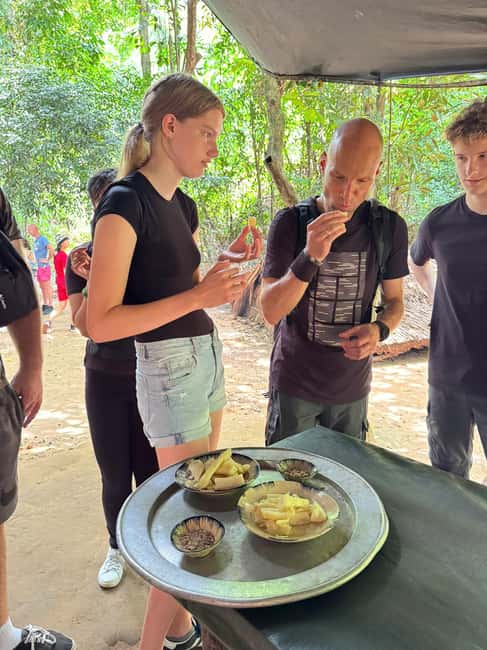
The visit includes tapioca, also called cassava, along with Vietnamese hot tea. Cassava was an important food during the war years, and tasting it gives the history a simple, physical connection.
This is not a full meal, so you should eat breakfast before pickup. Crackers, bottled water, and wet tissues are also included. Additional drinks and personal expenses are not included, so carrying some cash is wise.
The snack stop is modest, but it fits the subject. You are not being served a polished restaurant dish. You are tasting a plain staple associated with survival in difficult conditions.
The shooting range and optional AK47 or M16 session
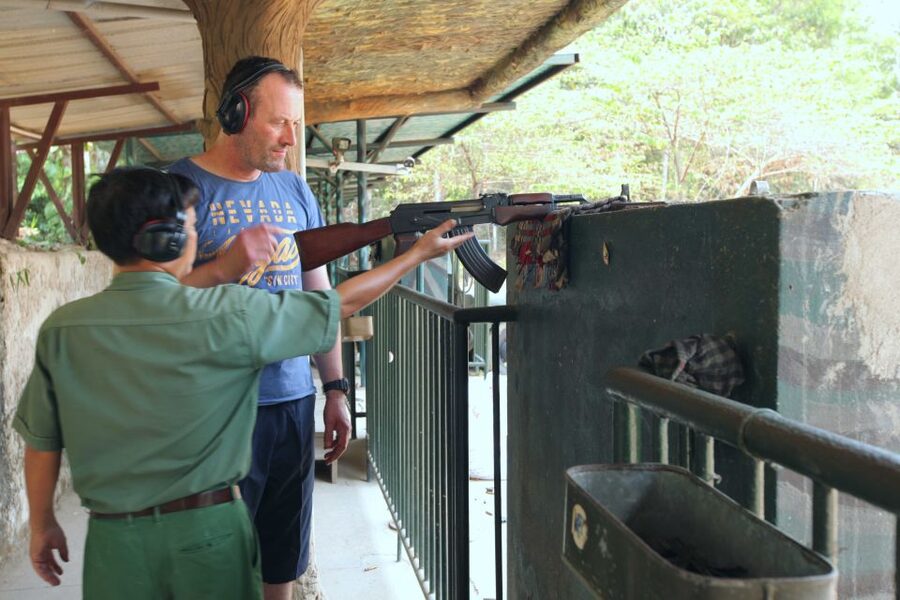
The shooting range is scheduled for about 15 minutes. You can fire an M16 or AK47 for an additional fee, which is paid separately from the $13 tour price.
This activity is optional. You can watch or skip it and still take part in the tunnel visit, historical displays, food tasting, and guided walk. I would decide in advance how you feel about mixing a war memorial visit with a recreational shooting activity.
For some people, firing the weapons is part of understanding the equipment used in the conflict. For others, it feels out of place beside displays of death and suffering. Neither choice is required, and the rest of the tour does not depend on taking part.
The shooting session also adds cost and may affect your timing. If the history is your priority, use the available time to listen to the guide and look more closely at the site.
How the guides shape the day
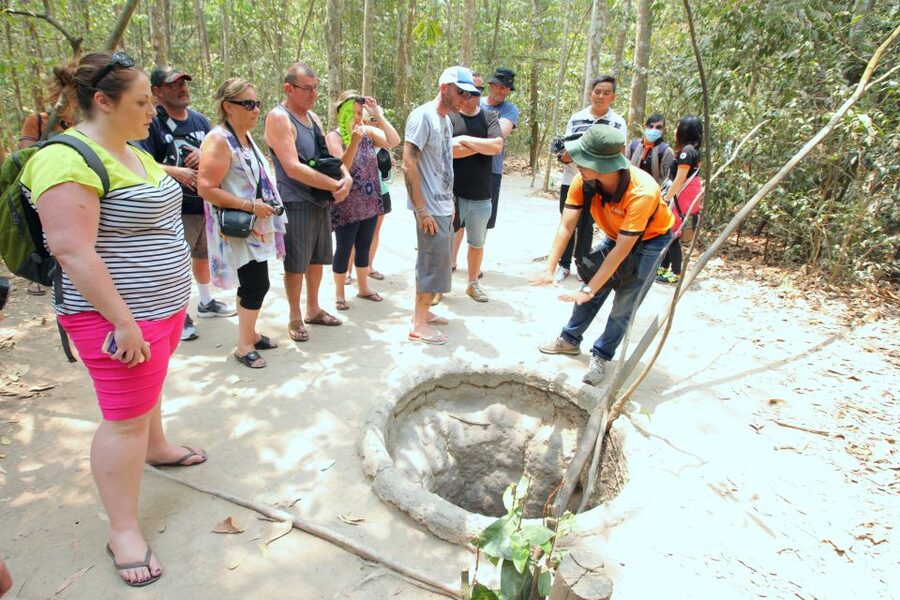
The strongest part of this tour is often the English-speaking guide. Names frequently associated with especially warm feedback include Bao, Tommy, Luna, Lam, Kelvin, Phong, Bodhi, Kim, Jacky, Andy, and Mr. Long.
You cannot usually choose your guide when booking, so treat these names as examples of the style you might receive rather than a promise. The praised qualities are consistent: clear English, humor, good pacing, patience with questions, and a personal way of explaining the history.
One guide, Kim, shared his family’s story, which made the war feel closer to home. Bao was praised for passion and careful answers, while Tommy was noted for remembering people’s names and keeping the group together. Luna was described as friendly and energetic, and Kelvin as both informative and entertaining.
A good guide matters here because the displays can otherwise feel like disconnected objects. The guide links the trap doors to guerrilla tactics, the kitchens to underground daily life, and the command rooms to the wider war around Saigon.
The best approach is to ask questions. You will get more from the visit if you want to understand how the network operated, why it was hard to locate, and how Vietnamese civilians and fighters lived with the conflict.
Morning or afternoon: which should you choose?
The supplied schedule gives a morning pickup window, but the activity is also offered as a morning or afternoon tour. Check the available start times before booking because the exact schedule depends on the selected option.
A morning departure gives you a full afternoon back in Ho Chi Minh City. That is useful if you want to visit the War Remnants Museum, Ben Thanh Market, or another city attraction later in the day.
An afternoon departure may suit you if you prefer a slower morning or arrive in the city late. The main things to consider are traffic, heat, and your plans afterward. The tunnels can be hot at any time, so comfortable clothing and water matter more than the label of the departure.
What you get for $13
At $13 per person, this is an unusually strong value for a six-and-a-half-hour outing. The price includes central hotel pickup, air-conditioned bus or minivan transport, an English-speaking guide, entrance fees, bottled water, tea, cassava, crackers, wet tissues, and travel insurance.
You are also getting the time saved by having transport arranged. Reaching Cu Chi independently may cost less in some circumstances, but you would need to organize the route, admission, and explanations yourself.
The low price has tradeoffs. The vehicle may not be especially spacious, and the standard group may be larger than a private tour. If comfort and flexible pacing matter more than price, compare the small-group or private options.
The shooting range is not included, and extra drinks or personal purchases cost more. Even after allowing for those extras, the core tour offers a lot for the money.
Who should book this Cu Chi tour?
I recommend it if you want a direct introduction to the Vietnam War outside the city. It suits first-time visitors, history fans, and people who prefer an organized day trip with transport and a guide included.
It also works well for solo visitors, since the group setting gives you a simple way to reach a site outside Ho Chi Minh City. Families with older children may enjoy the displays, but children must be accompanied by an adult. Children under five are free, though parents cover any costs that arise during the day.
You should think twice if you dislike confined spaces, struggle with heat, have heart problems, or use a wheelchair. The tunnel crawl is optional in spirit, but the entire site involves walking and uneven conditions.
Bring comfortable shoes, a sun hat, light clothing, insect repellent, cash, and an extra shirt. Pets are not allowed.
Final verdict: strong value with a few rough edges
I would book this tour if my main goal were to understand the Cu Chi tunnel system without spending much time arranging transport. The history, tunnel crawl, rural ride, and optional shooting range create a varied day, while the guide can turn a series of displays into a clear story.
The compromises are the warm, sometimes cramped van and the busy nature of a major attraction. Choose a small or private group if you want more room and personal attention. Otherwise, the $13 standard tour is a practical choice, especially when you receive a guide as engaging as Bao, Tommy, Luna, Lam, or Kelvin.
FAQ
How long does the Cu Chi Tunnels tour last?
The tour lasts 390 minutes, or about six and a half hours, including transportation, the tunnel visit, breaks, and the return journey.
Where is hotel pickup available?
Pickup is available from centrally located hotels in Districts 1, 3, and 4. If you stay elsewhere, you can go to Kim Travel’s office at 17 Thu Khoa Huan Street in District 1.
Where does the tour end?
Drop-off is provided in the center of District 1 in Ho Chi Minh City.
Is the shooting range included in the tour price?
No. Firing an M16 or AK47 at the shooting site costs an additional fee and is not included in the tour price.
Is the tour suitable for wheelchair users?
No. The tour is not suitable for wheelchair users. It is also not suitable for people with heart problems.
What should I bring?
Bring comfortable shoes, comfortable clothes, a sun hat, insect repellent, and cash. An extra shirt can be useful because the tunnels and outdoor areas may feel hot.
Just added around Ho Chi Minh City
- Free E-Sim War Remnants Museum & Independence Palace Tour★ 4.7 · 55 reviews
- Ho Chi Minh City Tour with Colonial Heritage and Chinatown★ 4.6 · 48 reviews
- Cu Chi Ben Duoc Tunnel & War Museum – Original, Less Touristy★ 5.0 · 80 reviews
- Long Tan, Nui Dat & Vung Tau Highlights – 1 day Private Tour★ 5.0 · 82 reviews
- From Ho Chi Minh City: Mui Ne 1 Day | Many Choices★ 5.0 · 47 reviews
- Vung Tau Full-Day Tour with Beach, Christ Statue & White Palace★ 5.0 · 51 reviews
- Private Departure Transfer: Ho Chi Minh City Hotels to Tan Son Nhat Airport★ 5.0 · 79 reviews
- Private Ho Minh City Sightseeing Shore Excursion From Phu My Port★ 5.0 · 52 reviews
Cu Chi Tunnels Tours, compared.
Cu Chi Tunnels Tour from HCM City – Morning or Afternoon
Read our review →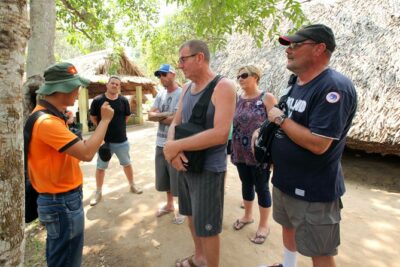
Cu Chi Tunnels-Tapioca Small Group Tour Morning or Afternoon
Read our review →
Cu Chi Tunnels and Mekong Delta Signature Tour
Read our review →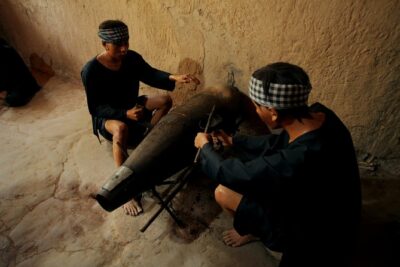
Cu Chi Tunnels and Mekong Delta Full Day Tour – Max 12
Read our review →
Full-Day Cu Chi Tunnels and Mekong Delta Tour
Read our review →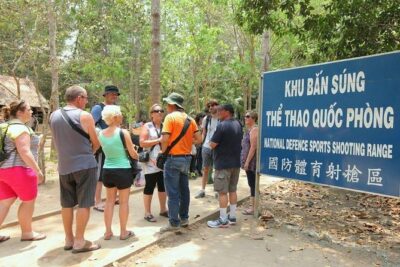
Cu Chi Luxury Group Tour – Tapioca and Cake Half Day
Read our review →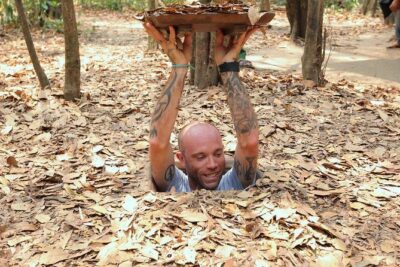
CuChi Tunnels&Mekong Delta-Boat,TukTuk,Coconut Village SmallGroup
Read our review →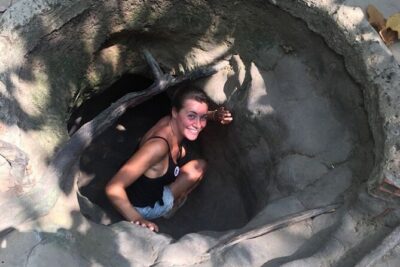
Adventure Cu Chi Tunnels and Mekong Delta Tour From HCM
Read our review →Browse the lists this tour appears in