
Reviewed · HO CHI MINH CITY
Using Medium Format film camera to discover Saigon
Saigon looks different through a twin-lens reflex camera. Instead of racing after famous sights, you get a roll of black-and-white film, a slow mechanical camera, and a local route through coffee culture, alley markets, and an old apartment building. The experience is built around seeing ordinary city life with care.
I like the limited number of exposures, because one roll makes you think before pressing the shutter. I also like the personal help from Bui Hoang Tu, who acts as a translator and helps you connect with local people rather than simply pointing out buildings.
The main drawback is the price: $148.27 per person is a serious sum for a 3 to 4 hour activity. You are paying for a private guide, camera use, film, instruction, and local access, not a long list of major sights. That makes this a better choice for curious photographers than for anyone looking for a traditional sightseeing tour.
In This Review
- Key points at a glance
- Why a film camera changes the way you see Saigon
- Starting at 73/8 Hồ Hảo Hớn
- Coffee at a 90-year-old Saigon shop
- Working through alley markets and old buildings
- Bui Hoang Tu’s role beyond camera instruction
- The value of one roll of film
- How the private format affects the day
- Ending at Chợ Bàn Cờ in District 3
- Is $148.27 a fair price?
- Who should book this Saigon photo walk?
- Should you book it?
- FAQ
- How long does the experience last?
- What is included in the price?
- Who leads the experience?
- Where does the experience start?
- Where does the experience end?
- Can I cancel for a full refund?
Key points at a glance
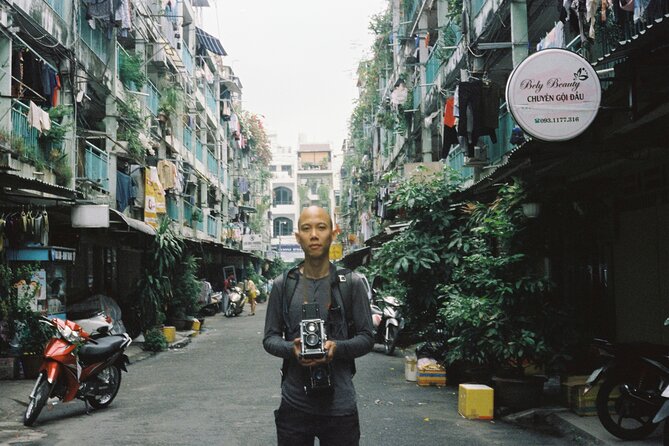
- A TLR camera and one roll of black-and-white film: You learn with a classic twin-lens reflex camera and have a limited number of frames.
- Coffee at a 90-year-old shop: The first stop focuses on Vietnam’s everyday coffee culture.
- Alley markets and an old apartment building: The route favors local settings over famous tourist streets.
- Bui Hoang Tu as guide and translator: He helps you communicate with people along the way.
- A private experience for your group: You do not share the activity with a larger tour party.
- Finish at Chợ Bàn Cờ: The tour ends at a local market in District 3, not back at the starting point.
Why a film camera changes the way you see Saigon
Digital photography rewards speed. You can take ten pictures, check them at once, and delete most of them. This experience asks you to do the opposite.
The TLR camera uses medium-format film, with one roll of black-and-white film included. The exact number of frames is not stated, but the central idea is clear: you have a fixed supply of pictures. Every frame matters more when you cannot instantly correct your choices.
That limitation is useful in Saigon. The city offers constant motion, but this is not a tour about collecting fast snapshots from a moving vehicle. You may pause over a coffee cup, a market stall, an apartment corridor, or a person you meet along the route. The camera encourages patience and attention.
A TLR camera also has a different feel from a phone. You look down into the viewing screen rather than holding the camera directly to your eye. The camera supplied is described as a relic, old but simple, and its age is part of the appeal. It still takes photographs, but it asks you to work more deliberately.
You should not book this expecting modern camera technology or instant results. There is no suggestion that you receive developed prints during the activity. The pleasure is in learning the process and making a small set of considered images.
Other Ho Chi Minh City days people book alongside this one:
- Cu Chi Tunnels Tour from HCM City – Morning or Afternoon
★ 5.0 · 15,833 reviews - From HCM City: Mekong Delta Tour with Sampan Journey
★ 4.5 · 13,132 reviews - Ho Chi Minh City Street Food Tour & Sightseeing By Motorbike
★ 5.0 · 9,413 reviews
Starting at 73/8 Hồ Hảo Hớn
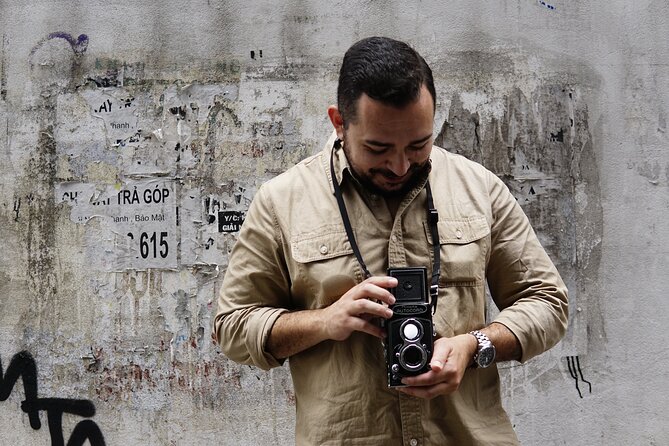
The experience begins at 73/8 Hồ Hảo Hớn in District 1. You meet Bui Hoang Tu at his store, collect the camera and film, and receive a short explanation of how the equipment works.
That opening lesson matters. A TLR camera may look straightforward, but film photography requires a few habits that phone users no longer think about. You need to understand how to handle the camera, wind the film, frame a picture, and avoid wasting exposures.
The instruction is intended for people who may not have used this kind of camera before. The supplied description says the practice helps you understand how to use all cameras in this world. That is a broad claim, but the practical point is sound: learning the basics of a simple analog camera can make other cameras feel less intimidating.
Expect a small amount of conversation about Saigon before setting off. This is not only a technical briefing. It is also the moment to ask about the city and understand the route.
Because the activity is private, the pace should suit your group better than a large walking tour. Still, the published duration is approximate, at 3 to 4 hours, so leave room in your day rather than scheduling a tight appointment immediately afterward.
Coffee at a 90-year-old Saigon shop
The first main stop is an approximately 90-year-old coffee shop. Coffee is not a side note here. It is one of the main ways the experience introduces local daily life.
You sit down and enjoy coffee in the local manner before the photography walk moves on. This gives you a calm start and a chance to get comfortable with the camera. It also keeps the experience from becoming a simple photo assignment. You are asked to notice how people use the city, not just how it looks.
The coffee shop is especially useful for visitors who want context without a formal lecture. You can ask Bui Hoang Tu about Saigon while sitting in a place with decades of everyday use. The age of the shop gives the stop a sense of continuity, but the value comes from the ordinary act of sitting, drinking, and watching.
Coffee or tea is included. That keeps the first stop simple, although the supplied details do not specify the exact drink, menu, or brand. If you have strong preferences, ask the guide when you meet.
The stop is listed as about one hour. That is a substantial portion of a short experience, so people who want nonstop photography should know the timing in advance. I see the pause as a strength for most people, since it gives the tour a human rhythm and lets you practice looking before you start using up film.
Working through alley markets and old buildings
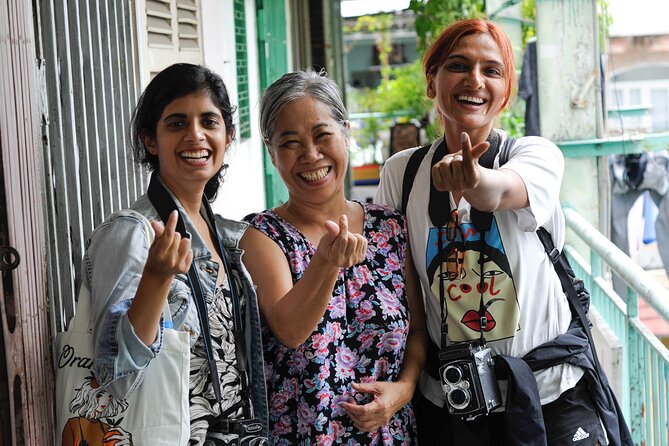
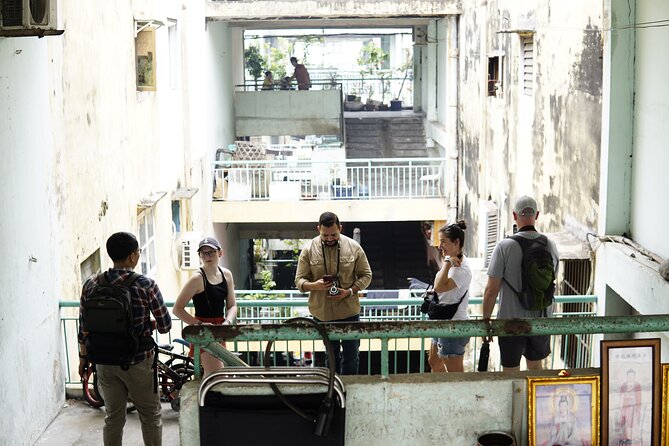
After the coffee stop, you wind through nearby alley streets and local markets. These settings are the heart of the experience.
An alley market gives you more useful photographic decisions than a polished shopping street. You might find narrow paths, small stalls, close views, and people carrying out ordinary business. The details supplied do not promise particular vendors or scenes, so you should arrive ready to respond to what is happening rather than expecting a fixed list of photo subjects.
The same applies to the oldest apartment mentioned in the route. It is described as a 1968 building of Ho Chi Minh City. That date gives the stop a clear historical reference without turning the activity into a formal architecture tour.
The building is presented as an older, tucked-away part of town, and the camera suits it. Black-and-white film can draw attention to texture, light, age, and shape. You may find the strongest pictures are not grand views but small details: a stairway, a doorway, a wall, or the way people use shared space.
The route is not designed around the city’s best-known postcard locations. That is good news if you have already seen the main landmarks or want a break from standard sightseeing. It also means you should not book this for famous skyline views or a checklist of major attractions.
A completely different kind of day out of Ho Chi Minh City:
- HCM: Cu Chi Tunnels-Tapioca Small Group Tour Morning or Afternoon
★ 5.0 · 7,485 reviews - Cu Chi Tunnels and Mekong Delta Signature Tour
★ 5.0 · 7,328 reviews - Mekong Delta Guided Tour from Ho Chi Minh City
★ 4.5 · 7,192 reviews - Cu Chi Tunnels & Mekong Delta Tour with VIP Limousine Transfer
★ 5.0 · 7,052 reviews
Bui Hoang Tu’s role beyond camera instruction
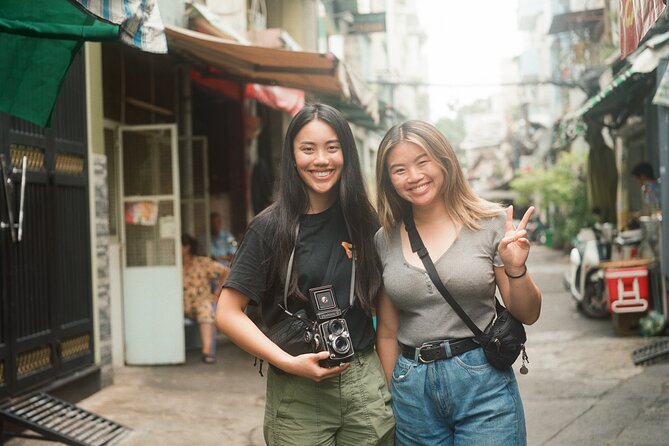
A key part of the experience is Bui Hoang Tu’s help with communication. He acts as a translator and helps break the ice with local people.
That role can change the quality of a street photograph. Taking pictures in an unfamiliar city can feel awkward, especially when you want to photograph people or daily activity. A guide who can introduce you, explain your purpose, and help you communicate gives the encounter more care and clarity.
This does not mean every person you meet will become a photo subject. The details do not promise staged portraits or guaranteed access. Instead, you have a local intermediary who can help you navigate conversations as you move through the markets and neighborhoods.
I would treat the guide’s translation as one of the main reasons to consider the cost. You are not only renting an old camera. You are paying for assistance that helps the photographic process make sense in a local setting.
The activity provider is Bui Hoang Tu, and the experience is for your private group only. That setup should appeal to couples, friends, or solo photographers who want to ask questions without slowing down a larger party.
The value of one roll of film
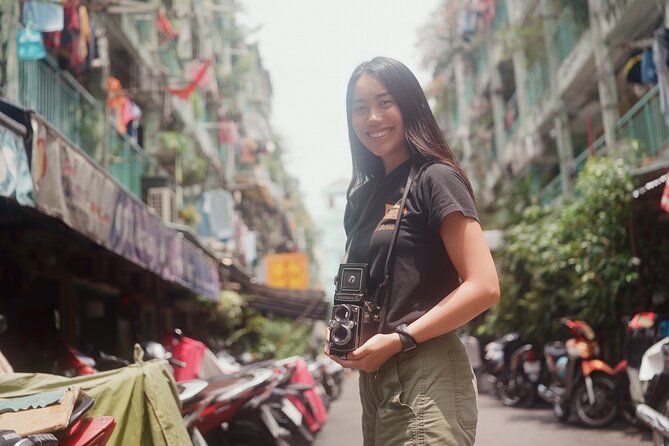
The single roll of black-and-white film is both a charming feature and a practical limit.
It gives the activity a clear beginning and end. You receive the camera and film, learn the basics, and make your way through Saigon with a finite supply of images. You cannot fire away at every passing motorbike. Instead, you must decide what is worth recording.
That kind of restraint can make you more reflective. The camera becomes less about collecting proof that you were somewhere and more about choosing what deserves your attention. The experience’s strongest idea is not simply analog photography. It is the habit of slowing down.
There are also limits. If you are already an experienced film photographer, the short briefing may cover familiar ground. You may also want more than one roll, especially if you are used to shooting freely. The supplied information only includes one roll, so ask ahead if you want to know about extra film or developing. No details are provided about processing, scanning, or how you receive the finished images.
For a beginner, one roll is probably enough for a first lesson. For a serious photographer, it may feel brief. Either way, the shortage is part of the format, not a mistake in planning.
How the private format affects the day
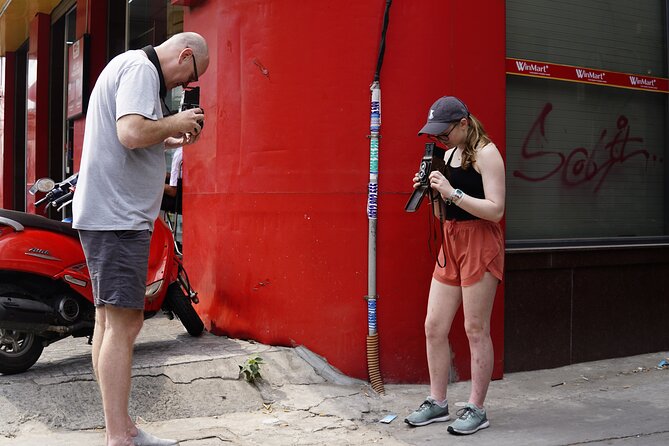
This is a private activity, so only your group participates. That can make the tour more comfortable for people who want to learn at their own speed.
You can stop to ask how to frame a subject, take extra time at the coffee shop, or discuss a scene before using a frame. You also avoid the common problem of a large group crowding narrow alleys or waiting while everyone photographs the same view.
The private format does not guarantee a completely flexible itinerary. The route still centers on the old coffee shop, alley markets, the older apartment building, and the ending market. But within that outline, a small group should find it easier to talk and pay attention.
The activity lasts about 3 to 4 hours. That is long enough for a focused photo walk without taking an entire day. It is also short enough to pair with other plans in Ho Chi Minh City, provided you allow time to reach the starting point and continue from the ending point.
Private transportation is not included. You need to make your own way to 73/8 Hồ Hảo Hớn and arrange your onward trip from Chợ Bàn Cờ. The meeting point is near public transportation, which helps, but the tour does not return you to the start.
Ending at Chợ Bàn Cờ in District 3
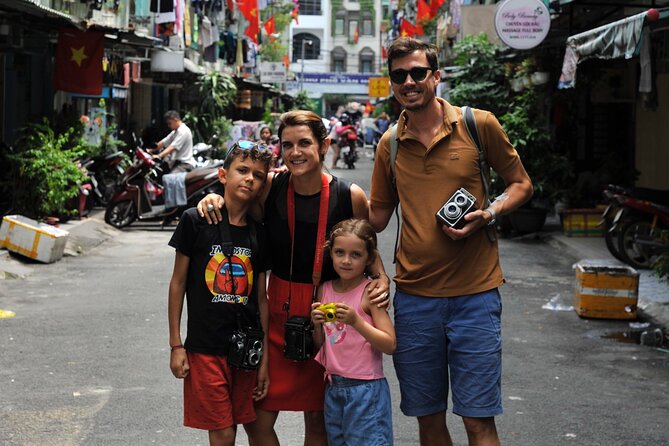
The experience ends at Chợ Bàn Cờ in District 3. Finishing at a local market gives the route a practical endpoint rather than sending you back to the original store.
You can treat the market as the final photographic setting, but the exact activities or amount of time spent there are not specified. The important point is that the ending is in a neighborhood market, so you should plan your next stop from District 3 rather than District 1.
This ending also reinforces the focus of the experience. You begin with coffee, work through local streets and an older building, and finish among everyday market life. The route is about seeing several ordinary parts of Saigon through one creative method.
You may want to keep your schedule open after the tour. A market ending can be useful if you want to continue exploring, but it is less convenient if you need to return immediately to your hotel near the starting point.
Is $148.27 a fair price?
At $148.27 per person, this is not a budget walking tour. The value depends on what you want from the afternoon.
The price includes coffee or tea, an analog camera, one roll of film, a private guide, a short camera lesson, and translation help while you explore. It also buys a carefully shaped local experience rather than a standard route through major attractions.
For someone curious about film photography, the combination is appealing. You get equipment without bringing your own, instruction without committing to a full photography course, and a local guide who can help with communication.
For someone who only wants to see Saigon cheaply, the price is harder to justify. You can explore coffee shops and markets independently for far less, and there is no private transportation or stated guarantee of developed photographs. The tour earns its price through the personal format and the creative focus.
I would compare it with the cost of renting a camera, buying film, and arranging a local guide separately. If you would not normally seek out those things, this experience puts them together in one short outing.
Who should book this Saigon photo walk?
Book it if you want a slower, more thoughtful way to see Ho Chi Minh City. It suits beginners who want to try a TLR camera, photographers who enjoy film, and repeat visitors who are less interested in major tourist sights.
It also works well for people who enjoy conversation. Bui Hoang Tu’s role as translator is important if you want help approaching local people respectfully or understanding the setting around you.
You may want to skip it if you need a packed sightseeing schedule, modern camera gear, instant digital images, or transport from one door to another. It is also not the right pick if spending $148.27 on a short private activity feels out of proportion to your budget.
The experience requires good weather. If poor weather causes a cancellation, you can choose another date or receive a full refund. You can cancel for a full refund up to 24 hours before the start time, but later cancellations and changes are not accepted.
Should you book it?
Book this experience if the idea of making a small number of careful photographs appeals to you more than collecting a long list of sights. The old coffee shop, 1968 apartment building, alley markets, and final stop at Chợ Bàn Cờ create a local route with a clear theme.
I would especially recommend it to anyone who sees a film camera as part of the experience, not just a tool. The camera is old, the film is limited, and the pace asks you to pay attention. That is the point.
Skip it if you want low-cost sightseeing or a guaranteed set of finished images. For the right person, though, this is a memorable way to look at Saigon, one deliberate frame at a time.
FAQ
How long does the experience last?
The experience takes approximately 3 to 4 hours.
What is included in the price?
Coffee or tea, an analog TLR camera, and one roll of black-and-white medium-format film are included.
Who leads the experience?
The experience provider is Bui Hoang Tu. He gives the camera briefing and helps translate and connect with local people.
Where does the experience start?
It starts at 73/8 Hồ Hảo Hớn, Phường Cô Giang, Quận 1, Ho Chi Minh City, Vietnam.
Where does the experience end?
It ends at Chợ Bàn Cờ in Phường 3, District 3, Ho Chi Minh City. Private transportation is not included.
Can I cancel for a full refund?
Yes. You can cancel at least 24 hours before the start time for a full refund. Changes or cancellations made less than 24 hours before the start time are not accepted.
Just added around Ho Chi Minh City
- Ho Chi Minh city Street Food by scooter tour | female driver★ 5.0 · 3 reviews
- Vung Tau City Shore Excursion from Phu My Port★ 5.0 · 3 reviews
- Ho Chi Minh City: Full Long Tan Battlefield Tour★ 4.7 · 3 reviews
- Ride Saigon: Private Half-Day Motorbike Adventure★ 5.0 · 3 reviews
- Ho Chi Minh City: Guided Food Tour by Scooter★ 5.0 · 3 reviews
- PHU MY SHORE EXCURSION: Saigon Past and Present Tour★ 5.0 · 3 reviews
- Ho Chi Minh: Cai Be-Mekong Delta Local Village Full Day Tour★ 3.7 · 3 reviews
- 3D2N Mekong Delta Tour: Cycling – Kayaking – Floating Market★ 5.0 · 3 reviews