
Reviewed · HO CHI MINH CITY
Three Coolest Neighborhoods in Saigon
Saigon reveals itself best in its side streets. This four-hour walk leaves the polished center behind for District 4 alleys, Chinatown markets, herbal medicine shops, and places tied to the Vietnam War. You move through ordinary neighborhoods, not just a checklist of famous sights.
I like the small maximum group of eight, which makes narrow lanes easier and gives you a better chance to ask questions. I also like the useful mix of tasting and context: Vietnamese coffee, herbal tea, seasonal fruit, Chinese culture, local commerce, and wartime history all fit into one morning.
The main drawback is the distance. You will walk about 5.5 to 6 kilometers, often through busy urban streets and tiny alleys, so this is not the right pick if you want a gentle, mostly seated tour. The start is at 8:30 am, and there is no hotel pickup.
In This Review
- Key points to know before booking
- Why this walk shows a different Saigon
- Starting with Xom Chieu Market and District 4 alleys
- Coffee and the social side of Saigon
- Chinatown, Aquarium Street, and Herbal Medicine Street
- The Burning Monk site and a wartime safehouse
- What the $37.59 price covers
- Timing, group size, and the physical effort
- Who should book this Saigon experience
- Small details that make the morning easier
- Should you book the Three Coolest Neighborhoods in Saigon?
- FAQ
- How long is the Three Coolest Neighborhoods in Saigon tour?
- How far do you walk during the tour?
- What food and drinks are included?
- Where does the tour start and end?
- How many people can join the tour?
- Is hotel pickup included?
Key points to know before booking

- District 4’s maze of alleys: Walk through Xom Chieu Market and residential lanes where daily life feels far removed from District 1.
- Chinatown beyond the main streets: See Aquarium Street, Herbal Medicine Street, and a colorful Chinese-style Buddhist temple.
- Coffee, tea, and fruit included: The price covers Vietnamese coffee, herbal tea, seasonal fruit, fees, and an English-speaking guide.
- War history with a physical setting: Visit the Burning Monk site and go down into the Commando Safehouse cellar.
- Small group format: The tour accepts no more than eight people, with group discounts available.
- A practical four-hour route: Start in District 1 and finish in District 3, about five minutes from the city center.
Why this walk shows a different Saigon
Many first visits to Ho Chi Minh City stay close to District 1. That area is convenient, but it can give you only one version of Saigon: hotels, major museums, restaurants, and busy central streets. This tour asks a better question: what makes the city itself unique?
The answer comes through contrasts. You see a local market, then a maze of alleys. You taste coffee, then herbal tea. You move from Chinese religious traditions to wartime history. The stops do not all have the same mood, and that is part of the appeal.
I like this approach because it connects small details to larger ideas. A street devoted to herbal medicine says something about Chinese influence and local commerce. A fish aquarium street shows how specialized neighborhood trade can be. A safehouse cellar gives wartime history a physical setting rather than leaving it as a date in a museum label.
The route covers three districts and ends outside the main tourist zone. That makes it useful early in your stay, when you want to understand the city before spending several days exploring it on your own.
Other Ho Chi Minh City days people book alongside this one:
- Cu Chi Tunnels Tour from HCM City – Morning or Afternoon
★ 5.0 · 15,833 reviews - From HCM City: Mekong Delta Tour with Sampan Journey
★ 4.5 · 13,132 reviews - Ho Chi Minh City Street Food Tour & Sightseeing By Motorbike
★ 5.0 · 9,413 reviews
Starting with Xom Chieu Market and District 4 alleys
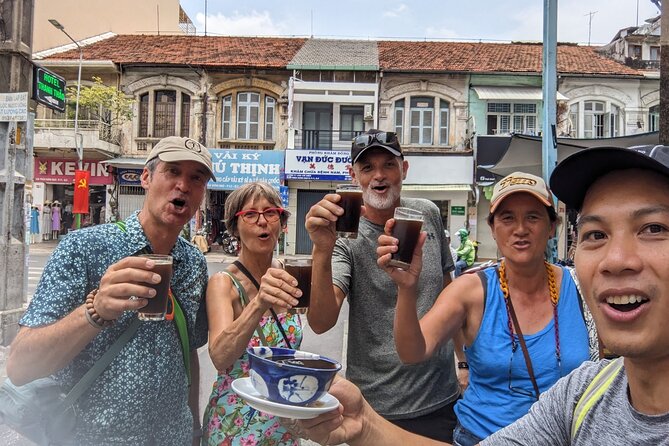
The first section takes about 90 minutes and covers roughly 3 kilometers. You begin at 36 Ho Tung Mau in District 1, then make your way toward Xom Chieu Market and District 4.
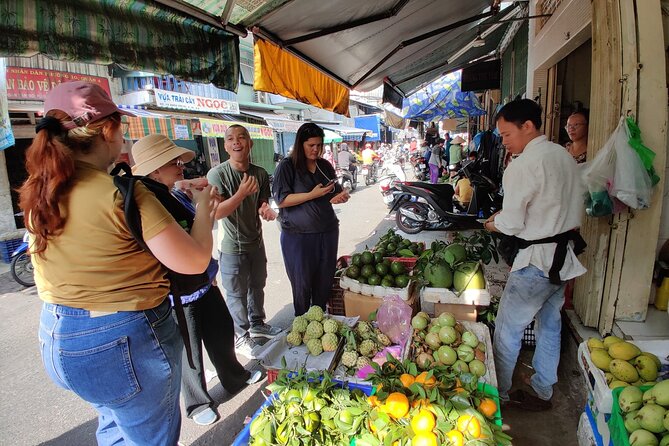
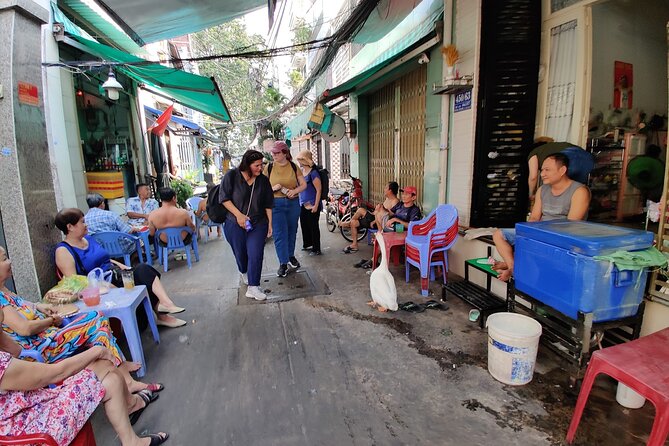
The market is not presented as a quick photo stop. The walk carries you through small alleys where many local residents live. These lanes are the kind of places you are unlikely to find by following a standard sightseeing route, especially if you are staying around the central hotels.
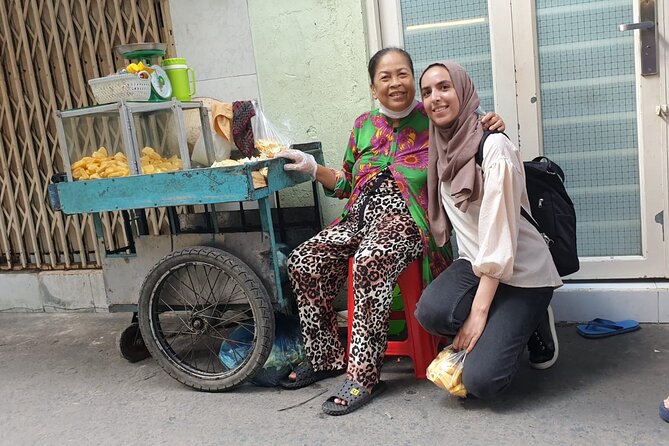
A local market gives you a useful opening lesson in Saigon. It is a working place, not a staged attraction. Seasonal fruit is bought here for you to taste, adding a simple food stop to the walk. Since the fruit is fresh and seasonal, the exact selection can vary, but the point is to connect the market to something you eat rather than simply pass through.
The alley section is also where comfortable shoes matter most. You are walking rather than riding, and the first leg alone is about 3 kilometers. If you prefer to move slowly for photographs or stop often, keep the walking distance in mind.
One appealing detail is the focus on how local residents live, not only on what they sell. The guide helps you read the surroundings as a neighborhood, including the narrow lanes and the everyday spaces between the market and the main roads. This is a stronger way to understand the city than rushing from one famous building to another.
Coffee and the social side of Saigon
Vietnamese coffee is included, and it is more than a welcome caffeine stop. Coffee is woven into the rhythm of city life, so sitting down for a cup gives the guide a natural moment to explain local habits and answer questions.
The exact coffee shop setting is not specified, so you should not expect a particular style of café or a long tasting session. Think of it as one included drink during a walking tour. The same applies to the herbal tea later in the route.
I like these short food and drink breaks because they divide the walk into manageable parts. They also give you a chance to pause after the first long stretch. If you start the morning without breakfast, remember that the included food is seasonal fruit and drinks, not a full meal.
Guides Kyle and Danny are named in the tour’s feedback, and Kyle is described as using a folder of visual material. That detail matters. Old photographs, maps, or other visual aids can make a complicated story easier to follow, especially when you are standing in an alley or looking at a site without much English signage.
Chinatown, Aquarium Street, and Herbal Medicine Street
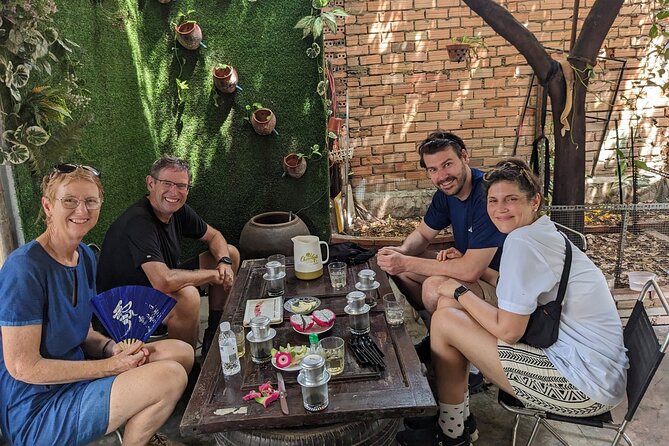
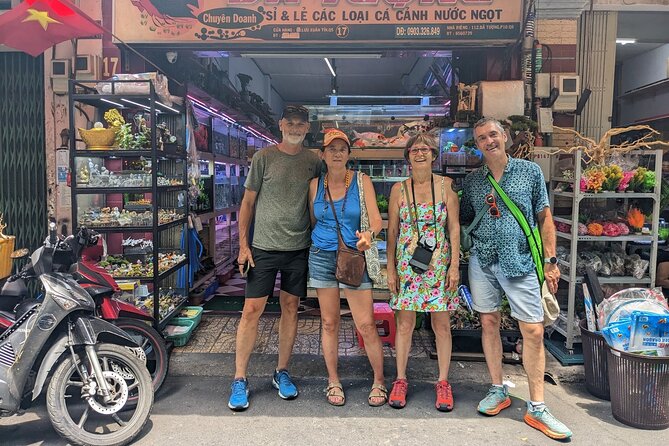
The second section moves through Cholon, Saigon’s Chinatown, with about 1.5 kilometers of walking and one hour set aside for the area. This part includes Aquarium Street, Herbal Medicine Street, a Chinese-style Buddhist temple, and herbal tea.
Chinatown is valuable here because the route goes beyond a single temple visit. You see several forms of neighborhood life together: specialized shops, religious practice, and traditional medicine. Aquarium Street gives you a particularly unusual subject. Instead of treating the street as a generic shopping area, the walk points out its fish-related trade and the way a district can develop around one type of business.
Herbal Medicine Street offers another layer. You can learn how Chinese cultural influence remains visible in Saigon through commerce and traditional remedies. The tour includes a cup of herbal tea, giving you a taste of that theme without turning the visit into a medical demonstration.
The colorful Chinese-style Buddhist temple is likely to be one of the more photogenic moments of the morning. Still, its value is not just color. The guide can place the temple within the Chinese community and explain why religious spaces matter in a city shaped by several cultural traditions.
This hour is shorter than the District 4 section, but it packs in a lot. If you enjoy architecture, food culture, markets, or neighborhood history, you may find this the most varied part of the route. If you prefer long, quiet visits inside major monuments, the quick pace may feel less satisfying.
A completely different kind of day out of Ho Chi Minh City:
- HCM: Cu Chi Tunnels-Tapioca Small Group Tour Morning or Afternoon
★ 5.0 · 7,485 reviews - Cu Chi Tunnels and Mekong Delta Signature Tour
★ 5.0 · 7,328 reviews - Mekong Delta Guided Tour from Ho Chi Minh City
★ 4.5 · 7,192 reviews - Cu Chi Tunnels & Mekong Delta Tour with VIP Limousine Transfer
★ 5.0 · 7,052 reviews
The Burning Monk site and a wartime safehouse
The final walk covers about 1 kilometer and takes around an hour. It leads to the Venerable Thich Quang Duc Monument, the site associated with the Buddhist monk who burned himself during the Vietnam War.
This is a serious stop. The subject is difficult, but it is an important part of understanding modern Vietnam. The monument gives the story a clear place in the city, and the guide can explain the event in relation to the war and religious tensions of the period.
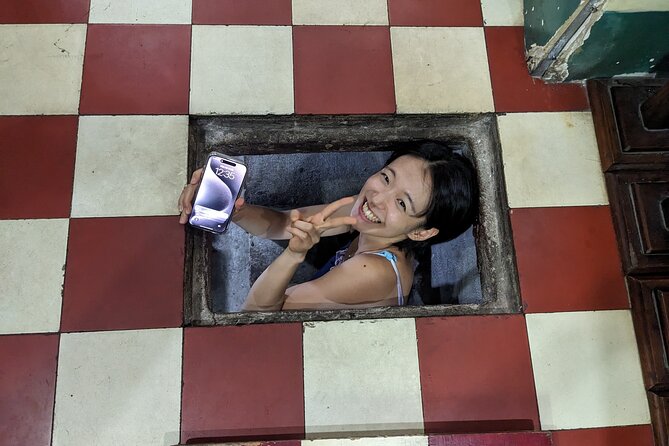
The route then includes the Commando Safehouse and its secret weapon cellar. Going down into the cellar changes the scale of the story. Instead of hearing only about military activity in distant locations, you see how covert work could be hidden inside an urban home.
The safehouse is one of the tour’s most distinctive features. It is not simply another historic marker, and it gives the final hour a sense of discovery without turning the subject into entertainment. You should expect the tone to become more reflective here.
The pairing of the Burning Monk site and safehouse also helps you see two different sides of wartime Saigon. One is a public act that drew international attention. The other is a concealed operation below an ordinary building. Together, they show why a city walk can teach you things a standard museum visit may not.
What the $37.59 price covers
At $37.59 per person, this is not the cheapest way to walk around Ho Chi Minh City. You could explore some markets and neighborhoods independently at little cost. The value comes from the route, the guide, the translation of local details, and the included tastings.
Your price covers the English-speaking guide, seasonal fruit, Vietnamese coffee, herbal tea, all fees and taxes, and admission to the included site. You are paying for access to a planned route through areas that can be hard to understand on your own, especially when the purpose of a street or building is not obvious.
The small group helps justify the cost. With a maximum of eight people, the guide can keep the group together in narrow alleys and make the walk more personal. Group discounts may lower the per-person price if you are booking with others.
You will still need money for personal expenses. Tips are optional but appreciated, and pickup and drop-off are not included. Since the tour begins in District 1 and ends in District 3, you should plan your own way to the starting point and onward from the finish.
Timing, group size, and the physical effort
The tour starts at 8:30 am and lasts about four hours. A morning departure gives you the rest of the day free, which is useful if you want to visit a museum, take a rest, or explore District 3 after the tour ends.
The route is long enough to feel like a proper city walk. The stated distance is 5.5 to 6 kilometers, divided into legs of approximately 3 kilometers, 1.5 kilometers, and 1 kilometer. Wear comfortable shoes and be ready to spend much of the morning on foot.
Most people can participate, but the distance should guide your decision. This is a good match for you if you enjoy walking, can manage several hours on city streets, and want local context more than a polished sightseeing circuit.
It is less suitable if you have limited walking ability or want regular vehicle transfers. There is no pickup service, and the tour ends at Vo Van Tan in District 3 rather than returning you to your hotel.
The maximum group of eight is a real practical advantage. A small group can fit into tight alleys more easily than a large coach group, and it should be easier to hear explanations or ask about something you notice.
Who should book this Saigon experience
I would choose this tour for a first or second visit when I wanted to see beyond District 1 without having to plan a complicated independent route. It also suits you if you want local neighborhoods, food and drink stops, Chinese culture, and war history in one morning.
It is especially useful for curious walkers. You do not need to be an expert in Vietnamese history, but you should enjoy asking why a street has a certain trade or why a site matters. The guide’s role is central, and the named guides Kyle and Danny have been singled out for friendly, clear English and strong preparation.
Families with older children may find the variety helpful, though the walking distance still matters. The tour is not designed as a formal food tour, shopping trip, or relaxed café outing. It is a city study conducted on foot, with small tastes along the way.
You might also book it if you have already seen the central landmarks and want a more grounded second look at Saigon. The neighborhoods are the point. The tour works best when you are willing to leave the familiar center and pay attention to ordinary streets.
Small details that make the morning easier
Meet at 36 Ho Tung Mau in Ben Nghe, District 1, at 8:30 am. The location is near public transportation, but hotel pickup is not part of the package.
Bring comfortable shoes and allow enough time to reach the start. The walk ends on Vo Van Tan in District 3, about five minutes from the city center, so you can continue sightseeing from there.
A mobile ticket is available, and confirmation is received at booking. Free cancellation is available until 24 hours before the start time. Cancellations or changes made within 24 hours are not accepted for a refund.
Should you book the Three Coolest Neighborhoods in Saigon?
Book it if you want Saigon explained through its neighborhoods rather than viewed from a tour bus. The market alleys, Chinatown trades, herbal tea, temple, Burning Monk site, and secret cellar create a varied morning with real substance.
Skip it if 5.5 to 6 kilometers feels like too much or if you want a slow tour focused on one major attraction. At $37.59, the price makes sense when you value a small group, an English-speaking guide, included drinks and fruit, and access to a route you might not build on your own.
For most active visitors who want a sharper sense of how Ho Chi Minh City works, this is a strong choice. Start with comfortable shoes, keep your schedule open after the 8:30 am meeting time, and expect the city to become more interesting as the main streets fall behind you.
FAQ
How long is the Three Coolest Neighborhoods in Saigon tour?
The tour lasts approximately four hours.
How far do you walk during the tour?
You walk approximately 5.5 to 6 kilometers in total.
What food and drinks are included?
The tour includes seasonal fruit bought at the market, Vietnamese coffee, and herbal tea.
Where does the tour start and end?
It starts at 36 Ho Tung Mau in Ben Nghe, District 1, at 8:30 am. It ends on Vo Van Tan in District 3, about five minutes from the city center.
How many people can join the tour?
The maximum group size is eight people.
Is hotel pickup included?
No. Pickup and drop-off service are not included, though the starting point is near public transportation.
Just added around Ho Chi Minh City
- Vung Tau City Shore Excursion from Phu My Port★ 5.0 · 3 reviews
- Ho Chi Minh city Street Food by scooter tour | female driver★ 5.0 · 3 reviews
- Ho Chi Minh City: Full Long Tan Battlefield Tour★ 4.7 · 3 reviews
- Ride Saigon: Private Half-Day Motorbike Adventure★ 5.0 · 3 reviews
- Ho Chi Minh City: Guided Food Tour by Scooter★ 5.0 · 3 reviews
- PHU MY SHORE EXCURSION: Saigon Past and Present Tour★ 5.0 · 3 reviews
- Ho Chi Minh: Cai Be-Mekong Delta Local Village Full Day Tour★ 3.7 · 3 reviews
- 3D2N Mekong Delta Tour: Cycling – Kayaking – Floating Market★ 5.0 · 3 reviews