Reviewed · PRIVATE
Private Tour to Long Tan – Former Australian Military Base
The most moving part of this seven-hour trip is the Long Tan Cross, a quiet memorial in the former battle area. You also visit Long Phuoc tunnels, Horseshoe FSB, and Nui Dat, linking names from wartime accounts to real places in southern Vietnam.
I like the privacy of having your own air-conditioned vehicle and guide, and I like that hotel pickup, permits, entrance fees, lunch, and bottled water are covered. The main drawback is the long road trip from Ho Chi Minh City, with roughly 110 kilometers each way and only a limited amount of time at each site.
In This Review
- Key points to know before you book
- Why Long Tan matters beyond the memorial
- Leaving Ho Chi Minh City at 8:00 AM
- The permit stop in Ba Ria Vung Tau
- Standing at the Long Tan Cross
- Long Phuoc tunnels and the physical side of the war
- Horseshoe FSB and Nui Dat, also called SAS Hill
- A guide can make or break this particular day
- What the $98.10 price includes
- Who will enjoy this tour most
- Practical details for a smoother day
- Should you book the Long Tan tour?
- FAQ
- How long does the Long Tan tour take?
- How far is Long Tan from Ho Chi Minh City?
- Is hotel pickup included?
- Is this a private tour?
- What sites are visited?
- Are entrance fees and permits included?
- Is lunch included?
Key points to know before you book
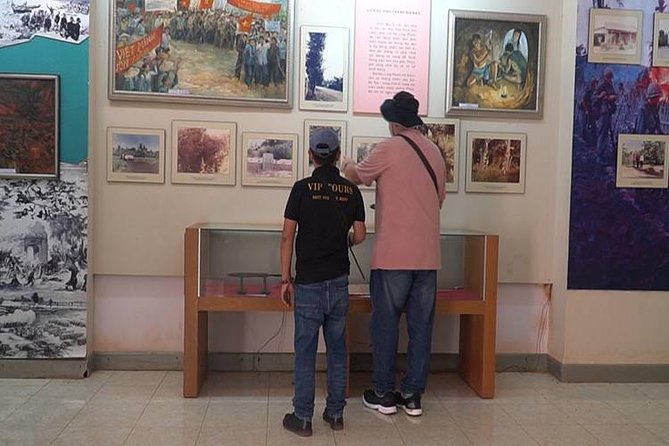
- Long Tan Cross: Visit the memorial to soldiers of the 1st Australian Task Force who died in the August 18, 1966 battle.
- Several wartime locations: The route includes Long Phuoc tunnels, Horseshoe FSB, and Nui Dat, also called SAS Hill.
- Private from start to finish: Your own guide and vehicle allow the day to be adjusted around your interests.
- Guide Tuan may add personal context: Tuan is described as an ex-serviceman, giving the tour a useful connection to military life.
- Permits are arranged locally: A stop in Ba Ria Vung Tau is made to collect the permits needed for the battle sites.
- Useful inclusions: Hotel transfers in Ho Chi Minh City, entrance fees, lunch, air conditioning, and bottled water are included.
Why Long Tan matters beyond the memorial
The Battle of Long Tan took place on August 18, 1966, during the Vietnam War. It became one of Australia’s best-known military engagements in Vietnam, and Australia commemorates the battle and its service members each year on August 18.
A visit here is not just a stop at a monument. The tour is built around the relationship between military history and the countryside where the fighting occurred. As you drive out of Ho Chi Minh City, rice fields, villages, and open farmland replace the city streets. That change helps you understand why this area mattered to military planners and why the journey itself is part of the experience.
You also hear about the Australian and Viet Cong forces involved in the battle. The aim is not simply to list dates and unit names, but to explain how the forces fought and how the local area was used. The guide can place Long Tan within the wider Australian military presence around Nui Dat and the surrounding villages.
For Australians with a family connection to the Vietnam War, this can be an especially meaningful day. For anyone else, the tour offers a focused introduction to one part of the conflict without requiring a long visit to a military museum.
A few more Ho Chi Minh City half-days to weigh up
- Private Street Food Tour by Motorbike/Car with Local Students
★ 5.0 · 3,950 reviews - Private Street Food Evening Walking Tour in Ho Chi Minh City
★ 5.0 · 3,175 reviews - Private Street Food Motorbike Tour in Ho Chi Minh City
★ 5.0 · 2,180 reviews
Leaving Ho Chi Minh City at 8:00 AM
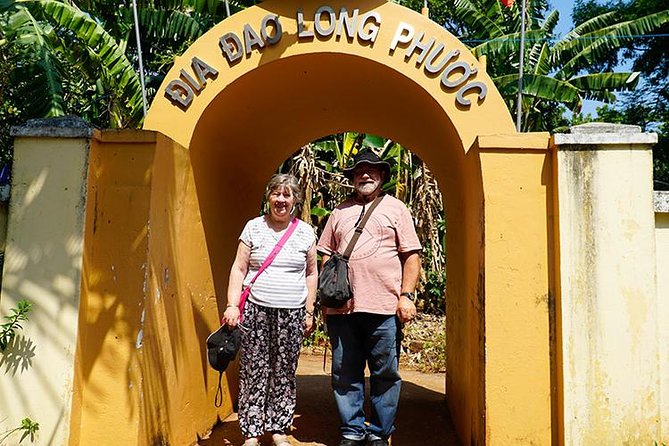
Pickup begins at about 8:00 AM from your hotel in Ho Chi Minh City. You travel in a private, air-conditioned car or van, rather than joining a large coach group. That matters on a full day with several hours on the road, especially if you want to ask questions along the way.
The drive to the Long Tan area covers about 68 miles, or 110 kilometers. The trip is described as taking you through rice fields, villages, and green countryside. Your guide provides background during the drive, so the road time is not simply dead time between attractions.
The full schedule runs from around 8:00 AM until about 3:00 PM. That gives you approximately seven hours door to door. You should think of this as a history day trip with a substantial drive, not a rapid city excursion.
A private vehicle also gives the group some breathing room. If one part of the military story interests you more than another, you can discuss that with your guide. The stated itinerary is flexible and may be adjusted to suit your interests, though the amount of time available still limits how long you can spend at each stop.
The permit stop in Ba Ria Vung Tau
Before visiting the battle sites and memorials, the tour stops in Ba Ria Vung Tau to collect the required permits. This is a practical detail, but it is also important: access to these sites is not treated like a simple visit to a city attraction.
The stop may interrupt the rhythm of the morning, yet it gives you a clearer idea of how carefully access to former military locations is handled. Your guide takes care of the process, so you do not need to arrange the permits yourself.
Because entrance fees and the required permits are included in the tour cost, you avoid a common worry with specialized day trips: finding out after arrival that an extra payment or document is needed. Still, you should allow for the possibility that the exact order of stops can change around local arrangements.
Standing at the Long Tan Cross
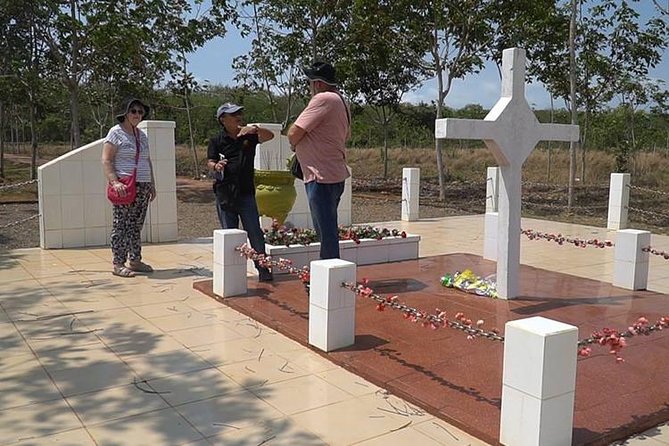
The Long Tan Cross is the emotional center of the tour. It commemorates the Australian soldiers who died in the battle, including members of the 1st Australian Task Force.
The memorial itself is likely to feel more restrained than a large museum. That is part of its power. Your guide explains what happened at the battle site and helps you connect the memorial with the people and military units involved. You are not simply taking a photograph and moving on.
The battle took place on August 18, 1966, and the date remains important in Australia. If your visit falls near that time, the annual commemoration may give the subject extra meaning, although no special ceremony is promised as part of this tour.
The surrounding area is also important. You walk through or near the former battlefield zone, seeing the kind of countryside in which the fighting occurred. The location helps turn an abstract account of the war into something easier to picture.
This is a place for a quieter pace. The tour has several stops to cover, but I would give the Cross your full attention. Listen closely to the explanation, ask about the battle, and take time to consider the memorial before moving on.
A completely different kind of day out of Ho Chi Minh City:
- Cu Chi Tunnels Tour from HCM City – Morning or Afternoon
★ 5.0 · 15,833 reviews - From HCM City: Mekong Delta Tour with Sampan Journey
★ 4.5 · 13,132 reviews - Ho Chi Minh City Street Food Tour & Sightseeing By Motorbike
★ 5.0 · 9,413 reviews - HCM: Cu Chi Tunnels-Tapioca Small Group Tour Morning or Afternoon
★ 5.0 · 7,485 reviews
Long Phuoc tunnels and the physical side of the war
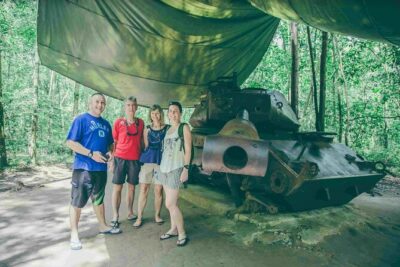
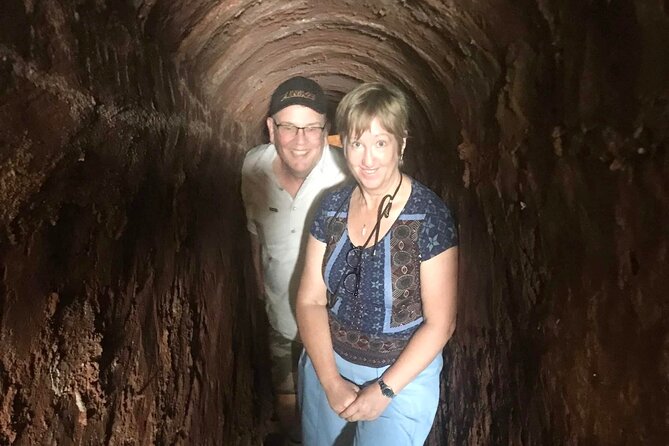
The Long Phuoc tunnels add a different layer to the visit. A memorial tells you who was lost. Tunnels show how people moved, sheltered, and organized themselves during the conflict.
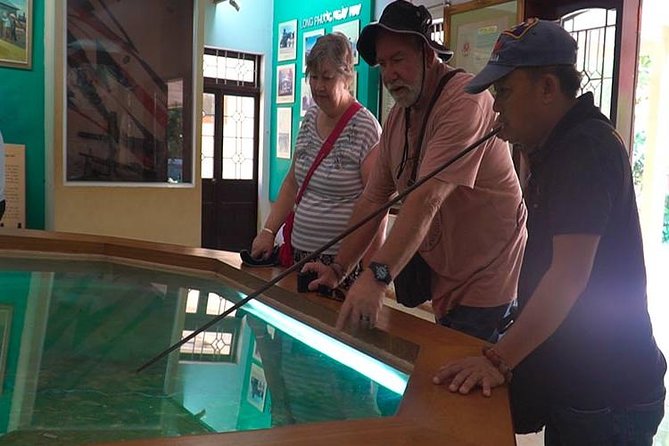
Your guide explains the part these tunnels played in the area’s wartime story. This stop is valuable because it shifts the focus away from one military force and toward the local infrastructure used by Viet Cong forces. It helps you see the conflict from more than one side.
Do not expect a polished museum complex based on the information available. The appeal is the place itself and the explanation you receive there. Conditions at former wartime sites can be simple, so sensible clothing and shoes are a good idea, though the tour information does not specify a dress code or walking requirements.
If you are mainly interested in Australian military history, the tunnels still deserve your attention. They explain the setting in which Australian troops operated and give useful context for the battle around Long Tan.
Horseshoe FSB and Nui Dat, also called SAS Hill
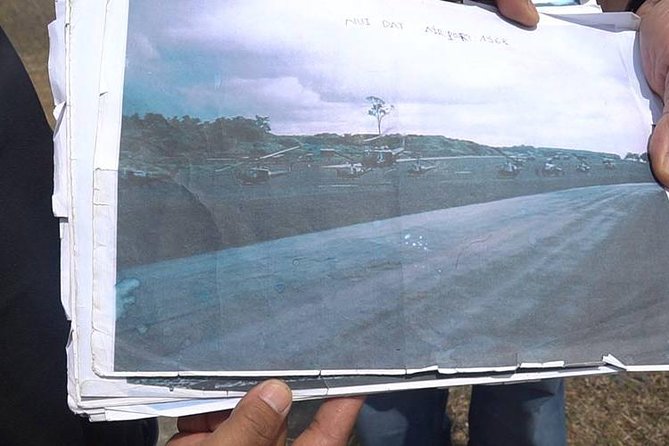
Horseshoe FSB is another key location connected with the Australian military presence. FSB refers to a forward operating base, so this stop helps explain how forces were positioned and supported in the area.
Nui Dat, also known as SAS Hill, brings the tour back to the former Australian base. This is one of the most useful parts of the day for anyone trying to understand the wider operation rather than only the battle itself.
The locations may not look dramatic to a modern visitor. Time, development, and ordinary rural life can soften the visible traces of war. That is exactly why a guide matters here. Without explanation, you may see fields or roads and wonder what you are looking at. With context, the same places become part of a military map.
The tour also includes discussion of humanitarian efforts by Australian forces in the region. In particular, you learn about the school and Australia’s connection with the local area. This does not erase the violence of the war, but it adds a broader view of the Australian presence and its contact with Vietnamese communities.
A guide can make or break this particular day
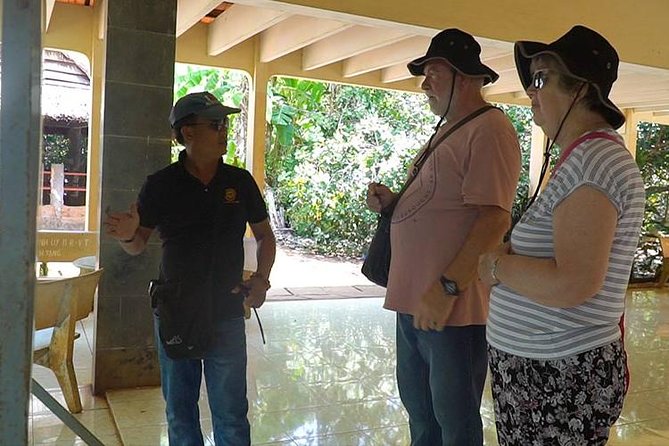
This is a guide-led experience, and the quality of the explanations matters more here than it would on a simple sightseeing drive. The tour information identifies Tuan as an ex-serviceman. His personal military background can add a useful perspective when discussing service, battle conditions, and the Australian connection to Long Tan.
You should still ask questions rather than expecting a lecture from start to finish. Ask your guide to explain the battle in geographic terms, to point out how the sites relate to one another, and to separate confirmed history from local stories.
The guide also tries to locate Vietnamese veterans of the Battle of Long Tan who may be able to meet the group. This is not guaranteed, so treat it as a possible extra rather than the main reason to book. If such a meeting can be arranged, it could add a rare local perspective to a tour that otherwise focuses strongly on the Australian side.
A private format makes this easier than a large group tour. You can pause for clarification and spend more time on the part of the story that matters most to you.
What the $98.10 price includes
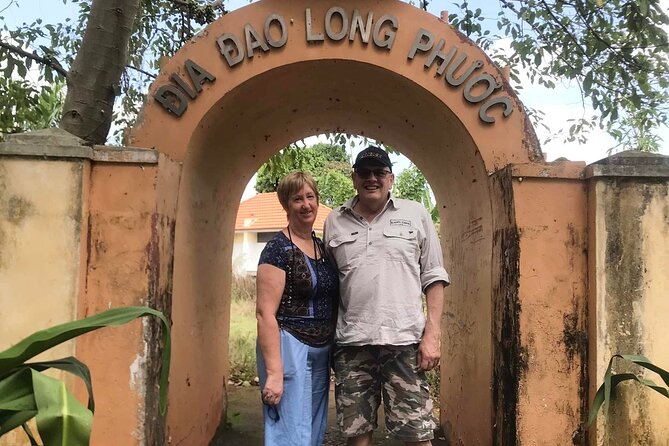
At $98.10 per person, this tour is not the cheapest way to spend a day outside Ho Chi Minh City. Its value comes from what is bundled into a specialized trip.
The price includes:
- Private air-conditioned vehicle
- English-speaking guide
- Hotel pickup and drop-off in Ho Chi Minh City
- Entrance fees
- Required site permits
- Lunch
- Bottled water
You are paying for a full day of transport, a private guide, access arrangements, and a focused military route. If you tried to organize the same combination independently, the logistics would be difficult, particularly because permits are collected locally and the sites are spread around the Long Tan and Nui Dat area.
The price makes the most sense for two or more people who value privacy and convenience. A group discount may also be available, so larger parties should check the final rate before booking. Solo visitors pay more per person for the private format, but they also receive a day built around their own questions and pace.
Lunch and bottled water are small inclusions, yet they matter on a rural day trip. You do not need to spend time searching for a meal during a tightly scheduled route.
Who will enjoy this tour most
This trip suits Australians interested in ANZAC history, Vietnam veterans, military enthusiasts, and anyone with a family connection to the conflict. It also works for visitors who want to see a less familiar part of southern Vietnam and learn about the war in the actual places where events unfolded.
You do not need to be a military expert. The guide supplies the background, and the visit moves from the battle itself to the tunnels, forward base, former Australian base, and local humanitarian work.
The tour is less suitable if you want a relaxed countryside outing with long stops for photography. The route covers several sites in one day, and the drive from Ho Chi Minh City takes a sizeable portion of the schedule.
Most people can take part, and the activity is private for your group. The available information does not provide detailed accessibility information, so you should ask the provider directly if you have specific mobility needs or concerns about walking at the sites.
Practical details for a smoother day
Wear comfortable clothing and shoes suited to visiting outdoor historic sites. The tour includes walking around the Long Tan memorial and battlefield area, though the exact amount is not specified.
Bring your questions. The best use of a private guide is not just listening, but asking for clear explanations of the Australian and Viet Cong positions, the role of Nui Dat, and the connection between the battle sites.
Keep your schedule clear after the return. The planned arrival is around 3:00 PM, but road travel and local permit arrangements can affect the timing. Hotel pickup and drop-off are provided within Ho Chi Minh City, and confirmation is sent at booking.
Free cancellation is available if you cancel at least 24 hours before the start time. Changes or cancellations made less than 24 hours before departure are not accepted for a refund, and the cut-off uses local time.
Should you book the Long Tan tour?
Book it if you want a focused, private history day and you are prepared for the long drive. The strongest reasons are the access to several connected sites, the included permits and transport, and the chance to learn from a guide such as Tuan, whose ex-serviceman background can bring added meaning to the subject.
I would especially recommend it to Australians and people with a personal link to the Vietnam War. The Long Tan Cross is a solemn place, and the combination of the memorial, tunnels, Horseshoe FSB, and Nui Dat gives you more than a single photo stop.
Skip it if your main goal is a leisurely day in the countryside or if military history does not interest you. For the right audience, though, the $98.10 cost is reasonable because it removes the hard logistical work and gives you a private guide for a route that would be difficult to arrange on your own.
FAQ
How long does the Long Tan tour take?
The experience lasts approximately seven hours. Pickup begins around 8:00 AM, and the planned return to Ho Chi Minh City is around 3:00 PM.
How far is Long Tan from Ho Chi Minh City?
Long Tan is approximately 90 kilometers, or 56 miles, from Ho Chi Minh City. The stated drive to the area is about 110 kilometers, or 68 miles.
Is hotel pickup included?
Yes. Pickup and drop-off at hotels in Ho Chi Minh City are included.
Is this a private tour?
Yes. Your group has its own private guide and vehicle, and no other group participates in the activity.
What sites are visited?
The tour includes Long Tan Cross, the Long Phuoc tunnels, Horseshoe FSB, and Nui Dat, also known as SAS Hill.
Are entrance fees and permits included?
Yes. Entrance fees are included, and the tour stops in Ba Ria Vung Tau to collect the permits required for the battle sites and memorials.
Is lunch included?
Yes. Lunch and bottled water are included in the tour.
Just added around Ho Chi Minh City
- Vung Tau City Shore Excursion from Phu My Port★ 5.0 · 3 reviews
- Ho Chi Minh city Street Food by scooter tour | female driver★ 5.0 · 3 reviews
- Ho Chi Minh City: Full Long Tan Battlefield Tour★ 4.7 · 3 reviews
- Ride Saigon: Private Half-Day Motorbike Adventure★ 5.0 · 3 reviews
- Ho Chi Minh City: Guided Food Tour by Scooter★ 5.0 · 3 reviews
- PHU MY SHORE EXCURSION: Saigon Past and Present Tour★ 5.0 · 3 reviews
- Ho Chi Minh: Cai Be-Mekong Delta Local Village Full Day Tour★ 3.7 · 3 reviews
- 3D2N Mekong Delta Tour: Cycling – Kayaking – Floating Market★ 5.0 · 3 reviews
Private, compared.
Private Street Food Tour by Motorbike/Car with Local Students
Read our review →
Private Street Food Evening Walking Tour in Ho Chi Minh City
Read our review →
Private Street Food Motorbike Tour in Ho Chi Minh City
Read our review →
Cu Chi Ben Duoc Tunnels Tour (max 12 people) with Private Option
Read our review →
Ho Chi Minh City Private Half-Day Tour by U.S Army Jeep
Read our review →
Cu Chi Tunnels and Mekong Delta – VIP Private Tour
Read our review →