
Reviewed · WAR HISTORY TOURS
Ho Chi Minh Most Historical Spots & War Museum Tour (Private & All-Inclusive)
Ho Chi Minh City’s difficult past comes into sharp focus at the War Remnants Museum, then unfolds through Buddhist memorials, a Khmer pagoda, and the unusual FITO Museum of traditional medicine. This is more than a quick city sightseeing loop. It gives you a clear day of context, with a private guide to connect the places.
I like the private vehicle and hotel pickup, which save you from managing Ho Chi Minh City traffic in the heat. I also like the mix of war history, religion, and local culture, especially the stop at the Thich Quang Duc Monument. The main consideration is emotional: the War Remnants Museum contains graphic material, including war-crime and Agent Orange exhibits, so you should allow time to process what you see.
In This Review
- Key points to know before booking
- Why this private history tour works
- 9:00 a.m. hotel pickup and the city drive
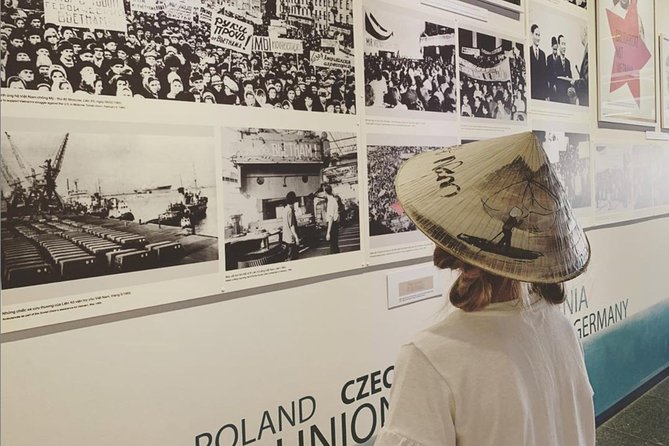
- War Remnants Museum: a hard but necessary morning
- Lunch at the midpoint
- Thich Quang Duc Monument at 1:00 p.m.
- Chantarangsay Pagoda and Khmer Buddhist culture
- FITO Museum: traditional medicine in a distinctive building
- What the extra city sights mean
- How the pacing feels
- Who will get the most from this tour
- Is the $133 price fair?
- Should you book it?
- FAQ
- Where does the tour take place?
- How long does the tour last?
- Is hotel pickup included?
- Is this a private tour?
- Is the tour conducted in English?
- Is admission to the War Remnants Museum included?
- Is admission to FITO Museum included?
- Which stops are listed in the main schedule?
- Is lunch included?
- Can I cancel for a full refund?
Key points to know before booking
- The War Remnants Museum is the main event: Expect powerful photographs, military equipment, documents, and personal accounts.
- Private touring keeps the day flexible: Only your group takes part, with an English-speaking guide and air-conditioned transport.
- The schedule covers more than wartime history: Thich Quang Duc Monument, Chantarangsay Pagoda, and FITO Museum add religious and cultural context.
- Ocean is one guide named in the feedback: He was praised for being polite and well informed, though guide assignment can vary.
- Admissions are included for two major museums: The War Remnants Museum and FITO Museum list included admission, while the outdoor and religious stops are free.
- The day runs on a full morning-to-afternoon schedule: Pickup is around 9:00 a.m., with return expected near 4:30 p.m., depending on your hotel.
Why this private history tour works
The best feature here is focus. Ho Chi Minh City has plenty of famous sights, but it is easy to see them as disconnected photo stops. This outing gives you a theme: how war, religion, medicine, colonial rule, and modern city life overlap.
You begin with the most confronting material and then move into quieter places. That order makes sense. After the War Remnants Museum, the Thich Quang Duc memorial offers a peaceful pause. The Khmer pagoda shifts the focus toward religious identity, and FITO Museum finishes the formal schedule with Vietnam’s long tradition of herbal medicine.
The private format matters in a city where traffic can turn a short drive into a slow one. Your own group travels in a spacious, air-conditioned vehicle, and the guide can explain what you are seeing without competing with a large crowd. The exact amount of conversation and flexibility will depend on your guide, but the setup is far more personal than a standard coach tour.
The tour costs $133 per person, which is not bargain pricing for Ho Chi Minh City. The value comes from the private transport, hotel pickup, guide, museum admissions, and the amount of time covered. If you only want the War Remnants Museum, a cheaper visit on your own is easy. If you want several historical stops explained in one day, the price becomes easier to justify.
More war history sites in Ho Chi Minh City:
- Adventure Cu Chi Tunnels: Vietnam War Underground Network AM/PM
★ 5.0 · 2,726 reviews - Cu Chi Tunnels Half-Day Tour: Vietnam War Underground Network
★ 5.0 · 2,587 reviews - Cu Chi Tunnels Half-Day Tour: Big Group Vietnam War Experience
★ 5.0 · 2,386 reviews
9:00 a.m. hotel pickup and the city drive

Pickup is scheduled for about 9:00 a.m., although the exact time can change with your location. You meet an English-speaking guide at your hotel, then travel by private, air-conditioned vehicle.
This is useful in Ho Chi Minh City. Heat, traffic, and busy crossings can make a packed sightseeing day tiring. You are not searching for taxis between stops or trying to follow a guide through a crowded public tour. You can also leave belongings in the vehicle during short visits, although normal precautions still apply.
The drive itself can introduce you to the city’s changing character. The wider sightseeing notes include French colonial streets, modern towers, markets, churches, temples, and busy central districts. Some of these may be passed during the route, but the confirmed schedule focuses on four main visits rather than promising a full stop at every named landmark.
War Remnants Museum: a hard but necessary morning
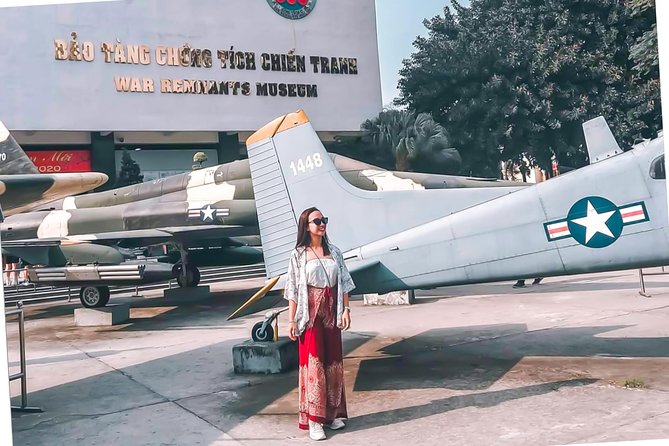
You reach the War Remnants Museum at about 9:20 a.m., with admission included. This is the tour’s emotional center and the place that demands the most time and attention.
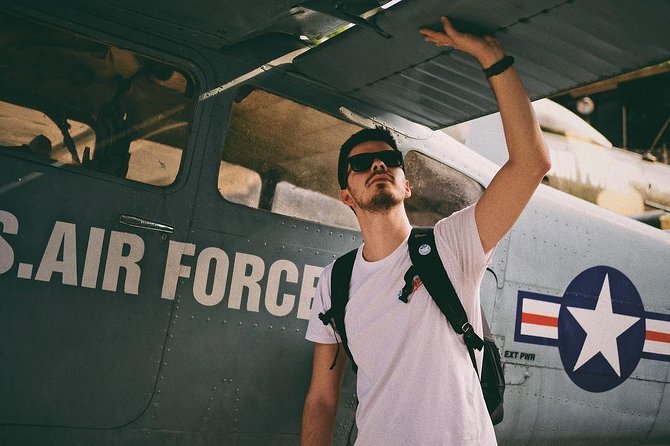
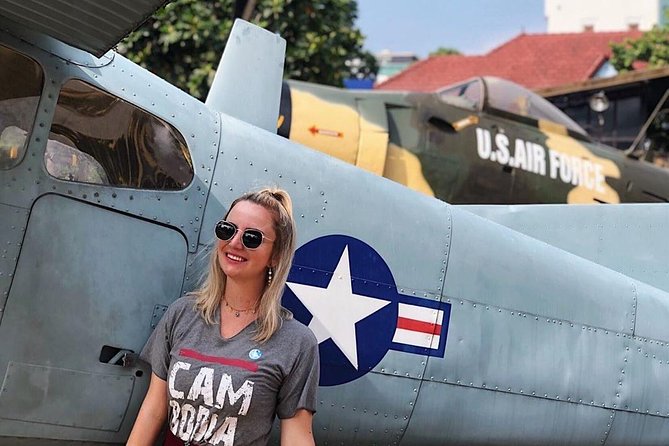
The museum first opened to the public in 1975. Its earlier name reflected the political language of the period, while its current presentation continues to focus heavily on the damage caused by the Vietnam War and its aftermath. You will see military hardware, photographs, documents, and personal testimony. Aircraft and guns are part of the display, and some exhibits offer numbered audio information through headsets.
The material is not neutral in tone. It presents the war from a strongly Vietnamese perspective, with particular weight given to civilian suffering, war crimes, and the effects of Agent Orange. That perspective is important, but you should not expect a balanced military history of every side in the same way a university textbook might provide it.
The most difficult rooms may include graphic photographs and accounts of injury, death, and long-term illness. I would not rush this stop. The scheduled visit is listed as about two minutes in the supplied timing, but that figure clearly does not reflect a useful museum visit, and the overall program allows far more time before lunch. Treat the museum as the central visit, not a quick checkbox.
A practical tip: keep your morning open emotionally. The museum can be confronting even for people who already know the broad outline of the war. The aircraft and weapons are visually striking, while the photographs and testimony carry the heavier weight. Families with older children should decide in advance how much difficult material is suitable.
The museum is also valuable because it pushes you beyond famous images and dates. You see how war affected ordinary people, how chemical exposure continued to cause harm, and how memory is shaped after a conflict ends. That makes this stop more than a collection of military objects.
Lunch at the midpoint
Lunch is scheduled for about 11:30 a.m., followed by the afternoon visits at 1:00 p.m. The supplied details do not specify the restaurant, menu, or whether the meal itself is included in the $133 price.
That is worth checking before you pay. The tour is described as all-inclusive, but the clearly stated included admissions are for the War Remnants Museum and FITO Museum. Ask the operator what all-inclusive covers for lunch, drinks, and any other costs.
The break is well placed. After the museum, you will appreciate time away from exhibits and vehicles. Since this is a private tour, your group may have a more relaxed meal than a large organized party, though the exact pace depends on traffic and the guide.
More museums and galleries in Ho Chi Minh City:
- HCM: War Remnants Museum & Independence Palace Walking Tour
★ 4.7 · 237 reviews - War Remnants Museum – Ho Chi Minh City Half Day Tours
★ 4.5 · 88 reviews - Cu Chi Ben Duoc Tunnel & War Museum – Original, Less Touristy
★ 5.0 · 80 reviews - Free E-Sim War Remnants Museum & Independence Palace Tour
★ 4.7 · 55 reviews
Thich Quang Duc Monument at 1:00 p.m.
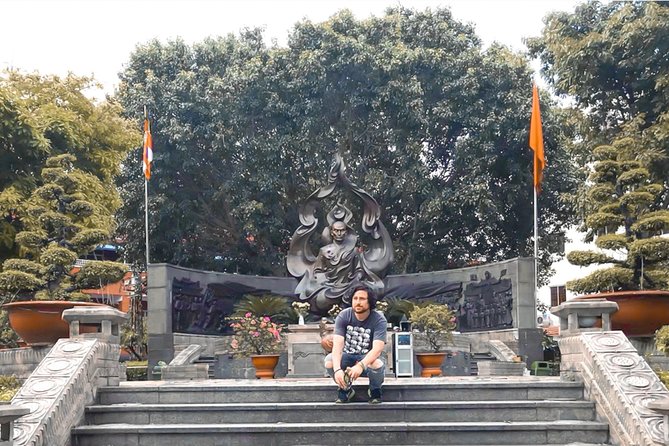
The next scheduled stop is the Venerable Thich Quang Duc Monument, reached around 1:00 p.m. The visit lasts about 20 minutes and has no admission charge.
The memorial marks the location where Thich Quang Duc, a Buddhist monk, set himself on fire in 1963 as a protest. The act took place at an intersection not far from the Presidential Palace, now called Reunification Palace. It became one of the defining images of the Buddhist crisis in South Vietnam.
This is a small, quiet stop rather than a major museum. The value lies in the guide’s explanation and in understanding the political and religious tensions behind the memorial. A short visit is enough to see the monument and reflect on its meaning.
Traffic and the surrounding city are part of the experience. You are not looking at history in an isolated park far from modern life. The memorial sits in the middle of the city, where motorcycles and daily routines continue around a place linked to a moment of national crisis.
Chantarangsay Pagoda and Khmer Buddhist culture
At about 1:30 p.m., you visit Chantarangsay Pagoda for roughly 45 minutes. Admission is free.
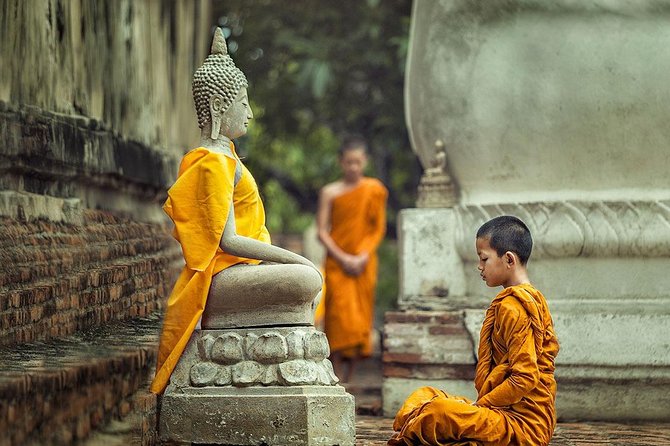
This is a Khmer religious and cultural center in southern Vietnam. It also houses monks from the Theravada Buddhist tradition, one of Buddhism’s oldest branches. That makes the stop especially useful after the Thich Quang Duc memorial, because it shows that Vietnamese religious life is not one single tradition.
Expect a calmer visit than at the war museum. You may see architectural details, religious spaces, and signs of Khmer cultural identity. Dress respectfully for a religious site, even though no specific dress code is supplied. Keep your voice low and follow your guide’s instructions about where you may walk or take photographs.
The pagoda also prevents the tour from becoming a narrow account of military conflict. Vietnam’s past includes political struggle, but it also includes ethnic communities, religious practice, and cultural exchange. This short visit adds that human scale.
FITO Museum: traditional medicine in a distinctive building
The final scheduled attraction is FITO Museum, visited at about 2:30 p.m. The stop lasts around one hour, and admission is included.
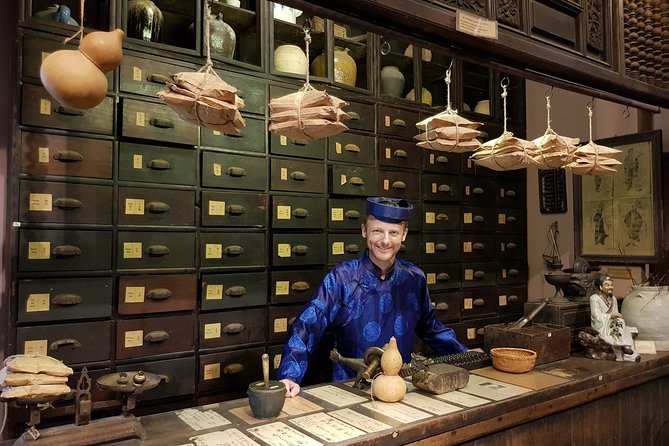
FITO combines traditional and modern architectural elements. The museum has a ground floor, five upper floors, and 18 exhibition rooms. You may see finely carved wooden displays and objects connected with Vietnamese traditional medicine and pharmacy.
This museum is unusual because it explores healing rather than battlefields or political power. The exhibits help explain how herbal remedies, medical knowledge, tools, and pharmacy developed over time. It also gives you a look at a part of Vietnamese culture that many short city tours skip.
One hour should give you a useful overview without making the visit feel endless. Still, the building’s multiple floors may involve stairs, and the supplied information does not state whether an elevator or step-free route is available. If mobility is a concern, ask the operator before booking.
The museum works well as the last major stop. The War Remnants Museum confronts you with modern violence, while FITO shows older systems of knowledge and care. Together, they make the day feel broader and less repetitive.
What the extra city sights mean
The tour information also names many Ho Chi Minh City landmarks, including Turtle Lake, the Nguyen Dinh Chieu Street weapons house, Tan Dinh Church, Dong Khoi Street, the Saigon Opera House, Ben Thanh Market, Reunification Palace, the Central Post Office, Notre Dame Cathedral, Ho Chi Minh City Hall, Thien Hau Temple, the Fine Arts Museum, Book Street, and the Women’s Museum.
These places help explain the city’s layers. Dong Khoi Street was once Rue Catinat under French rule. The Central Post Office shows Gothic, Renaissance, and French colonial design, although Gustave Eiffel is often wrongly credited with designing it. Reunification Palace recalls the dramatic 1975 tank breakthrough that came to symbolize the end of the war.
Other places point in different directions. Thien Hau Temple reflects Chinese religious culture in Cho Lon. Tan Dinh Church shows Gothic and Renaissance details in a pink-toned colonial-era building. Bitexco Financial Tower and Landmark 81 represent the modern city, while Ben Thanh Market offers food, handicrafts, art, and souvenirs.
The schedule provided for this experience specifically lists four main visits. Treat the other sites as route context or possible sights seen during the city drive, not as guaranteed full stops. If you want time inside Reunification Palace, the Central Post Office, or the museums not listed as included, ask before departure.
The same applies to performances and special attractions. Water puppetry and the bamboo circus show À Ố are mentioned among city options, but neither is part of the confirmed historical tour schedule.
How the pacing feels
The day begins at approximately 9:00 a.m. and is expected to finish around 4:30 p.m., though hotel location and traffic affect both times. The experience is described as lasting about 6 to 7 hours, while the sample schedule covers roughly seven and a half hours including transport and the lunch break.
That difference is normal for city tours, but it is useful to know if you are arranging an evening meal, airport transfer, or show. Ho Chi Minh City traffic can change the day’s rhythm, especially when crossing districts.
The schedule is full without being packed with a dozen formal admissions. The War Remnants Museum carries the greatest weight, and the other three stops give the day variety. You will still spend time in the vehicle, so anyone who dislikes structured sightseeing may prefer a shorter, self-guided museum visit.
The private format lets your group ask questions as you go. Ocean is one guide specifically praised for being polite and well informed. Guide assignments can change, but the experience is designed around an English-speaking guide rather than a recorded route.
Who will get the most from this tour
I would choose this tour if you want to understand Ho Chi Minh City beyond cafés, markets, and colonial buildings. It suits first-time visitors who want the main war museum explained in a wider cultural setting.
It also fits families with older children, history students, photographers interested in memorials and architecture, and anyone with only one free day for serious sightseeing. The private vehicle is helpful for small groups who value comfort and a guide’s attention.
I would hesitate if your main goal is a relaxed food tour, shopping, or a long list of famous central landmarks. The War Remnants Museum is central to the day, and its content can be upsetting. I would also choose another outing if you specifically want the Cu Chi Tunnels, since they are mentioned separately but are not part of this scheduled route.
The tour has a perfect 5 rating from four published ratings, but that is a small sample. The repeated strengths are clear: a smooth private ride, a polite guide, strong historical content, and an eye-opening museum visit. Those points fit the design of the tour, but they do not remove the need to check lunch details and confirm which extra sights, if any, will be visited.
Is the $133 price fair?
At $133 per person, this is a premium day in Ho Chi Minh City. You are paying for convenience and interpretation, not simply entry tickets.
The strongest value comes from combining several stops that would be awkward to arrange independently. The private pickup, vehicle, guide, and included admissions remove much of the planning work. You also get a coherent explanation of places that might otherwise feel unrelated.
The weaker value is for independent visitors who are comfortable using taxis, walking, and reading museum material alone. The two main admissions are not enough by themselves to justify the full price. You should book for the private structure and historical guidance.
Free cancellation is available up to 24 hours before the start time for a full refund. Changes or cancellations inside that window are not accepted for a refund. Confirmation is provided at booking, and the activity is near public transportation, though your own hotel pickup is offered.
Should you book it?
Book this tour if the War Remnants Museum is high on your list and you want help placing it in Vietnam’s political, religious, and cultural setting. The private vehicle, English-speaking guide, and carefully varied afternoon make it a strong choice for a first visit.
Before booking, confirm what the all-inclusive price covers at lunch and ask if you want guaranteed stops at Reunification Palace, Tan Dinh Church, or another landmark from the wider city list. If graphic war material is not right for you, choose a gentler city tour.
For history-minded visitors, this is a serious and useful day. It will not show every major attraction in Ho Chi Minh City, but it gives you a clearer understanding of the city and the country behind the modern streets.
FAQ
Where does the tour take place?
The tour takes place in Ho Chi Minh City, Vietnam, with pickup offered directly from your hotel.
How long does the tour last?
The experience lasts approximately 6 to 7 hours. The sample schedule begins around 9:00 a.m. and returns you to your hotel near 4:30 p.m., depending on location and traffic.
Is hotel pickup included?
Yes. Private pickup from your hotel is offered, with the exact pickup time depending on your location.
Is this a private tour?
Yes. Only your group participates in the private tour or activity.
Is the tour conducted in English?
The tour includes a friendly, English-speaking guide.
Is admission to the War Remnants Museum included?
Yes. Admission to the War Remnants Museum is included.
Is admission to FITO Museum included?
Yes. Admission to FITO Museum is included.
Which stops are listed in the main schedule?
The scheduled stops are the War Remnants Museum, the Venerable Thich Quang Duc Monument, Chantarangsay Pagoda, and FITO Museum.
Is lunch included?
Lunch time is scheduled for about 11:30 a.m., but the supplied tour details do not specify the restaurant, menu, or whether the meal is included. Confirm this with the provider before booking.
Can I cancel for a full refund?
Yes. You can cancel at least 24 hours before the experience start time for a full refund. Cancellations or changes made less than 24 hours before the start time are not accepted for a refund.
More History Walks in Ho Chi Minh City
- From Ho Chi Minh: Cu Chi Tunnels Half-Day History Tour with Guide
★ 5.0 · 480 reviews - Saigon Afternoon City Historical Scooter Tour |Opt: Ao Dai Riders
★ 5.0 · 466 reviews - Saigon Unseen, History, & Hidden Gems Sightseeing Motorbike Tour
★ 5.0 · 416 reviews - Saigon Morning City Historical Scooter Tour w Ao Dai Rider option
★ 5.0 · 349 reviews
Just added around Ho Chi Minh City
- Ho Chi Minh city Street Food by scooter tour | female driver★ 5.0 · 3 reviews
- Vung Tau City Shore Excursion from Phu My Port★ 5.0 · 3 reviews
- Ho Chi Minh City: Full Long Tan Battlefield Tour★ 4.7 · 3 reviews
- Ride Saigon: Private Half-Day Motorbike Adventure★ 5.0 · 3 reviews
- Ho Chi Minh City: Guided Food Tour by Scooter★ 5.0 · 3 reviews
- 3D2N Mekong Delta Tour: Cycling – Kayaking – Floating Market★ 5.0 · 3 reviews
- PHU MY SHORE EXCURSION: Saigon Past and Present Tour★ 5.0 · 3 reviews
- Ho Chi Minh: Cai Be-Mekong Delta Local Village Full Day Tour★ 3.7 · 3 reviews
War History Tours, compared.
Cu Chi Tunnels Half-Day Tour: Vietnam War Underground Network
Read our review →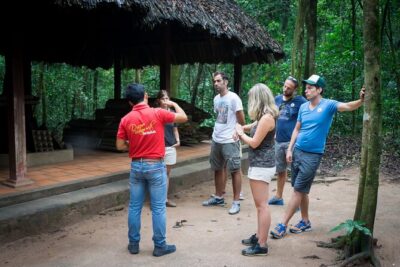
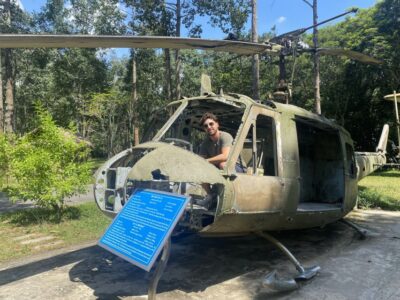
Cu Chi Tunnels Half-Day Tour: Big Group Vietnam War Experience
Read our review →
War Remnants Museum & Independence Palace Walking Tour
Read our review →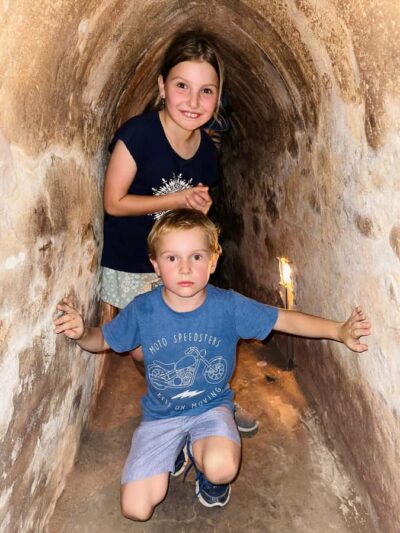
Cu Chi Tunnels Guided Tour: Vietnam War History Half-Day
Read our review →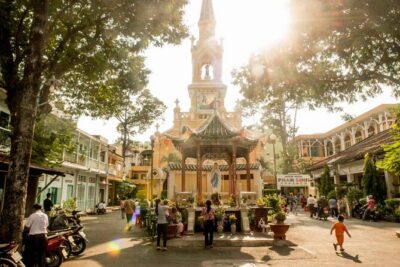
War Remnants Museum – Ho Chi Minh City Half Day Tours
Read our review →
Cu Chi Ben Duoc Tunnel & War Museum – Original, Less Touristy
Read our review →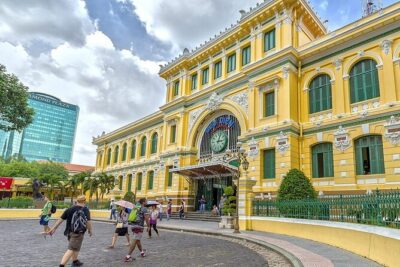
From War to Peace: Long Tân & the Australian Base Today
Read our review →Browse the lists this tour appears in