
Reviewed · MOTORBIKE & SCOOTER TOURS
Ho Chi Minh: Historical City Scooter Tour
Ho Chi Minh City reveals itself best from the back of a scooter. This four-hour private ride links famous sights with places most visitors would not find on foot, from a French-built cathedral and war museum to an old apartment block, a sleepless flower market, and Cholon’s Chinese-Vietnamese quarter. You cover eight districts without spending the day inside a tour bus.
I like the one-to-one format, which lets your guide adjust the final hour to your interests. I also like the human stories: the 90-year-old letter writer at the post office and a 75-year-old coffee shop are more memorable than a quick parade of monuments. The main consideration is the scooter itself. You ride through heavy city traffic, and this tour is not suitable for people with back, heart, or mobility problems.
The guides are a major part of the experience. Halsey, Henry, Hannah, Son, Sunny, and Midori are among the guides named in the feedback, with praise for clear English, safe driving, and thoughtful explanations of Vietnamese life. Bring sunscreen, sunglasses, and comfortable shoes, and be ready for heat, noise, and a few hours on the back of a motorbike.
In This Review
- Key points at a glance
- Why a scooter is the right way to cross Saigon
- The cathedral and post office: Saigon’s French chapter
- The War Remnant Museum and a difficult national story
- Thich Quang Duc Monument and the cost of protest
- An old apartment block and everyday Saigon
- The flower market that never really sleeps
- A 75-year-old coffee method
- Cholon, the motorbike market, and Thien Hau Temple
- What $49 includes, and where the value lies
- Timing, safety, and what to bring
- Who should book this scooter tour
- Should you book it?
- FAQ
- How long does the Ho Chi Minh City scooter tour last?
- What pickup times are available?
- Is hotel pickup included?
- Is the tour private?
- Which languages does the guide speak?
- Are entrance tickets included?
- Is a helmet provided?
- Who should not take this tour?
Key points at a glance

- Eight districts in four hours: This is an efficient way to see how sharply Ho Chi Minh City changes from central monuments to local neighborhoods.
- A private scooter and driver: You ride with your own English-speaking local driver rather than following a large group.
- History with a human face: The post office letter writer, Thich Quang Duc Monument, and War Remnant Museum add personal stories to the city tour.
- Local stops beyond the main sights: An old apartment, flower market, traditional coffee shop, and Cholon markets give you a look at everyday Saigon.
- Flexible final hour: You may have room to shape the later part of the ride around what interests you most.
- Simple pricing: At $49 per person, the price includes the listed attractions, entrance tickets, a good-quality helmet, a raincoat, and a private driver.
Why a scooter is the right way to cross Saigon
Ho Chi Minh City is too spread out for a compact sightseeing walk. Its major sights sit among districts with different sounds, smells, buildings, and daily routines. A scooter lets you move between them quickly, while still giving you a close view of the streets.
That is the real point of this tour. You are not only checking off a cathedral, post office, and museum. You are watching the city shift around you. A central colonial-era building gives way to an old residential block, then a flower market, then Cholon, the city’s Chinese-Vietnamese quarter.
The private setup matters here. Traffic can feel intimidating when you first arrive, especially if you have not ridden on a scooter before. Your driver handles the traffic while you watch the city and ask questions. Son was praised for being both a strong guide and a good driver, while Midori was credited with moving confidently through heavy traffic. That combination is more important than a polished script.
You should still know what you are signing up for. This is not a quiet ride through empty streets. You sit behind a driver for several hours, with traffic, heat, engine noise, and road movement all part of the day. If you have back or heart problems, limited mobility, or need a wheelchair-accessible activity, choose a different city tour.
More motorbike and scooter tours of Ho Chi Minh City:
- Ho Chi Minh City Street Food Tour & Sightseeing By Motorbike
★ 5.0 · 9,413 reviews - Saigon By Night and Street Food By Motorbike | Opt: Ao Dai Riders
★ 5.0 · 4,066 reviews - Private Street Food Tour by Motorbike/Car with Local Students
★ 5.0 · 3,950 reviews
The cathedral and post office: Saigon’s French chapter
The first stop is Ho Chi Minh City’s famous cathedral, built entirely from materials brought from France. It gives you an immediate look at the city’s French colonial period and makes a useful opening stop because it is visually striking and easy to understand even if you are new to Vietnamese history.
The cathedral is paired with the Central Post Office, another well-known colonial-era landmark. The building is not just a place for photographs. Here you meet a 90-year-old man described as the last handwritten letter writer in Vietnam. That detail changes the stop from a short architectural visit into a chance to see an old service still connected with the building.
I like this pairing because it gives you two ways into the city’s past. The cathedral presents imported European design, while the post office brings that older public world into contact with a living person. Ask your guide about the letter-writing tradition and how visitors use it today, since the personal story is likely to be the most unusual part of the stop.
You will not get a long, quiet museum visit here. The tour has many stops in four hours, so expect an overview rather than a slow study of every detail. That is a fair trade if your aim is to get your bearings quickly.
The War Remnant Museum and a difficult national story
The War Remnant Museum is the tour’s most serious stop. Vietnam has experienced repeated wars, and the museum presents stories connected with those conflicts from a Vietnamese point of view. Your guide explains parts of that history that you may not hear in a standard city sightseeing route.
Allow yourself some emotional room here. This is not simply another attractive building or photo stop. The subject is painful, and the museum can be difficult to process, particularly when you connect military events with the lives of ordinary people.
A strong guide makes a real difference. Halsey was praised for handling the subject with care and for explaining how Vietnamese people view sacrifice and respect. That kind of conversation is useful because war history can become a list of dates unless someone helps you connect it with modern Vietnam.
The four-hour schedule means the museum visit may be shorter than you would choose for a dedicated museum outing. If you want to read every display at length, return on your own. If you want a guided introduction before deciding what deserves more time, this stop fits well.
Thich Quang Duc Monument and the cost of protest
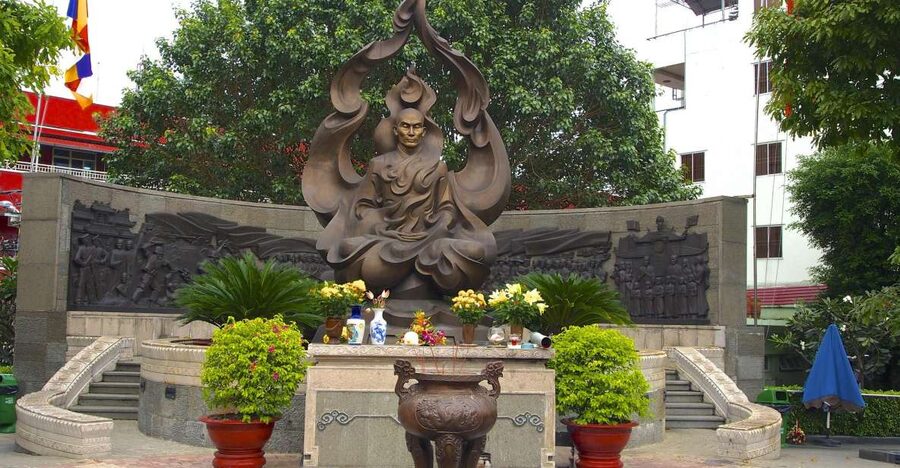
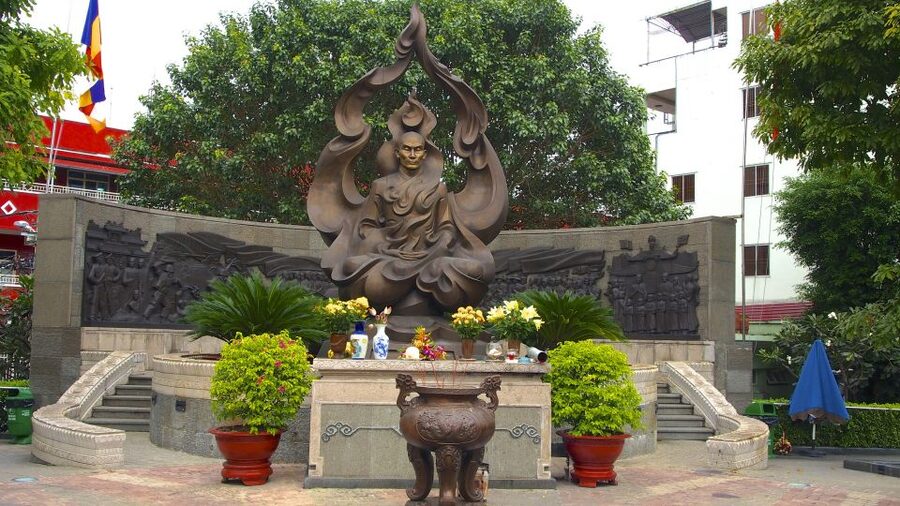
Next comes the Thich Quang Duc Monument, dedicated to the Buddhist monk who burned himself in protest against the southern government in 1963. The monument marks one of the most powerful and painful acts of political protest in modern Vietnamese history.
This stop is brief in physical size but large in meaning. Your guide can explain what happened and why the event mattered. It also gives you a chance to think about how religious belief, politics, and public protest met during a period of intense conflict.
The monument works particularly well after the War Remnant Museum. The museum gives you a wider account of war and its effects, while the monument focuses on one person and one act. Halsey’s careful approach to difficult subjects was singled out in the tour feedback, and that sensitivity is valuable at a stop like this.
Do not expect a formal museum setup or a long visit. The point is the explanation and the setting, not a large collection of objects.
More history walks in Ho Chi Minh City:
- From Ho Chi Minh: Cu Chi Tunnels Half-Day History Tour with Guide
★ 5.0 · 480 reviews - Saigon Afternoon City Historical Scooter Tour |Opt: Ao Dai Riders
★ 5.0 · 466 reviews - Saigon Unseen, History, & Hidden Gems Sightseeing Motorbike Tour
★ 5.0 · 416 reviews - Saigon Morning City Historical Scooter Tour w Ao Dai Rider option
★ 5.0 · 349 reviews
An old apartment block and everyday Saigon
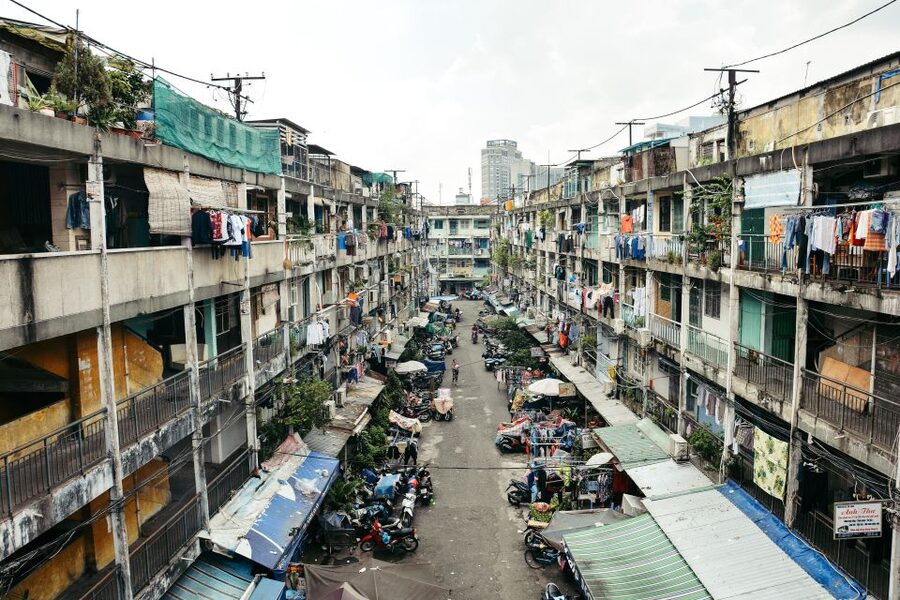
The tour then moves away from major monuments to one of Ho Chi Minh City’s oldest apartment buildings. It was built during the war, and you see how local people live in and around the aging structure.
This is one of the most useful parts of the route for anyone who wants more than a polished central district. You get a look at an ordinary residential setting, along with stories about how the building developed and how its residents use it today. The contrast with the cathedral and post office is sharp, which is exactly why the stop works.
An old apartment can tell you things a monument cannot. You see practical urban life, tight spaces, older construction, and the way a historic building remains part of the present city. Your guide’s local knowledge fills in the details that you would miss if you passed by alone.
Be respectful here. This is a place where people live, not a museum display. Keep the visit observational and follow your guide’s lead about photographs and where to walk.
The flower market that never really sleeps

The city’s largest flower market is another strong change of pace. It began in 1980 and operates almost 24 hours a day. Flowers arrive from Da Lat, often called the Paris of Vietnam, each morning, and thousands of blooms are displayed for sale.
The market gives the tour color and movement without relying on another historical lecture. You walk among the flowers, see how the market functions, and get a feel for a working part of the city. The early morning tour may give you the best chance of seeing fresh deliveries, while the afternoon departure still offers a market visit according to the set route.
This stop also shows why a scooter is useful. The market sits outside the standard cluster of central landmarks, and fitting it into an independent walking itinerary would take more effort. Here it becomes one part of a wider city ride.
The visit is not designed as a flower-arranging class or a shopping trip. Think of it as a short walk through a major local market. Wear comfortable shoes, since you will be getting on and off the scooter and walking at several stops.
A 75-year-old coffee method
Vietnamese coffee is a natural part of a Saigon city tour, but this stop aims to go beyond a standard café break. You visit a 75-year-old coffee shop using a brewing method said to be found in only three coffee shops in Vietnam.
That detail gives the stop real character. Instead of stopping at any convenient café, the tour connects a familiar drink with a long-running local practice. Your guide can explain the method and place it within Vietnamese coffee culture.
The coffee break also gives you a chance to sit down during a fast-moving itinerary. Four hours on a scooter can feel full, so a pause with a drink helps divide the route into manageable sections.
The information provided does not specify the exact coffee style, drink choices, or whether the beverage itself is included. Do not book this stop expecting a full meal or a tasting menu. It is a focused coffee visit with a traditional angle.
Cholon, the motorbike market, and Thien Hau Temple
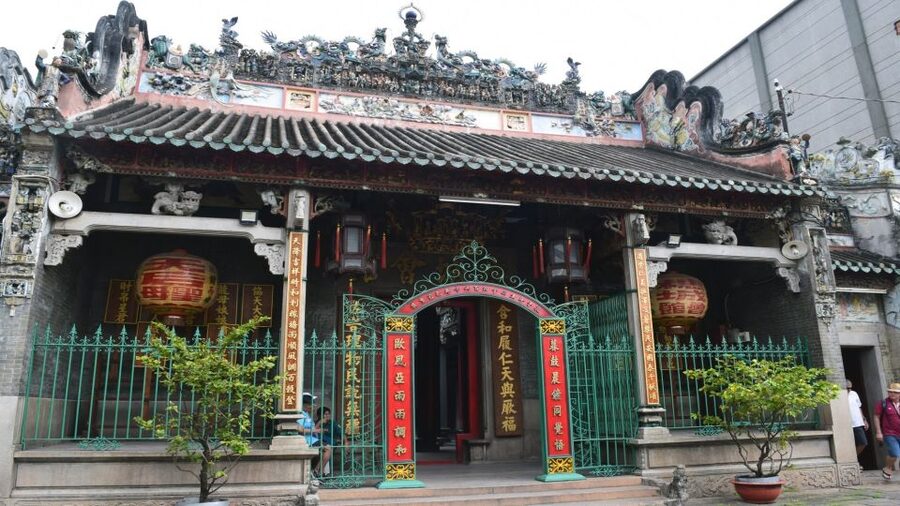
The final major area is Cholon, Ho Chi Minh City’s Chinatown. About 1.5 million Chinese-Vietnamese people are described as living in the area across generations, and the district offers a different cultural side of the city.
The ride includes a motorbike market, a bird market, and the 300-year-old Thien Hau Temple. These stops bring together commerce, local tradition, and religious architecture. The temple is the star of the district, with a long history and a strong connection to the Chinese-Vietnamese community.
You should not expect Cholon to feel like a separate, preserved old town. It is a living urban district, and the markets are part of daily business rather than a performance arranged for sightseeing. That is precisely its value. Your guide helps you understand what you are seeing instead of leaving you to guess at the meaning of the temple decorations, markets, and street activity.
The route description calls Thien Hau the most special of the Cholon stops, and I agree that it is likely to leave the strongest impression. A 300-year-old temple at the end of a ride through working markets gives the tour a satisfying cultural finish.
What $49 includes, and where the value lies
The tour costs $49 per person. That includes all listed attractions, entrance tickets, a good-quality helmet, a raincoat, and a private English-speaking driver. Pickup from your hotel lobby is also included.
For a four-hour private tour covering eight districts, the price is reasonable if you value convenience and personal guiding. You avoid arranging several separate rides, finding each attraction, and negotiating transport between distant parts of the city. You also get a local driver who can explain what you are passing rather than simply taking you from one address to another.
The private format is especially useful for couples, solo visitors, or small groups who want to ask questions freely. It also gives you some flexibility. One person used the final hour to decide where to go, which suggests you may be able to shape the later part of the route around your interests.
The value is less clear if you want long visits at only two or three sights. This tour is built around range. You see many different places, but most stops are introductions rather than exhaustive visits. A dedicated museum day or walking tour would suit you better if depth at one site matters more than seeing eight districts.
Timing, safety, and what to bring
The pickup time is either 8:00 AM or 1:00 PM. Choose the morning if you prefer an earlier start and want to reach the flower market near its morning activity. Choose the afternoon if you prefer a later departure, keeping in mind that the route still packs many stops into four hours.
You receive a helmet and raincoat. The raincoat is practical in Ho Chi Minh City, where weather can change, but you should also bring sunscreen, sunglasses, and comfortable shoes. Sunscreen is not a minor extra here. You are exposed to sun while riding, and the tour includes walking at the stops.
The strongest safety reassurance comes from the guides themselves. Son and Midori were praised for safe handling, and the general feedback repeatedly highlights guides who made riders feel at ease in traffic. Still, you should be honest about your comfort level. If sitting on a scooter makes you anxious, this may not be the right way to see the city.
The tour has a 4.8 rating from 17 reviews, with most feedback giving it five out of five. The repeated praise centers on three things: personal attention, safe driving, and guides who explain both history and present-day Vietnamese life in clear English.
Who should book this scooter tour
I would choose this ride if I had a short stay in Ho Chi Minh City and wanted a broad first look. It is also a good fit if you have already seen the central cathedral and post office but want local districts, Cholon, an old apartment, and the flower market in the same outing.
It suits curious solo visitors particularly well because a private guide can answer questions throughout the ride. Couples and small groups will also benefit from the flexible format.
I would not choose it for wheelchair users, people with mobility impairments, or anyone with back or heart problems. I would also think twice if you dislike motorbikes, hot weather, or busy traffic. The tour is safe according to the available feedback, but safety does not remove the physical nature of riding through a large Asian city.
Should you book it?
Book this tour if you want breadth, local contact, and a private guide in a single half-day. The best parts are not only the famous landmarks, but the unusual links between them: a handwritten-letter tradition, a war-era apartment, a nearly nonstop flower market, an old coffee method, and Cholon’s temple and markets.
Skip it if you want a slow museum visit, a quiet walking route, or an activity without scooters. At $49 per person, it offers good value for a private ride with admissions and equipment included, especially during a first visit when getting around eight districts alone would take much more planning.
FAQ
How long does the Ho Chi Minh City scooter tour last?
The tour lasts four hours.
What pickup times are available?
Pickup is scheduled for either 8:00 AM or 1:00 PM. Check availability for the exact starting time when booking.
Is hotel pickup included?
Yes. You should wait in the lobby of your hotel for pickup.
Is the tour private?
Yes. The tour is private, just for you or your booking group.
Which languages does the guide speak?
The tour is offered in Vietnamese and English, with an English-speaking private driver included.
Are entrance tickets included?
Yes. Entrance tickets for the attractions listed in the route are included.
Is a helmet provided?
Yes. A good-quality helmet and a raincoat are included.
Who should not take this tour?
The activity is not suitable for people with back problems, heart problems, mobility impairments, or wheelchair users.
Just added around Ho Chi Minh City
- Ho Chi Minh city Street Food by scooter tour | female driver★ 5.0 · 3 reviews
- Vung Tau City Shore Excursion from Phu My Port★ 5.0 · 3 reviews
- Ho Chi Minh City: Full Long Tan Battlefield Tour★ 4.7 · 3 reviews
- Ho Chi Minh City: Guided Food Tour by Scooter★ 5.0 · 3 reviews
- Ride Saigon: Private Half-Day Motorbike Adventure★ 5.0 · 3 reviews
- PHU MY SHORE EXCURSION: Saigon Past and Present Tour★ 5.0 · 3 reviews
- Ho Chi Minh: Cai Be-Mekong Delta Local Village Full Day Tour★ 3.7 · 3 reviews
- 3D2N Mekong Delta Tour: Cycling – Kayaking – Floating Market★ 5.0 · 3 reviews
Motorbike & Scooter Tours, compared.

Ho Chi Minh City Street Food Tour & Sightseeing By Motorbike
Read our review →
Saigon By Night and Street Food By Motorbike | Opt: Ao Dai Riders
Read our review →
Private Street Food Tour by Motorbike/Car with Local Students
Read our review →
Street Food Tasting & Sightseeing Tour by Motorbike
Read our review →
Top Notch Street Food Motorbike Tour In Ho Chi Minh City
Read our review →
Private Street Food Motorbike Tour in Ho Chi Minh City
Read our review →
Ho Chi Minh City Motorbike Tour with Student | Saigon Adventure
Read our review →
Browse the lists this tour appears in