
Reviewed · CHINATOWN & BEN THANH MARKET TOURS
Ho Chi Minh City: Chinatown Hidden Treasures – Free Walking Tour
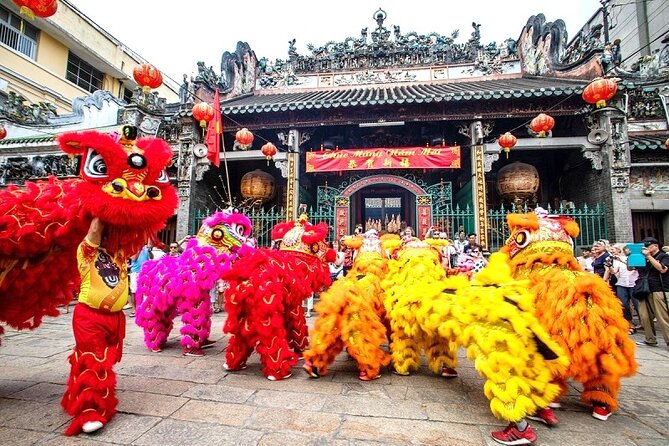
Ho Chi Minh City’s Chinatown is best understood on foot, where narrow lanes, old temples, and everyday homes reveal more than the main roads ever could. This three-hour walk takes you from Saigon Skydeck to Hao Sy Phuong, Nghia An Hoi Quan, Ba Thien Hau Temple, and the streets of Chợ Lớn.
I like the small-scale local details, especially the century-old alley and the preserved religious buildings tucked among modern city blocks. I also like the focus on history, politics, and present-day life, which gives the walk more substance than a simple photo stop.
The main consideration is the tips-only price. The booking charge is just $0.71, but the suggested tip is $15 to $25 per person, so your real cost depends on the tip you choose. The tour is also advertised as a walking experience, and no vehicle, drinks, or snacks are included.
In This Review
- Key points to know before booking
- Why Chinatown is worth three hours on foot
- Starting at Saigon Skydeck in District 1
- Hao Sy Phuong and the texture of daily life
- Nghia An Hoi Quan and the role of community halls
- Ba Thien Hau Temple and Cantonese heritage
- One hour in Chợ Lớn’s commercial center
- What makes Thang’s guiding style useful
- The tips-only price and what it really means
- Who should book this Chinatown walk
- Should you book it?
- FAQ
- How long does the Chinatown walking tour last?
- Where does the tour begin?
- What time does the tour start?
- Which places does the tour visit?
- Is the tour really free?
- What is included in the tour?
Key points to know before booking
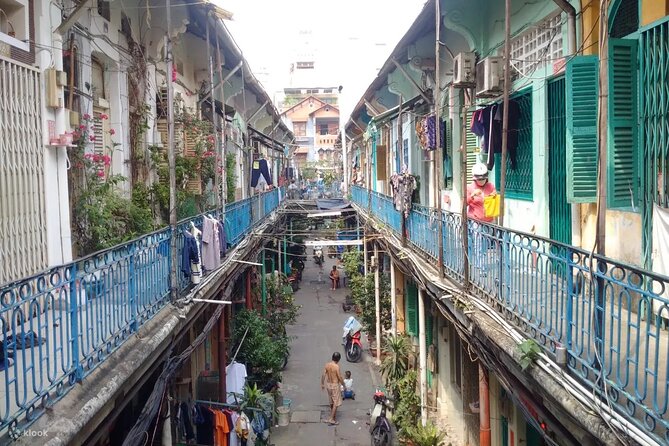
- A close look at Hao Sy Phuong: Spend about 30 minutes in a narrow residential alley with more than a century of local history.
- Three important Chinese religious sites: Visit Nghia An Hoi Quan and Ba Thien Hau Temple, each with its own community roots and architectural character.
- Chợ Lớn gives the tour its scale: The final hour takes you through the commercial heart of Ho Chi Minh City’s Chinese community.
- Thang is a strong guide when assigned: His tours are praised for clear explanations of Vietnamese history, politics, and city life.
- Tips-only means the posted price is not the full budget: Plan around the suggested $15 to $25 tip per person.
- A three-hour city walk: The route suits people who want context and street-level views, not a short temple visit by car.
Why Chinatown is worth three hours on foot
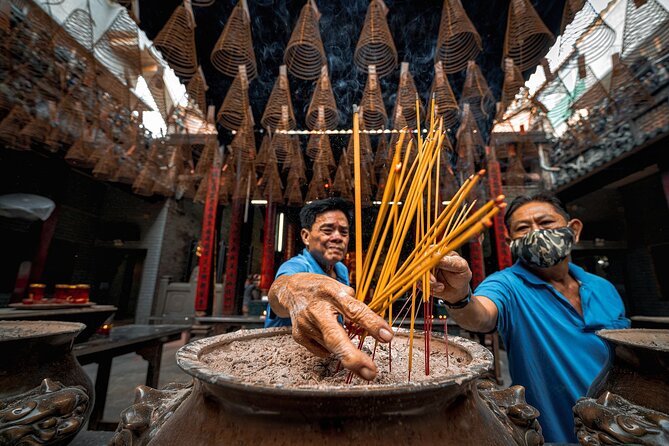
Ho Chi Minh City’s Chinatown, known as Chợ Lớn, is not one single sight. It is a district shaped by commerce, migration, religion, family life, and repeated rebuilding. That makes a guide useful. Without one, you can see an ornate roof or a crowded market, but you may miss why the place matters.
I like that this experience moves between ordinary streets and formal religious buildings. The contrast is the point. One stop places you in a residential passageway, another brings you into a Chinese community hall, and the temples show how faith and local identity have been preserved in a fast-changing city.
The walking format also gives you time to notice the small things: doorways, roof tiles, narrow lanes, old facades, and the way modern buildings press close to older structures. You should expect a city walk rather than a polished sightseeing circuit. That means plenty of visual interest, but also traffic, uneven attention from passersby, and the normal heat and noise of Ho Chi Minh City.
The group can include up to 30 people. That is not a private tour, so the guide’s voice and pacing matter. If you prefer long questions and a quiet, personal discussion, a large group may feel less flexible. If you enjoy meeting other people and want a structured introduction to the district, the size is manageable for a public walking tour.
More Chinatown and Ben Thanh market walks:
- Full-Day Ho Chi Minh City Tour with Colonial Heritage & Chinatown
★ 5.0 · 246 reviews - Cooking Class with Ben Thanh Market visit
★ 4.9 · 94 reviews - Private Sunrise Photography Tour – Down in Chinatown
★ 5.0 · 59 reviews
Starting at Saigon Skydeck in District 1
The meeting point is Saigon Skydeck at 36 Hồ Tùng Mậu in Bến Nghé, District 1. The tour begins at 9:00 a.m. and ends back at the meeting point, according to the supplied details.
That start point is practical if you are staying in central Ho Chi Minh City. It also gives you a clear landmark rather than an obscure side street. Still, the main Chinatown stops are not at the meeting point, and the details do not specify how the group moves between District 1 and Chợ Lớn. Since the activity is described as a walking tour and an air-conditioned vehicle is not included, I would confirm the transfer arrangement before booking.
The morning start is a sensible choice. You get out before the day becomes hotter, and three hours on city streets is easier at 9:00 a.m. than at midday. Wear light clothing, bring water, and choose shoes you can comfortably use for a sustained walk. Drinks and snacks are not included.
Your mobile ticket is accepted, and confirmation is provided when you book. The tour is near public transportation, which helps if you are not staying in District 1. The group returns to the meeting point, so you do not need to plan around a one-way finish in Chinatown.
Hao Sy Phuong and the texture of daily life
The first Chinatown stop is Hao Sy Phuong, a narrow alley with more than 100 years of history. It offers something that grand buildings cannot: a glimpse into how people use an older urban space as part of daily life.
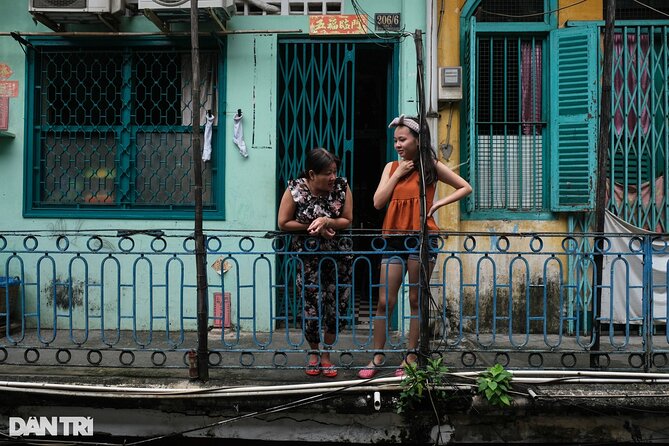
I value this stop because it changes your idea of what a sightseeing attraction can be. You are not simply looking at a facade. You are walking through a passageway where the setting itself tells a story about dense city living, older neighborhoods, and the survival of community spaces amid modern development.
The 30-minute visit is long enough for a guide to explain the alley’s background without turning the stop into a lengthy lecture. This is where a good guide can make a real difference. You need someone who can explain what you are seeing while also giving residents room and respect.
Hao Sy Phuong may be less visually grand than the temples later in the tour. Its value lies in atmosphere and context. If you want only famous landmarks, you may find the stop modest. If you want to understand the city beyond major avenues, it is one of the most useful parts of the morning.
Keep your camera discreet. The passageway is a lived-in place, not a stage set. Your guide should help you see the neighborhood without making local residents feel like part of a display.
Nghia An Hoi Quan and the role of community halls
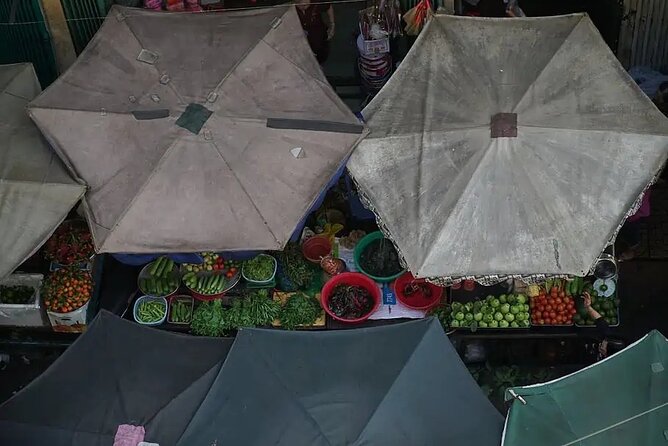
The next stop is Nghia An Hoi Quan, a Chinese community hall built before the 19th century and reconstructed several times. Its present appearance has an old-world character that feels surprising among Ho Chi Minh City’s modern buildings.
The important point here is that the building is not only an architectural object. Hoi Quans were tied to Chinese community life, worship, social connections, and shared identity. A guide can explain how these buildings functioned within the community, giving the ornate details a clearer purpose.
You have about 30 minutes at the hall. That should allow time to look at the structure and hear its story without rushing. The stop is especially useful for people who want historical context, because reconstruction means the building’s story is not frozen in a single date. It has changed, survived, and remained part of the district.
I would listen closely to the explanation of its connection with local Chinese communities. Ho Chi Minh City is not simply a Vietnamese city with a separate Chinatown added on top. Its neighborhoods reflect long contact between Vietnamese and Chinese residents, trade networks, religious traditions, and changing political conditions.
This is also one of the places where Thang’s reported style matters. He is described as able to explain Vietnamese history and politics in clear, digestible terms, and that kind of delivery is valuable in a building with several layers of meaning. You are likely to get more from the hall if you ask questions rather than treating it as a quick photograph.
More walking tours in Ho Chi Minh City:
- Private Street Food Evening Walking Tour in Ho Chi Minh City
★ 5.0 · 3,175 reviews - Super Niche Walking Street Food Tour in Ho Chi Minh City
★ 5.0 · 1,636 reviews - Ho Chi Minh City: Walking Food Tour with 13 Tastings
★ 5.0 · 469 reviews - Ho Chi Minh City: Super Niche Walking Street Food Tour
★ 5.0 · 438 reviews
Ba Thien Hau Temple and Cantonese heritage
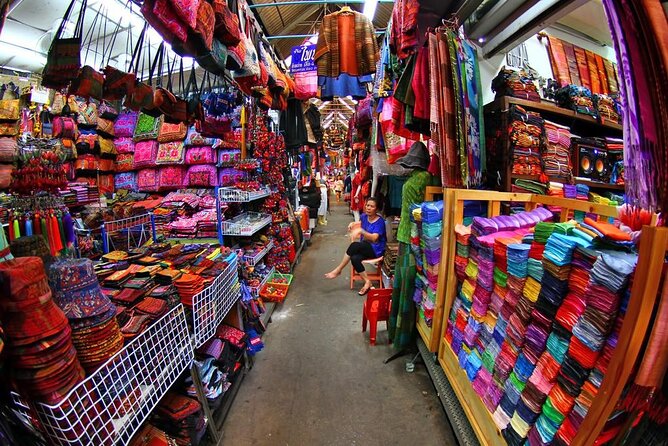
Ba Thien Hau Temple was built in the late 19th century by the Cantonese community in Saigon. It is known for Chinese-style architecture, a yin-yang tiled roof, and an old appearance surrounded by modern city buildings.
The temple gives the tour a different mood from Hao Sy Phuong. The alley introduces everyday residential life, while the temple shows a formal place of worship that has carried community traditions across generations. Its location in the middle of the city makes the contrast especially clear.
Expect another 30-minute stop. That is enough time to take in the roofline, architectural details, and religious setting while your guide explains the temple’s background. The exact level of access and activity inside can vary, so you should follow the guide’s instructions and behave respectfully.
I like the pairing of Nghia An Hoi Quan and Ba Thien Hau Temple. Seeing both helps you compare community buildings with a temple tied specifically to Cantonese heritage. The walk is not just collecting old structures. It is showing you that Chinatown contains several Chinese traditions and institutions, not one uniform culture.
This part of the route may appeal most to visitors who enjoy architecture and cultural history. If you are mainly interested in food and shopping, the final Chợ Lớn section will probably hold your attention more. The temple still provides an important pause before the busier commercial streets.
One hour in Chợ Lớn’s commercial center
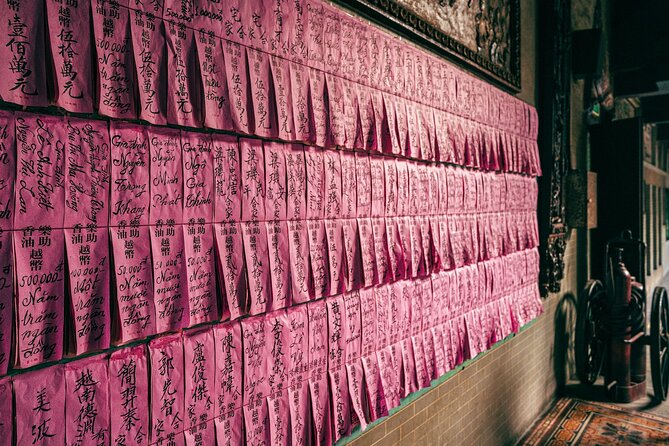
The final stop lasts about an hour and takes you through Chợ Lớn, a major commercial center for Ho Chi Minh City’s Chinese community. This is where the tour broadens from individual sites to the district as a whole.
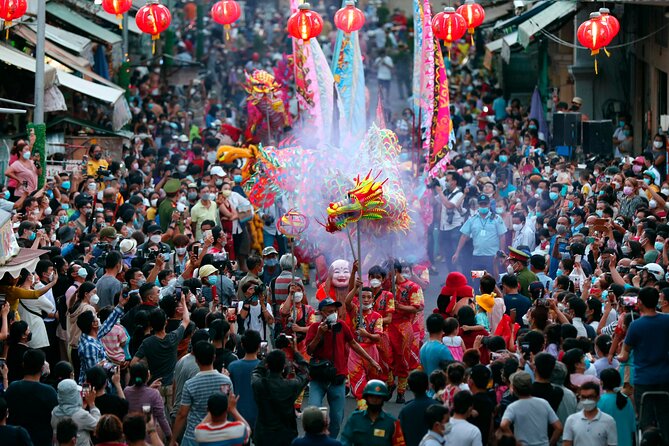
Chợ Lớn preserves cultural, religious, and architectural traditions while functioning as a working business district. That combination is what makes the area worth walking through. You are not visiting a preserved historic quarter detached from modern life. You are seeing a place where commerce and old customs continue side by side.
The area is associated with older architecture and narrow streets, including pipe-shaped structures typical of the district’s traditional urban form. A guide can help you notice how buildings, shops, temples, and lanes fit together. Without that explanation, the area can feel like a series of crowded streets. With context, it becomes a record of how the Chinese community helped shape the city.
An hour is the right length for a general introduction, though it will not cover every corner of Chợ Lớn. You should think of this as an orientation walk rather than a complete food tour or market expedition. The supplied details do not promise tastings, and coffee, tea, and snacks are not included.
If you want to continue exploring afterward, ask the guide for suggestions before the tour ends. The activity itself returns to the starting point, so any extra Chinatown exploring would need to be planned separately. Since no meal or refreshment stop is included, bring water and eat beforehand or afterward.
What makes Thang’s guiding style useful
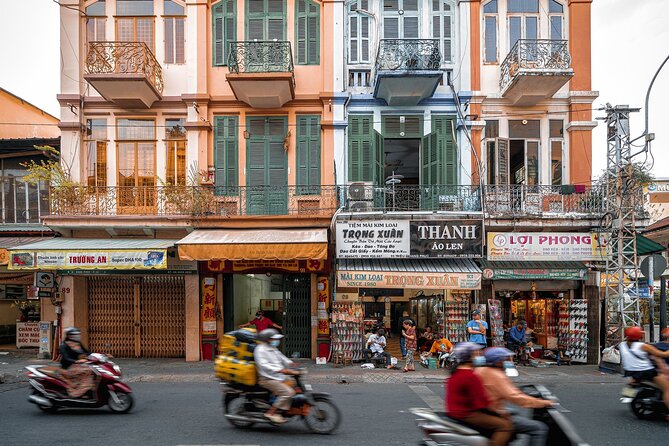
The guide named most often in the supplied material is Thang, also written as Thăng. His strongest qualities are clear explanations, a friendly manner, and the ability to connect major historical events with what you see on the street.
That matters in Ho Chi Minh City. The city’s past includes early Chinese settlement, colonial change, war, political shifts, and rapid modern growth. A guide who can explain those subjects in plain language helps you connect a temple roof or old alley to the wider story.
Thang is also described as able to answer questions and keep the information easy to follow. That is important because a three-hour history walk can become tiring if every stop turns into a long speech. The best version of this experience will give you enough background to understand the district without burying you in dates.
The guide is not guaranteed by the supplied information, so I would treat Thang as a likely strength rather than a promise. If he leads your walk, you can reasonably expect a strong focus on history, politics, and local culture. If another guide leads, the quality may depend more on that person’s preparation and speaking style.
The tips-only price and what it really means
The advertised booking price is $0.71 per person, which looks almost free. The tour operates on a tips-only basis and suggests an additional $15 to $25 per person. That suggested tip is the figure you should use when judging the cost.
At $15, the tour can be good value for three hours with an English-speaking guide and several cultural stops. At $25, it becomes closer to a standard paid walking tour, so you should expect useful explanations, good organization, and a clear route. The low booking charge should not be treated as the full price.
Tips-only tours can suit people who like deciding what the guide’s work was worth. They also require a little more thought before booking. If you dislike uncertain final pricing, the model may feel less straightforward than a fixed-fee tour.
The experience has seven published ratings at five stars, and the strongest praise centers on the guide’s explanations, friendly manner, off-the-main-road stops, and smooth flow between locations. Those are exactly the qualities I would use to judge the tour on the day. The temples and alley are valuable, but the guide is what turns them into a coherent experience.
Who should book this Chinatown walk
I would recommend this tour to first-time visitors who want a clear introduction to Chợ Lớn without spending a full day there. It also suits repeat visitors who have seen the central sights and want a closer look at a different part of Ho Chi Minh City.
History fans should get the most from it, especially if you enjoy learning about Chinese communities in Vietnam, architecture, and the political forces that shaped the city. The tour also works for curious walkers who prefer local streets to large attractions.
You may want another option if you need an accessible, air-conditioned outing, a food-focused tour, or a private experience. The supplied details say most people can participate, but they do not promise an air-conditioned vehicle, refreshments, or special mobility arrangements. A group of up to 30 may also feel too large if you want a quiet, highly personal tour.
The walking format means you should be comfortable spending around three hours outdoors. Since the route includes religious buildings and a residential alley, respectful behavior and modest clothing are sensible choices, even though a formal dress code is not provided.
Should you book it?
Book this Chinatown walk if you want history tied to real streets, not just a checklist of famous buildings. The combination of Hao Sy Phuong, two Chinese religious sites, and an hour in Chợ Lớn gives you a useful cross-section of the district.
I would book it with two conditions in mind. First, budget the suggested $15 to $25 tip rather than relying on the $0.71 headline price. Second, confirm how the group moves from the Saigon Skydeck meeting point to the Chinatown stops, since a vehicle is not included and the details do not explain that connection.
If Thang leads the walk, his clear historical explanations could make the morning especially worthwhile. If you want a low-cost, thoughtful introduction to Ho Chi Minh City’s Chinese quarter and do not mind walking in a group, this is a strong choice.
FAQ
How long does the Chinatown walking tour last?
The tour lasts approximately three hours.
Where does the tour begin?
It begins at Saigon Skydeck, 36 Hồ Tùng Mậu, Bến Nghé, District 1, Ho Chi Minh City.
What time does the tour start?
The scheduled start time is 9:00 a.m.
Which places does the tour visit?
The route includes Hao Sy Phuong, Nghia An Hoi Quan, Ba Thien Hau Temple, and Chợ Lớn.
Is the tour really free?
The booking price is listed as $0.71 per person, but the activity works on a tips-only basis and suggests an additional tip of $15 to $25 per person.
What is included in the tour?
An English-speaking guide and a mobile ticket are included. An air-conditioned vehicle, coffee, tea, and snacks are not included.
Just added around Ho Chi Minh City
- Ho Chi Minh city Street Food by scooter tour | female driver★ 5.0 · 3 reviews
- Vung Tau City Shore Excursion from Phu My Port★ 5.0 · 3 reviews
- Ho Chi Minh City: Full Long Tan Battlefield Tour★ 4.7 · 3 reviews
- Ride Saigon: Private Half-Day Motorbike Adventure★ 5.0 · 3 reviews
- Ho Chi Minh City: Guided Food Tour by Scooter★ 5.0 · 3 reviews
- Ho Chi Minh: Cai Be-Mekong Delta Local Village Full Day Tour★ 3.7 · 3 reviews
- 3D2N Mekong Delta Tour: Cycling – Kayaking – Floating Market★ 5.0 · 3 reviews
- PHU MY SHORE EXCURSION: Saigon Past and Present Tour★ 5.0 · 3 reviews
Chinatown & Ben Thanh Market Tours, compared.

Full-Day Ho Chi Minh City Tour with Colonial Heritage & Chinatown
Read our review →

Private Sunrise Photography Tour – Down in Chinatown
Read our review →
Ho Chi Minh City Tour with Colonial Heritage and Chinatown
Read our review →
HCM city Chinatown Landscape, Beliefs & ghost tour by scooter
Read our review →
Ben Thanh Princess Luxurious Dining Cruise in Ho Chi Minh City
Read our review →
Saigon City and Chinatown Exploration with Water Bus Adventure
Read our review →
Ben Thanh Princess: Luxury Dinner Cruise on Saigon River
Read our review →Browse the lists this tour appears in