
Reviewed · WALKING TOURS
Early Riser Walk: Grandma Noodles, Cafe, Exotic Fruits & History
Saigon shows its most personal side before the heat arrives. This three-hour morning walk moves from a quiet monument to grandma-made noodles, crowded neighborhood markets, an old apartment block, ginger-syrup tofu pudding, and coffee brewed the traditional way. It is less about famous sights than about seeing how the city starts its day.
I like the small maximum of six people, which makes it easier to ask questions and fit into tiny food stalls. I also like the calm pace. Guides Spring and Hieu are described as warm, flexible hosts who slow down when you need a breather, rather than pushing through a fixed script.
The main catch is the early start, plus the close quarters of markets and alleys. You should also be open to simple settings, stools, local food, scooters, and strong Vietnamese coffee. This is not a polished sightseeing bus tour.
In This Review
- Key points before you book
- Why the early hour matters in Saigon
- Starting with Thich Quang Duc’s difficult story
- Breakfast in a grandmother’s living room
- Fruit and market life at Vuon Chuoi
- Going further into Ban Co Market
- The old apartments on Nguyen Thien Thuat
- Tàu hũ with hot ginger syrup
- Coffee history at Cheo Leo Cafe
- What $39 buys you
- Who will enjoy this walk most
- Practical booking advice for an early morning
- Should you book Early Riser Walk?
- FAQ
- How long does the Early Riser Walk last?
- Where does the walk start?
- Where does the experience end?
- How many people can join the tour?
- Is food and drink included?
- Can I cancel for a full refund?
Key points before you book
- Grandma-made breakfast: Begin with handmade dumplings and noodles, or slow-cooked beef stew, in a tiny home-style restaurant.
- Two real neighborhood markets: Vuon Chuoi and Ban Co offer daily Saigon life rather than souvenir shopping.
- A quiet history lesson: The Thich Quang Duc Monument and old apartment buildings give the morning emotional weight.
- Coffee dating to 1938: Cheo Leo Cafe shows an old family brewing tradition in a narrow alley.
- A six-person limit: The small group suits solo visitors, couples, and families who want easy conversation.
- Good value at $39: Food, drinks, dessert, history, and local access are packed into a three-hour walk.
Why the early hour matters in Saigon
The useful idea behind this tour is simple: wake up before the city becomes too hot and noisy. Saigon is already active in the morning, but the activity feels tied to ordinary routines. Breakfast is being served, fruit is being moved, coffee is brewing, and market stalls are doing business.
You are not spending the morning racing between large attractions. Instead, you get a guided route through District 3 that links food, memory, religion, housing, and neighborhood commerce. That combination gives you a clearer sense of the city than another list of monuments would.
The walk is listed at about three hours. The named stops add up to roughly two hours of scheduled time, leaving the rest for walking between places, eating, talking, and pausing for photographs. That matters because the route is designed around observation, not a stopwatch.
The guides’ style also seems important here. Spring and Hieu are described as people who let conversation develop naturally. You can ask questions, walk quietly, or take pictures without feeling that you must perform as an eager sightseer. That makes the experience a good fit for solo visitors and introverts.
More history walks in Ho Chi Minh City:
- From Ho Chi Minh: Cu Chi Tunnels Half-Day History Tour with Guide
★ 5.0 · 480 reviews - Saigon Afternoon City Historical Scooter Tour |Opt: Ao Dai Riders
★ 5.0 · 466 reviews - Saigon Unseen, History, & Hidden Gems Sightseeing Motorbike Tour
★ 5.0 · 416 reviews
Starting with Thich Quang Duc’s difficult story
The meeting point is the Venerable Thich Quang Duc Monument at 185 Cach Mang Thang Tam in District 3. The stop takes about 15 minutes and has no admission charge.
This is a small, quiet place that can be easy to miss when you are moving through the city. Its story gives the morning a serious opening. Thich Quang Duc was the Buddhist monk whose self-immolation in 1963 became one of the defining images of the Vietnam War era. The experience does not present this as a grand museum visit. Instead, the monument offers a brief pause and a chance to connect national history with a real city street.
I appreciate that this comes first. It keeps the food and market stops from feeling like disconnected snacks. You begin by remembering that Saigon contains layers of political and personal history, even in places that look modest at first glance.
Do not expect a long formal lecture or a large memorial complex. The stop is short, and its power comes from context and quiet. If you prefer a lighthearted food-only walk, this opening may feel heavier than expected. For most people, that seriousness gives the rest of the route more meaning.
Breakfast in a grandmother’s living room
At Vo Van Tan, the tour turns toward food. The setting is a tiny restaurant inside a home, where a grandmother prepares handmade dumplings and a slow-cooked beef stew. The scheduled visit is about 15 minutes, so this is a focused breakfast rather than a long restaurant meal.
The appeal is not fancy presentation. You are eating a dish made for daily life, in a place where the cooking feels tied to a family routine. The food may include a hearty bowl of noodles and dumplings, or the beef stew described in the experience details. Since the exact serving can vary, you should arrive ready to try what is being prepared rather than expecting a fixed restaurant menu.
This is one of the strongest parts of the morning because it explains how food fits into Saigon’s day. Early breakfast is practical, filling, and social. Your guide can connect the meal to local habits instead of simply naming ingredients and moving on.
The small setting is also the limitation. You may sit close to other people, and the visit is not built for lingering over several courses. If you need a quiet, spacious breakfast room, this will not be that. If you want a direct taste of home-style food, it is a far better match.
Fruit and market life at Vuon Chuoi
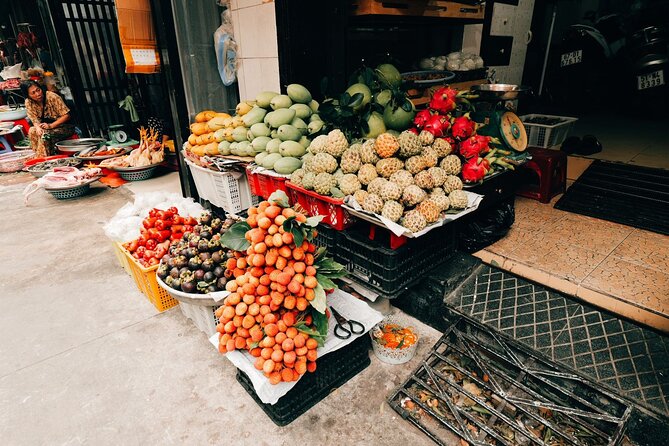
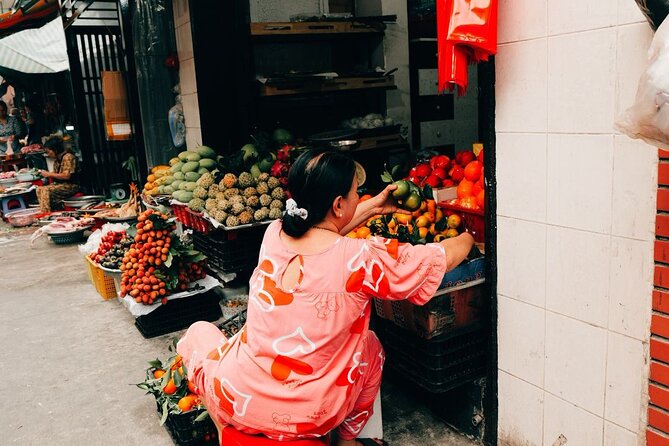
Vuon Chuoi Market brings you into a more active part of the route. The stop lasts about 15 minutes and includes admission. The market is described as an old-style neighborhood market, with scooters moving past piles of produce, vendors calling out prices, and small stools appearing wherever there is room.
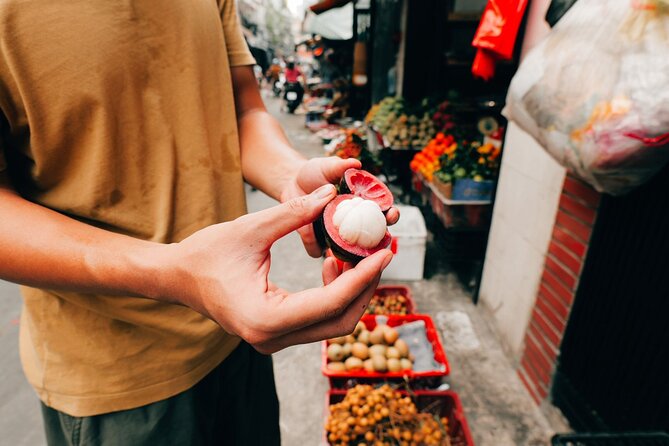
The focus here is fresh fruit. You can sample juicy, less familiar tropical fruit at the point when it is being sold and eaten locally. The value is not just the tasting. Your guide helps you understand what you are looking at, how the market works, and why certain foods are part of the morning routine.
This is also where a guide adds real value. A market can be hard to read alone. You may not know which fruit is ready, how to ask the price, or where it is acceptable to stand. Having Spring or Hieu explain the scene lets you pay attention to the people and produce instead of worrying about every social detail.
Expect movement and noise. This is not a staged food hall with clear walkways. Scooters, shoppers, and vendors share a tight space. Keep your belongings close, watch your footing, and wear shoes that feel secure. The stop is short, so it gives you a useful taste rather than a full market expedition.
More walking tours in Ho Chi Minh City:
- Private Street Food Evening Walking Tour in Ho Chi Minh City
★ 5.0 · 3,175 reviews - Super Niche Walking Street Food Tour in Ho Chi Minh City
★ 5.0 · 1,636 reviews - Ho Chi Minh City: Walking Food Tour with 13 Tastings
★ 5.0 · 469 reviews - Ho Chi Minh City: Super Niche Walking Street Food Tour
★ 5.0 · 438 reviews
Going further into Ban Co Market
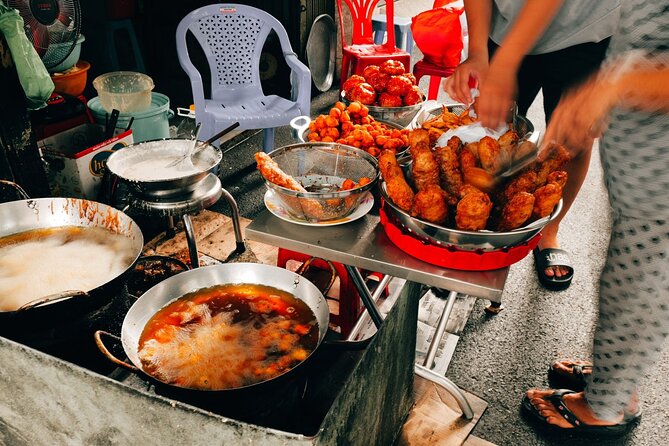
Ban Co Market receives about 30 minutes, making it the longest individual stop. That extra time is worthwhile because it lets you look beyond fruit and see the wider working rhythm of a local market.
The scene includes aunties chatting while cutting morning vegetables, people calling about change, and produce being handled as part of normal household shopping. This is not a retail attraction arranged for sightseeing. Its value comes from the fact that people are there to buy, sell, cook, and catch up with one another.
I like the contrast between the two markets. Vuon Chuoi introduces the market atmosphere and fruit tasting. Ban Co gives you more time with the neighborhood itself. You are less likely to feel that you are checking off a stop and more likely to notice how food connects homes, vendors, and daily schedules.
The drawback is that market conditions are unpredictable. You may find it crowded, noisy, or a little confusing. That is part of the point, but it may not suit someone who wants a controlled, easy-to-navigate attraction. The guide’s presence matters most here, especially when you need help understanding what is happening around you.
The old apartments on Nguyen Thien Thuat
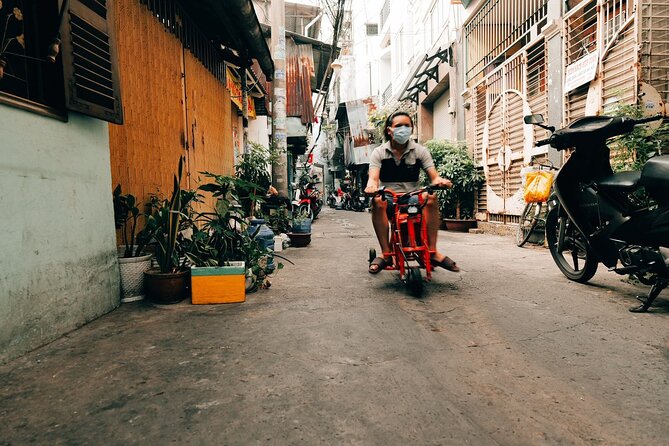
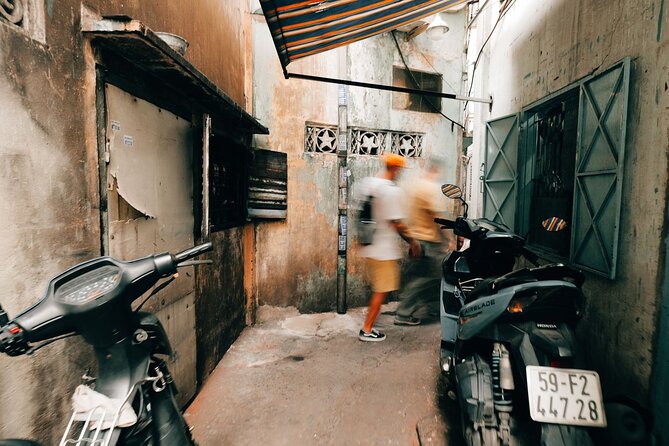
The Nguyen Thien Thuat apartment buildings offer a change of pace. The stop lasts about 15 minutes and takes you into a block described as an old-school Saigon living archive.
The buildings are valuable because they show housing as lived experience rather than architecture viewed from a distance. Life happens in layers here. The noise softens as you enter, but the area is not empty or silent. It feels residential, used, and personal.
The guide can explain how the buildings fit into the city’s past and present. One of the best features of this walk is the way history is tied to everyday places. Instead of separating the past from modern Saigon, the route shows how older homes, apartments, markets, and food stalls continue to shape the city.
Please remember that this is a lived-in area, not a film set. Move respectfully, follow your guide, and keep photography thoughtful. The brief stop is enough to notice the design and atmosphere, but not enough for a detailed architectural study.
Tàu hũ with hot ginger syrup
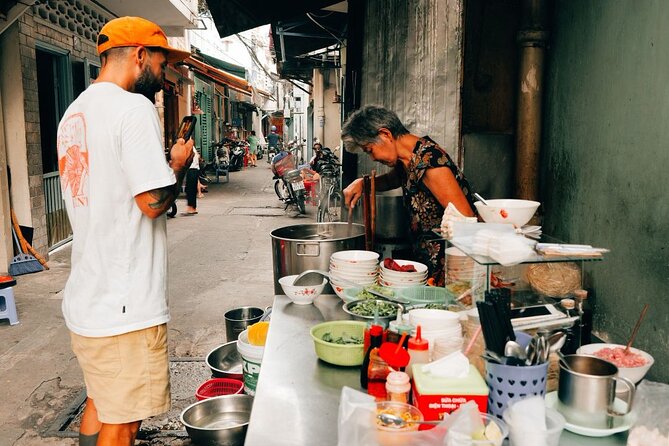
At Thế Giới Tàu Hũ, you get a 15-minute dessert stop with admission included. The setup is simple: plastic stools, a large pot of steaming tàu hũ, and hot ginger syrup.
Tàu hũ is a soft tofu dessert. Here, the warm ginger syrup adds sweetness and a sharp, spicy aroma. It is a gentle food stop after the market, and it shows another side of Saigon eating. Not every memorable dish comes from a famous restaurant. Some are served from one pot at a few small stools.
This stop also helps keep the tour varied. You have already had a savory breakfast and fresh fruit. Now you get something warm and sweet before coffee. The short serving time means you can enjoy it without turning the morning into a series of long meals.
The setting may feel basic if you expect air conditioning or formal seating. That is not a flaw, but it is worth knowing. Bring an open mind and expect a simple local dessert rather than a plated finale.
Coffee history at Cheo Leo Cafe
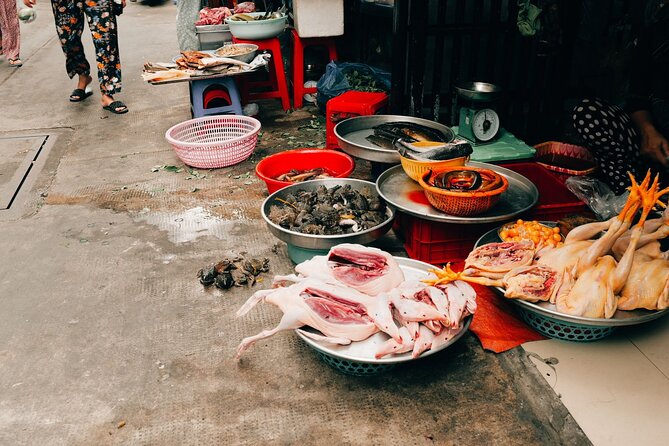
The final stop is Cheo Leo Cafe, a family-run coffee house dating to 1938. It sits down a narrow alley near Nguyen Thien Thuat, and the visit lasts about 15 minutes with admission included.
The aunties demonstrate an old-style method for brewing coffee and tea. You get to taste strong Vietnamese coffee and tea while hearing how the café has kept its family tradition. The setting matters as much as the drink. This is a place with a long local life, not a modern café built around design and photographs.
The coffee is bold. If you are sensitive to caffeine, keep that in mind, especially after an early start and a full breakfast. The tour description makes clear that the brew can deliver a serious morning jolt.
I like ending here because coffee gives the group time to settle. You can ask final questions, review what you have seen, or simply sit. One especially useful feature of the guiding style is flexibility. If you become tired or quiet, the guide may slow the pace rather than treat the schedule as more important than your comfort.
What $39 buys you
At $39 per person, this is not the cheapest way to eat breakfast in Ho Chi Minh City. You could spend much less by walking into a noodle shop or ordering coffee alone. The question is what you are paying for beyond the food.
You are paying for a small group, a local route, several food tastings, drinks, history, and access to places that can feel awkward to enter by yourself. You also save time figuring out how to move between the monument, markets, apartments, dessert stall, and café.
The maximum group size of six is a real part of the value. A larger group would be harder to fit into the home restaurant, market lanes, apartment area, and tiny café. With six or fewer, the guide can answer questions and adjust the pace.
I would call the price fair, especially early in a Ho Chi Minh City visit. The tour can help you understand local food and street life before you attempt similar places alone. If you already know Saigon well and speak Vietnamese, you may prefer to make your own route and spend less.
The experience is also booked an average of 12 days ahead, so it is sensible to reserve early if the date matters to you. Confirmation is provided when you book, and the mobile ticket makes the practical side simple.
Who will enjoy this walk most
I would choose this for someone who wants food, context, and conversation in equal measure. It suits solo visitors who normally avoid organized activities, since the pace is personal and quiet moments are welcome.
Families can also make it work. A teenage child who likes asking questions should have plenty to notice, from market habits to coffee preparation. The route is short enough to be manageable, but the early hour and walking still require basic energy.
This is less suited to anyone looking for major landmarks, a long history lecture, luxury dining, or a carefully controlled route. The food is simple, the seating can be basic, and the markets are active. You need to accept a little uncertainty in exchange for ordinary city life.
Most people can participate, and the route is near public transportation. Still, the supplied details do not promise a fully step-free route or describe specific food accommodations. If either matters to you, ask Spring Saigon Tours before booking.
The tour ends in District 3 rather than returning to the monument. That is useful if you plan to continue exploring the area, but you should allow time to arrange your next stop.
Practical booking advice for an early morning
Wear comfortable shoes and light clothing. The route includes markets, alleys, neighborhood buildings, and food stops, so practical clothes are more useful than polished sightseeing outfits.
Arrive ready for breakfast soon after the opening monument stop. If you are not hungry early in the day, the food-focused nature of the walk may be less appealing. The coffee is strong, so anyone limiting caffeine should tell the guide.
The tour offers free cancellation up to 24 hours before the start time for a full refund. Cancellations or changes made within 24 hours are not refunded, and the cut-off follows local time.
Should you book Early Riser Walk?
Book it if you want to understand Saigon through breakfast tables, markets, old apartments, dessert stalls, and coffee rather than through headline attractions. The route has a gentle pace, a small group, and guides who appear comfortable letting the morning unfold naturally.
Skip it if you dislike early starts, close market spaces, simple food stalls, or strong coffee. At $39, the value depends on wanting local access and interpretation, not just inexpensive food.
For a first or second morning in Ho Chi Minh City, I think it is a smart choice. You leave with practical food knowledge, a better feel for District 3, and a calmer sense of how the city works before the day gets hot.
FAQ
How long does the Early Riser Walk last?
The experience lasts approximately three hours.
Where does the walk start?
It starts at the Venerable Thich Quang Duc Monument, 185 Cach Mang Thang Tam, District 3, Ho Chi Minh City.
Where does the experience end?
It ends in District 3, Ho Chi Minh City.
How many people can join the tour?
The group has a maximum of six participants.
Is food and drink included?
The experience includes breakfast food, exotic fruit sampling, tàu hũ, and coffee or tea stops as described in the route. Admission is included at Vuon Chuoi Market, Thế Giới Tàu Hũ, and Cheo Leo Cafe.
Can I cancel for a full refund?
Yes. You can cancel at least 24 hours before the local start time for a full refund. Cancellations or changes made less than 24 hours before the start time are not refunded.
Just added around Ho Chi Minh City
- Vung Tau City Shore Excursion from Phu My Port★ 5.0 · 3 reviews
- Ho Chi Minh city Street Food by scooter tour | female driver★ 5.0 · 3 reviews
- Ho Chi Minh City: Full Long Tan Battlefield Tour★ 4.7 · 3 reviews
- Ride Saigon: Private Half-Day Motorbike Adventure★ 5.0 · 3 reviews
- Ho Chi Minh City: Guided Food Tour by Scooter★ 5.0 · 3 reviews
- PHU MY SHORE EXCURSION: Saigon Past and Present Tour★ 5.0 · 3 reviews
- Ho Chi Minh: Cai Be-Mekong Delta Local Village Full Day Tour★ 3.7 · 3 reviews
- 3D2N Mekong Delta Tour: Cycling – Kayaking – Floating Market★ 5.0 · 3 reviews
Walking Tours, compared.
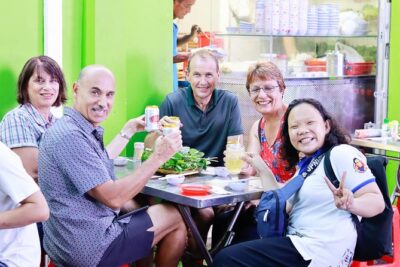
Private Street Food Evening Walking Tour in Ho Chi Minh City
Read our review →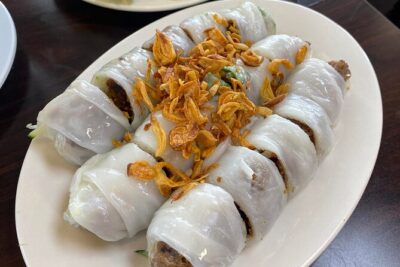
Super Niche Walking Street Food Tour in Ho Chi Minh City
Read our review →
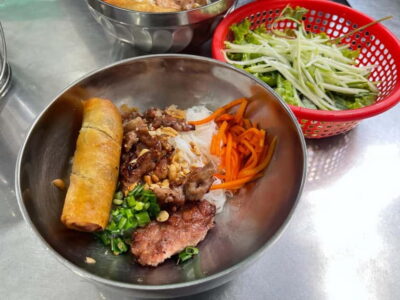
Ho Chi Minh City private walking tours with young local volunteers
Read our review →
Lively Saigon River Sightseeing Cruise + Guided Walking Tour
Read our review →Browse the lists this tour appears in